






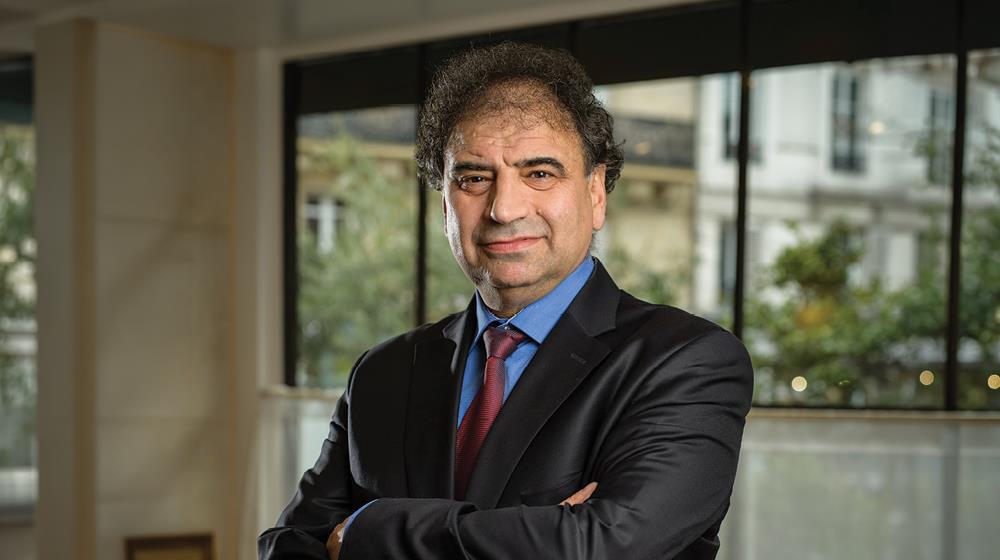
In March this year, the world’s best-known Cypriot chef, Andreas Mavrommatis, passed away unexpectedly at the age of 69. His brother Evagoras is still trying to come to terms with the family tragedy, but he is more than happy to recount the story of how he and Andreas established the award-winning restaurant La Maison Mavrommatis in Paris.
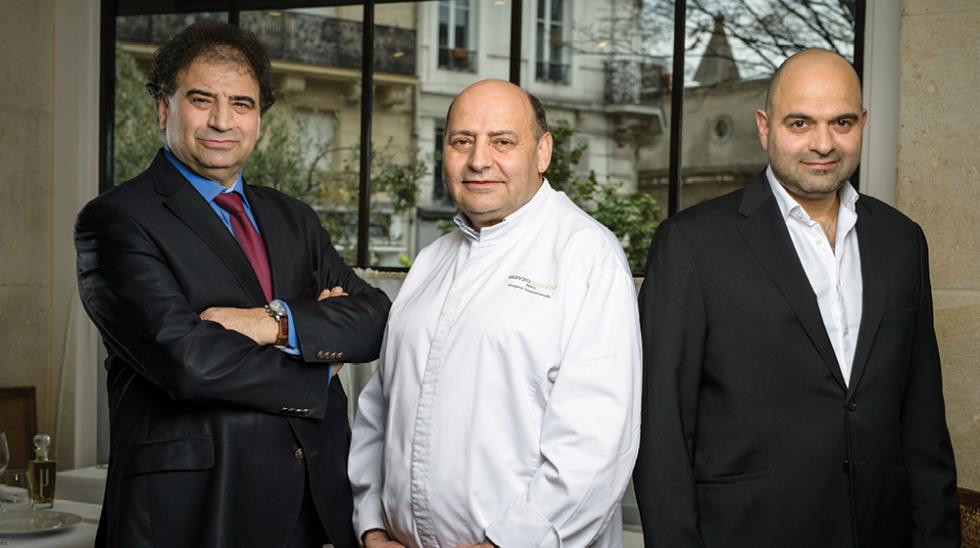
They started with Les Délices d’ Aphrodite, a small taverna in the heart of the French capital’s Latin Quarter serving inspired Greek and Cypriot cuisine, and gradually began blending French cuisine with the flavours of their homeland, Cyprus, eventually opening more restaurants. The undoubted peak of their achievements was the award in 2018 of a prestigious Michelin star for La Maison Mavrommatis, which combines French gastronomic cooking techniques with Greek and Cypriot ingredients. Andreas Mavrommatis, from the Troodos mountain village of Agios Ioannis Pitsilias, was key to “developing the image of Cypriot cuisine,” Evagoras Mavrommatis tells me, as he relives the journey that he and his brother took to shine a spotlight on a cuisine which, he admits, had a very poor reputation in France at the time.
“From the very beginning, Andreas and I were convinced that Greek and Cypriot cuisine deserved better,” he says, recalling their arrival in Paris for studies in their 20s. Andreas Mavrommatis had gone to study clinical psychology, while his brother had chosen political science but they both abandoned their original ambitions and decided to follow their passion and to change the reputation and presentation of Cypriot and Greek cuisine. Mavrommatis reminisces about how, having gone to Paris after the 1974 Turkish invasion, he and his brother divided their time between university and work in Greek restaurants. Andreas was undergoing clinical training at a local hospital when they bought Les Délices d’ Aphrodite, which started as a small grocery with a modest kitchen. “We knew absolutely nothing about running such a business – what permits were required, if we were even legally allowed to do some of what we were doing,” he admits. In fact, to avoid any problems, they registered the store in the name of a French friend.
So, what happened to their studies and the careers they had envisioned? “Once you're drawn into entrepreneurship, something changes. You feel like you've found your place,” he says, “and you’re on a mission to develop your first creation.” The brothers knew that they were building something different for Parisian restaurant-goers, Mavrommatis admits, “We just never imagined it would eventually become what it is today.”
If this story sounds movie-worthy, the well-known Greek-French Film Director Costa-Gavras had the same idea, though, in the end, the documentary about the Mavrommatis brothers did not materialise. “It wasn't an easy journey. There were many obstacles and many difficulties and, sadly, my brother is no longer with us, but it remains a wonderful story,” says Evagoras.
Their passion to showcase Cypriot and Greek cuisine led to the brothers’ restaurant gradually attracting – and maintaining – its high-calibre clientele. “It happened little by little, as we focused on quality and exceptional ingredients and raw materials,” he says, adding “because that is the only way to create something truly outstanding.” Recalling some of the most famous visitors to have visited La Maison Mavrommatis, he mentions the former Greek Prime Minister Andreas Papandreou, former French President François Mitterrand and hosts of others, some of whom remain dedicated clients to this day. “One of our regular customers is now 93 years old!” he says, referring to the grandmother of France's current Minister of Finance. “When I travelled to Greece with President Macron and later visited Cyprus, her grandson told me: ‘You know, whenever she goes out, she always wants me to take her to Les Délices. She remembers meeting you when you first opened.’ There are countless stories like that,” Mavrommatis notes with evident pride.
After his success in France, Andreas Mavrommatis was moved to begin changing Cyprus’ approach to fine dining, gastronomy and the local restaurant scene. “Andreas played a very important role in the development of Cypriot gastronomy,” his brother says. “Some years ago, being a chef wasn’t considered a particularly prestigious profession in Cyprus but, thankfully, that perception has changed. Young people now see cooking as a profession they can build a future around,” he explains, adding, “I’ve seen a significant change in the country’s gastronomic landscape. Cypriot cuisine absolutely has a future.”
However, there are conditions attached to this. Changing perceptions of the profession of chef are just one aspect. Evagoras Mavrommatis believes that the key to maintaining the right food culture on the island is “for chefs to respect their ingredients” and to work with farmers and local producers to cultivate products that “provide continuity and consistency”. He gives the example of the many types of wild mushrooms, with which Cyprus is blessed. “We have countless varieties growing naturally – some beneath plane trees, others beneath olive trees,” he says. “Even highly prized mushrooms that are considered delicacies elsewhere exist in Cyprus, naturally.” He is adamant that, to create truly great cuisine, “you first have to understand nature.” Another important aspect of any cuisine is seasonality. “Unfortunately, today many people choose the easiest path. It's difficult to find properly prepared dishes like afelia (marinated pork) or the traditional sauteed kavourmas that my mother used to make. We've forgotten that winter and summer cuisine were always completely different,” he says.
He goes on to explain that, if they are to create great dishes, chefs need to ask the producers to grow exactly what they need. “Of course, they must also pay them fairly for that effort,” he adds, recalling how, “Sometimes I would even specify exactly how I wanted celery to be grown. People may laugh but that's how great cooking begins.” He also notes about Cyprus’ traditional cuisine the fact that the island is “full of treasures and this knowledge must be recorded before it disappears forever.”
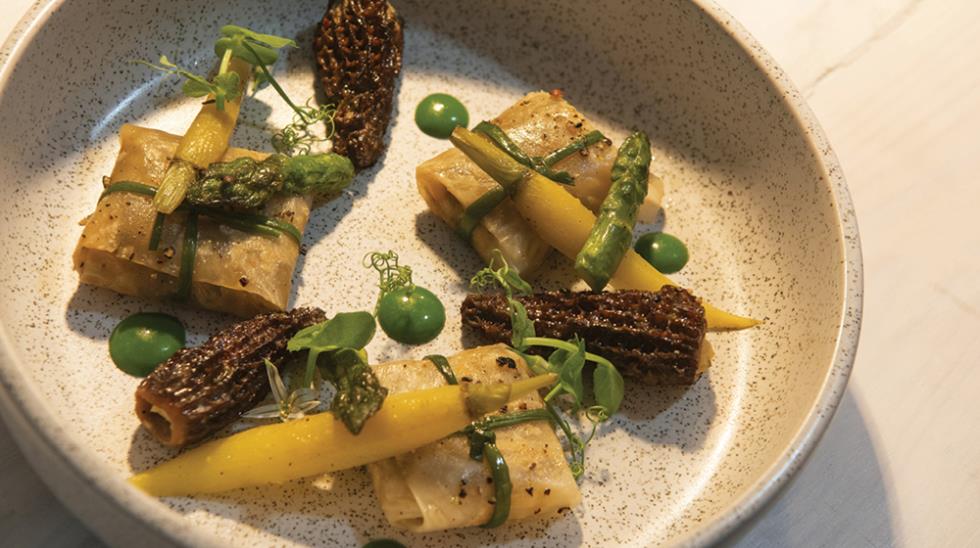
The Mavrommatis brothers’ “respect for ingredients and seasonality” is one of the many factors that led to La Maison Mavrommatis being awarded a prestigious Michelin star. “We work exclusively with seasonal ingredients. Understanding the season is fundamental,” he repeats, sharing his view that diners seek out restaurants that respect the time of the year, in much the same way as “life in the villages used to revolve around the seasons."
When he was called to curate the menu for Cyprus’ recent six-month Presidency of the Council of the European Union, Andreas Mavrommatis sought to introduce the Government’s European colleagues and guests to all the available local seasonal products. “We didn't simply send a menu on paper. We developed it, prepared every dish and tested everything with our team in Cyprus and with our own excellent team,” his brother says. “Our goal was to present Cyprus through an elevated interpretation of its own cuisine – not by changing its identity but by showcasing it at the highest possible level.”
French President Emmanuel Macron also acknowledged the work that the chef had put into curating the menu and publicly thanked Andreas Mavrommatis for his work. The dignitaries participating in that particular dinner also shared their gratitude for the work that he had put into the menu. “We wanted our country to feel proud of what was being served in its name,” says Evagoras, “So that meant a great deal to us.”
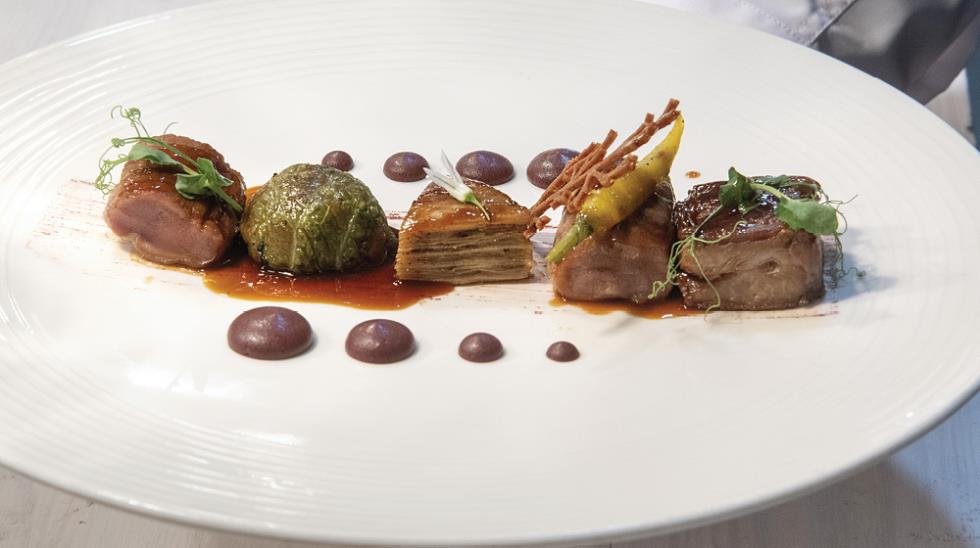
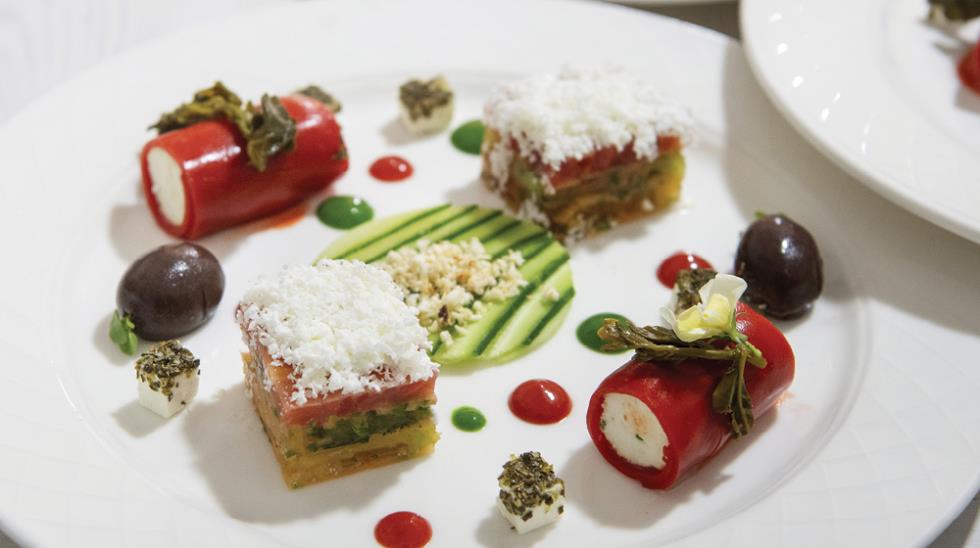
Mavrommatis shares an anecdote about halloumi, which is now the island’s most famous product but, when he and his brother started their careers, “almost nobody served halloumi in France. Many years later, in 2018 when we received our Michelin star, one of our signature dishes paired lamb with halloumi. That was when chefs from all over France suddenly became curious!” he says. Mavrommatis genuinely believes that “halloumi became widely known in France, largely because of La Maison Mavrommatis.” Now that halloumi has taken off internationally, the hope is that other Cypriot products can achieve similar recognition. He recalls how, during Cyprus’ first EU Council Presidency, diners were treated to a mille-feuille of kolokassi (Cypriot taro root), which left quite an impression. “They loved it! And at every New Year’s celebration, we continue to serve variations of that dish,” he says.
So, what does the future hold for Cypriot cuisine? Evagoras Mavrommatis is optimistic about the island’s traditions, ingredients and gastronomic identity. “Cyprus has many remarkable ingredients. The key is knowing how to present them properly. I believe Cypriot cuisine has an excellent future.”
This interview first appeared in the 2026 edition of The Cyprus Journal of Wealth Management. Click here to view it.
