








Cyprus is entering a crucial phase of its energy transformation, with a series of interventions aimed at reducing electricity costs, strengthening energy security and accelerating the green transition.
The introduction of natural gas, the development of energy storage infrastructure, the opening of the electricity market and new support schemes for businesses and households are shaping a new energy landscape for the country.
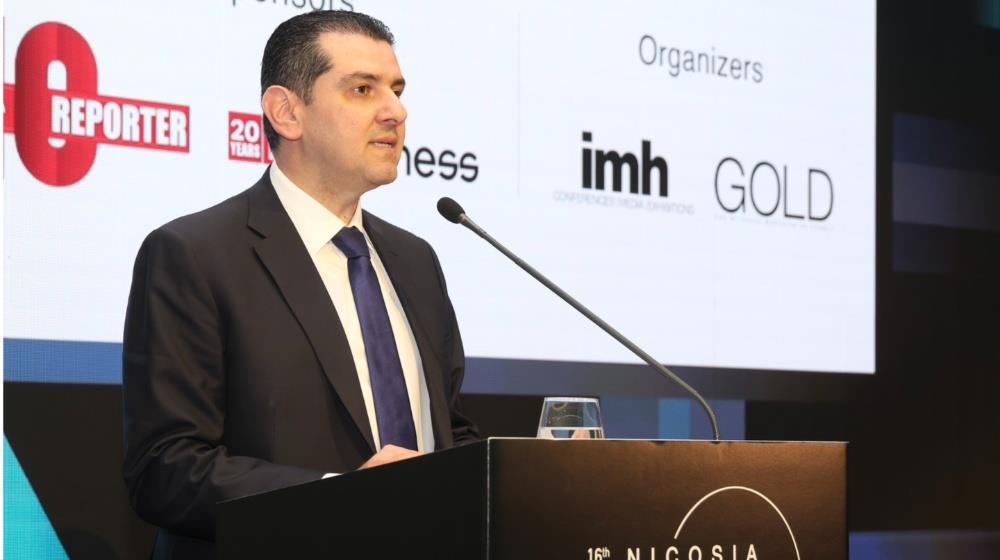
Minister of Energy, Commerce and Industry, Michael Damianos presented these priorities at the 16th Nicosia Economic Congress, describing the key steps of the government's energy policy in an international environment of increased uncertainty.
According to the Minister, recent geopolitical developments in the Middle East, and especially the conflict in Iran, have highlighted the vulnerability of the global energy system, as critical sea routes for energy transport are being affected and fuel costs are increasing significantly. For a small and energy-isolated economy like Cyprus, strengthening energy autonomy is now a strategic priority.
The government's energy strategy is based on three main axes: reducing energy costs, enhancing energy security and accelerating sustainable development. In this context, the opening of the competitive electricity market is of particular importance, a reform that is expected to strengthen competition and gradually lead to better prices for consumers and businesses.
The Vasilikos Energy Centre plays a central role in the new energy plan, where infrastructure for the import and storage of liquefied natural gas is progressing. The use of natural gas in power generation is expected to reduce pollutant emissions by 25% to 30%, while also limiting the cost arising from carbon dioxide emission rights.
Particular emphasis is also placed on the development of energy storage infrastructure, which is considered critical for the further penetration of Renewable Energy Sources in the country's energy mix. In the near future, the installation of central storage systems under the management of the Cyprus Transmission System Operator is planned, in order to enhance the stability of the network and better utilise the production from RES.
An important element of the energy transition is the digital modernisation of energy infrastructure. With the installation of smart meters and the development of an integrated "smart grid" system, new opportunities are created for investments in energy management technologies and energy services.
At the same time, the ministry promotes the cogeneration of electricity and heat in industrial units, utilising energy that would otherwise be wasted and reducing fuel consumption.
At European level, energy policy is aligned with the framework of the European Green Deal, the Fit for 55 package and the REPowerEU plan. The new regulations strengthen consumer protection and create a more stable regulatory environment for investments in clean technologies.
In this context, large enterprises will have to implement energy management systems and prioritise energy efficiency in their investments. For example, data centres with a capacity of more than 500 kW will be required to publish annual technical data on their energy efficiency.
The government is also proceeding with a series of support measures for the energy upgrading of the economy. In 2026, the 'Save - Upgrade in Homes' grant scheme is expected to be re-announced, while for the first time, a grant scheme will be implemented for the installation of energy storage systems in businesses.
At the same time, through the upgraded One Stop Shop, licensing procedures for RES projects and strategic energy infrastructure are accelerated, with the aim of reducing bureaucracy and attracting investments.
Additional measures have already been taken to relieve households and businesses from rising energy prices. These include a reduction in the consumption tax on fuel by 8.33 cents per liter, as well as a reduction in the VAT rate on electricity from 9% to 5%.
According to the minister, the energy transition creates significant business opportunities in areas such as energy storage, energy infrastructure, building upgrades and energy management services.
This transition entails, he concluded, significant investments, to clarify, finally, that the cost of inaction would be much greater for the country's economy and energy security.
(Source: InBusinessNews)
