







Wealth 2050: The $84 Trillion Question
Eighty-four trillion dollars is about to change hands. Over the coming decades, the largest generational wealth transfer in history will move to a generation that has never known a world that pauses. They stream, communicate, shop, and work in real time. The money they are about to inherit does not. It still settles on a two-day delay, closes on weekends, and stalls whenever value crosses a border.
The world runs in real time. Finance still keeps office hours. That contradiction sits at the centre of the wealth question now facing Europe. The financial market of yesterday was not built for the questions of tomorrow, and the generation now inheriting the world's capital will not accept monthly PDF reports or opening hours.
Finance has always advanced on infrastructure and trust
The history of money is a history of upgrades, from coins and gold to banking, central banks, credit cards, and the mobile wallet. Each step arrived when two things came together: better infrastructure and the trust to use it.
Digital assets and tokenisation are the next step in that sequence; not a break from financial history, but its continuation. Tokenisation moves real-world assets, including real estate, bonds, equities, and even gold, onto a blockchain, where they can be traded in fractions, worldwide, at any hour.
From a niche experiment to a $2.3 trillion asset class
For years, the idea that digital assets belonged in serious portfolios invited skepticism. It no longer does. BlackRock's spot Bitcoin ETF gathered more than $53 billion within roughly a year of launch, JPMorgan now settles between $1 and $2 billion daily on its JPM Coin network, and Deutsche Börse, UBS, Citi, and Visa have built or backed digital-asset infrastructure.
The scale tells the same story. What was a $10 billion experiment in 2014, once dismissed as a niche, is now an asset class of roughly $2.3 trillion, measured against the markets for equities, bonds, and precious metals rather than the next hype cycle. Set against the $84 trillion due to pass between generations, the direction of travel is hard to ignore: even a fraction flowing into digital assets would mean hundreds of billions of dollars.

Regulation was the dividing line
When Teroxx was founded in 2018, the sector faced a binary future: regulation or prohibition. Europe chose regulation and built toward it deliberately, from the payment frameworks of EMI and EMD2, through MiFID II, to the Markets in Crypto-Assets regulation (MiCA), which now supervises crypto-assets, stablecoins, and the service providers that handle them.
Teroxx was built for that endpoint rather than retrofitted to it, and today holds 8 of 10 possible CASP authorizations under MiCA. In an asset class once defined by volatility, regulatory certainty has become the real competitive advantage.
The jurisdiction behind the license
If regulation is the dividing line, then jurisdiction is the substance. Teroxx's MiCA authorizations are granted and supervised in Cyprus by the Cyprus Securities and Exchange Commission, which means the certainty Pliessnig points to is administered on the island, not imported to it. The licensed entity and operational core have stayed in Cyprus even as its client base spread across continental Europe.
The timing makes that choice look deliberate. Cyprus has held the rotating Presidency of the Council of the European Union through the first half of 2026, the same window in which MiCA reaches full application across the bloc. For a country that moved early to regulate digital assets, the convergence places it near the front of a conversation that the rest of Europe is only beginning.
For the local market, the implication is concrete. A Cyprus-licensed firm clearing roughly €3 billion in annual volume for clients across Europe is evidence that the island's framework is producing businesses of real weight – not paper registrations, but operations competing for institutional capital from a Mediterranean base.
Where private banking ends
Regulation, though, is the foundation rather than the offering. Teroxx's purpose is to bridge traditional wealth management and digital assets, bringing the discretion, accountability, and human judgment of private banking to a market that has too often lacked all three. "Wealth management is a relationship, not a transaction," Pliessnig told the summit.
In practice, that means a dedicated relationship manager for every client rather than an app and an automated help desk, with custody, trading, portfolio strategy, and investment advice under one roof, available in twenty-nine countries and run from the firm's regulated headquarters in Cyprus.
It is the logic behind where the firm is heading: where private banking ends, Teroxx begins. The twentieth-century model, office hours, paper reports, settlement measured in days, was made for a slower world. The future of wealth, he argues, is digital, and it is no longer a forecast. The infrastructure exists, the regulation is in place, and capital is already moving.
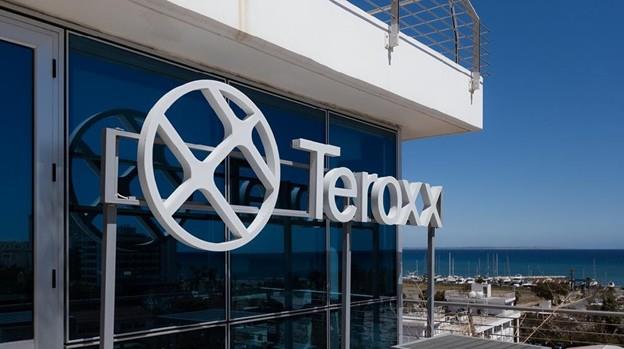
About Teroxx
Founded in 2018, Teroxx is a premier digital asset boutique serving affluent, institutional, and high-net-worth clients. Holding 8 of 10 MiCA CASP authorizations and processing approximately €3 billion in annual volume, Teroxx bridges the gap between traditional finance and the digital economy. With a leadership team expanded for global scale in 2026, Teroxx provides the compliance, custody, and risk management infrastructure that the future of finance demands.