








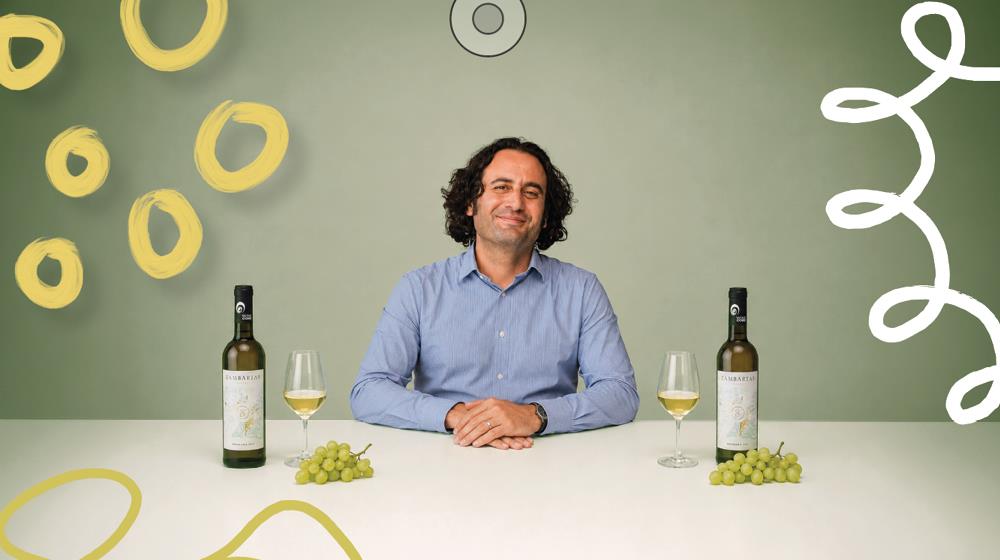
A collective initiative is bringing Cyprus' native grape varieties to the forefront, strengthening the country's wine identity and creating new opportunities in international markets.
Cyprus is one of the world's oldest wine-producing countries, with a winemaking tradition that spans thousands of years. Yet despite its rich heritage, distinctive terroir and remarkable indigenous grape varieties, Cypriot wine is still building the international recognition it deserves.
This ambition lies at the heart of WINECORE a collaborative initiative established by leading Cypriot wineries to promote the country's unique wine identity. Rather than focusing on individual labels, WINECORE seeks to showcase Cyprus itself, its native grape varieties, protected wine regions and centuries-old viticultural heritage.
As part of the Eat Wisely Cyprus project, co-funded by the European Union under the IMCAP programme and implemented by IMH, Eat Wisely spoke with Markos Zambartas, Chairman of WINECORE, about the initiative's vision, the importance of indigenous grape varieties and the future of Cypriot wine.
A shared vision for Cypriot wine
WINECORE brings together fourteen wineries that share a common belief: the future of Cypriot wine depends on promoting what makes the island genuinely unique.
The initiative includes Ayia Mavri, Vlassides, Zambartas, K&K Vasilikon, Kalamos, Dafermou Estate, Kyperounda Winery, Constantinou Winery, Mallia Winery, Marathasa Wines, Santa Irene, Tsiakkas Winery, Argyrides Vineyards and Fikardos Winery, all working together to strengthen the international image of Cypriot wine.
"Our vision is to create a compelling story around Cyprus' indigenous grape varieties and the wines they produce," says Markos Zambartas.
By promoting a shared identity rather than individual brands, WINECORE aims to position Cyprus as a premium wine-producing destination with a distinctive character.
Native varieties at the centre of the story
According to WINECORE, Cyprus' greatest advantage lies in its indigenous grape varieties, which have adapted naturally to the island's climate and soils over centuries.
Among the best known are Xynisteri, Mavro and Maratheftiko, while varieties such as Yiannoudi, Promara, Morokanella, Vasilissa and Spourtiko are also attracting increasing attention.
"Cyprus' indigenous grape varieties are our country's greatest asset," says Markos Zambartas.
Beyond producing distinctive wines, these varieties preserve biodiversity, reflect Cyprus' cultural heritage and offer consumers an authentic expression of place—qualities that are becoming increasingly valuable in international markets.
A new generation of Cypriot wines
Among the indigenous varieties, Xynisteri has become the flagship white grape of Cyprus.
Cultivated across the island, it expresses the diversity of Cyprus' terroirs while producing wines with freshness, complexity and excellent ageing potential.
"No other variety can express the different terroirs of Cyprus in the same way because it is grown throughout the island," explains Markos Zambartas.
Cyprus' native red varieties are also enjoying renewed interest.
While Mavro remains deeply connected to the island's winemaking tradition and the production of Commandaria, Zivania and other traditional products, producers are increasingly exploring its premium potential.
At the same time, Maratheftiko has emerged as one of Cyprus' most promising indigenous varieties, producing elegant red wines and distinctive rosés that continue to attract growing international attention.
Emerging varieties such as Yiannoudi are further enriching the country's wine portfolio, offering winemakers new opportunities to showcase Cyprus' diverse viticultural heritage.
PDO and PGI: Protecting identity and quality
For WINECORE, promoting Cypriot wine is closely linked to protecting its authenticity.
The European Union's Protected Designation of Origin (PDO) and Protected Geographical Indication (PGI) schemes provide an internationally recognised framework that guarantees origin, quality and traceability.
Cyprus currently has four PGI wine regions, Limassol, Pafos, Larnaca and Lefkosia, together with recognised PDO wine zones that connect wines to specific production areas and stricter viticultural and winemaking standards.
"PDO wines allow us, as Cypriot producers, to present a distinctive proposition in international markets," says Markos Zambartas.
For producers, these quality schemes create added value and strengthen competitiveness. For consumers, they offer confidence that each wine genuinely reflects its place of origin.
Commandaria: Cyprus' wine ambassador
No story about Cypriot wine would be complete without Commandaria, one of the world's oldest named wines and one of Cyprus' most iconic products.
Produced exclusively from the indigenous Xynisteri and Mavro grape varieties, Commandaria continues to be made using traditional methods, including the natural sun-drying of grapes and extended ageing in oak barrels.
"Commandaria is Cyprus' ultimate flagship product," says Markos Zambartas.
Beyond its commercial importance, Commandaria represents a living connection between Cyprus' rich winemaking history and its modern wine industry, serving as one of the country's strongest ambassadors in international markets.
Sustainability driving the next generation of vineyards
Sustainability is becoming increasingly important across Cyprus' wine sector.
While certified organic vineyards still account for a relatively small proportion of production, more wineries are adopting environmentally responsible practices, including organic cultivation, reduced vineyard interventions and improved water management.
Cyprus' naturally dry climate offers an important advantage by reducing disease pressure and limiting the need for plant protection products.
"The trend is clearly moving towards gentler interventions, both in the vineyard and in the winery," explains Markos Zambartas.
Protecting biodiversity, conserving soil and using water more efficiently have become central priorities for wineries seeking to build a more resilient and sustainable future.
Stronger together
Collaboration is the foundation of the WINECORE initiative.
Through joint tastings, masterclasses and events such as ANTAMOMA, participating wineries are introducing consumers and wine professionals to Cyprus' indigenous varieties and unique wine culture.
Today, WINECORE members export to markets including the United States, the United Kingdom, Germany, France, Switzerland and the Nordic countries, demonstrating growing international interest in authentic wines with a clear sense of origin.
"There is strength in unity, and that is precisely what WINECORE represents."
By working collectively, the participating wineries are helping build a stronger international profile for Cypriot wine while promoting the island's distinctive wine identity.
The role of the Common Agricultural Policy
The development of Cyprus' wine sector has been closely supported by the European Union's Common Agricultural Policy (CAP), which encourages quality, sustainability and competitiveness across the agri-food sector.
For WINECORE, European quality schemes such as PDO and PGI play an important role in protecting the authenticity and geographical identity of Cypriot wines while enhancing consumer confidence in international markets.
CAP also supports the preservation of Cyprus' indigenous grape varieties by encouraging sustainable vineyard management, protecting biodiversity and promoting environmentally responsible farming practices.
At the same time, investment programmes help wineries modernise their facilities, strengthen innovation and improve their international competitiveness.
Together, these measures provide an important foundation for the continued development of Cyprus' wine industry while safeguarding its unique heritage.
Looking ahead
For WINECORE, the future of Cypriot wine lies in building greater international awareness of what makes the island truly distinctive.
Promoting indigenous grape varieties, strengthening the reputation of PDO and PGI wines and encouraging collaboration across the sector remain central to the initiative's long-term strategy.
At the same time, continued investment in sustainable viticulture, research and innovation will help ensure that Cyprus' vineyards remain resilient while continuing to produce wines that reflect the island's unique character.
A new chapter for Cypriot wine
WINECORE represents more than a partnership between wineries. It is a shared commitment to redefining how Cypriot wine is perceived both at home and abroad.
By placing indigenous grape varieties, quality, sustainability and authenticity at the centre of its message, the initiative is helping to build a stronger and more recognisable identity for Cyprus on the global wine map.
Its experience demonstrates that the future of Cypriot wine lies in embracing its own strengths—its native varieties, centuries-old winemaking tradition and unique terroir. Supported by collaboration, innovation and the opportunities provided through the Common Agricultural Policy, Cyprus is well positioned to strengthen its reputation as a producer of distinctive, high-quality wines with an authentic sense of place.
About Eat Wisely Cyprus
This feature was produced as part of the Eat Wisely Cyprus project, co-funded by the European Union under the Information Measures Relating to the Common Agricultural Policy (IMCAP) programme and implemented by IMH.
The views and opinions expressed are those of the authors and do not necessarily reflect those of the European Union.
This interview first appeared in the July edition of InBusiness magazine. Click here to view it.
