








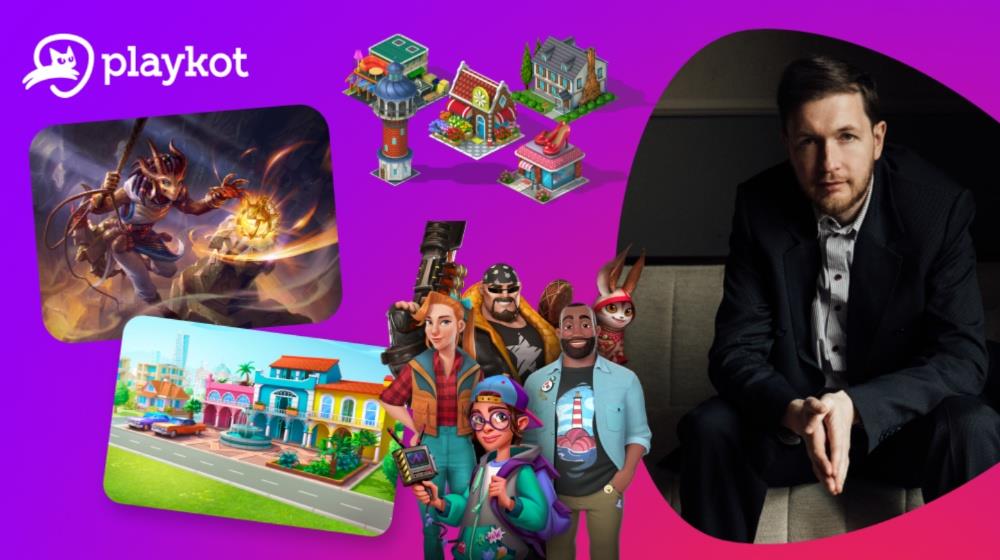
“The defining change of the last decade has been the shift to long-term service models. Success now depends less on how a game launches and more on whether you can run, improve and grow it for years after. Looking ahead, AI will be one of the forces reshaping the industry – making teams more productive, lowering the cost of creation and enabling player experiences we can’t build today,”suggests Playkot’s Co-Founder, Alexander Pavlov.
Playkot, established in Cyprus in 2017, operates across 25 countries with a global workforce of more than 130 employees, including 11 based in Cyprus. The company is known for successful titles such as SuperCity, Age of Magic, and Spring Valley.
Among its notable achievements, Playkot was ranked in the Deloitte Technology Fast 50 EMEA in 2023. Its game Age of Magic reached the Top 50 grossing games in China, while both SuperCity Mobile and Age of Magic received Editor’s Choice recognition on the App Store and Google Play. SuperCity was also named Facebook’s Best New Game in 2014 and became one of the platform’s top-performing titles. In addition, Playkot has been recognised at the WN Talents in Games Awards, earning distinctions such as Best Employer and Best Support.
In an interview with GOLD magazine, Alexander Pavlov expands on the defining shift to long-term service models and the impact of AI in game development.
How would you describe your company’s core business model and game development strategy?
Playkot builds and runs live-service games meant to grow over many years. Our portfolio includes SuperCity, a city-building game we’ve operated for 15 years, and Age of Magic, a fantasy RPG built on hero collection, strategic combat and progression.
We’ve always cared more about lasting products than quick hits. That means heavy investment in LiveOps, a steady stream of content, serious analytics and constant dialogue with players. You don’t launch a live game and walk away – you keep improving it, year after year. Our games reach different audiences but run on the same idea: something worth coming back to, progress that means something and a community that makes players stay.
What are the key factors currently influencing your company’s operations and strategic decision-making?
AI is the biggest technological shift hitting the industry now. We’re already using it to speed up content production and operations, sharpen analytics and get more done across development. At the same time, players expect more. Games no longer compete only with other games – they compete with everything else on a person’s screen. That raises the bar on quality, personalisation and how fast you can ship. And the market is harder. User acquisition costs more, discoverability is hard and development keeps getting more expensive. Most of our strategic decisions trace back to those pressures.
What do you consider to be the most significant recent industry trends and growth drivers? Which of these do you expect to shape the sector over the coming years?
The defining change of the last decade has been the shift to long-term service models. Success now depends less on how a game launches and more on whether you can run, improve and grow it for years after. Looking ahead, AI will be one of the forces reshaping the industry – making teams more productive, lowering the cost of creation and enabling player experiences we can’t build today. Games, creator communities and platforms are growing into each other – more social, more persistent, more community-driven. The winners will pair strong technology with a real understanding of how people spend their attention.
This interview first appeared in the June edition of GOLD magazine. Click here to view it.
