






East Mediterranean hydrocarbon reserves in the Greece, Cyprus, Israel axis could help enhance Europe’s energy supply, stressed panellists during the first Eastern Mediterranean Energy, Geopolitical and Maritime Security Summit, which was held as part of the 30th Anniversary of the World Hellenic Inter-Parliamentary Association (PADEE–WHIA) on Friday, July 24, in Rhodes, Greece.
According to an organiser’s statement, PADEE–WHIA is the only global organisation bringing together legislators of Hellenic heritage serving in parliaments around the world, with the mission of strengthening cooperation among Hellenic legislators and promoting closer ties with Greece and Cyprus.
As noted, the event, held under the auspices of the Region of South Aegean, brought together legislators of Hellenic heritage, government officials, diplomats, academics, and policy experts to discuss key strategic developments in the Eastern Mediterranean.
The Summit was officially opened by Rhode Island State Senator Leonidas Raptakis from the United States and President of PADEE–WHIA, while welcome addresses were delivered by Nikos Pavlakidis, Deputy Mayor of Rhodes, Christos Michalakis, Deputy Regional Governor for Strategic Planning of the South Aegean Region, and Rear Admiral Georgios Christianos, Director General for Operations, Security and Law Enforcement of the Hellenic Coast Guard at the Ministry of Maritime Affairs and Insular Policy.
Among the Summit's three featured panels was one on Maritime Security, moderated by Admiral (Ret.) Ioannis Egolfopoulos, with presentations by Rhode Island State Senator Leonidas Raptakis, Michael McCormack, Member of the Federal Parliament of Australia, Aris Babikian, Member of Provincial Parliament in Ontario, Canada, and Professor Miltiadis Sarigiannidis of the Aristotle University of Thessaloniki.
The second panel focused on energy issues and was moderated by Costis Stambolis, Chairman and Executive Director of the Institute of Energy for Southeast Europe (IENE). The panel featured Dimitrios Kardomateas, President and General Manager of the Centre for Renewable Energy Sources & Saving (CRES), Steve Malagari, Pennsylvania State Representative, USA, Basil Zempilas, Leader of the Western Australian Liberal Party, and George Kremlis, an internationally recognised expert on energy, climate, and environmental policy.
Speaking at the Energy Security segment was Chairman of the Institute of Energy for Southeastern Europe (IENE) Costis Stambolis, who stressed the crucial role of Greece and Cyprus in strengthening European energy security.
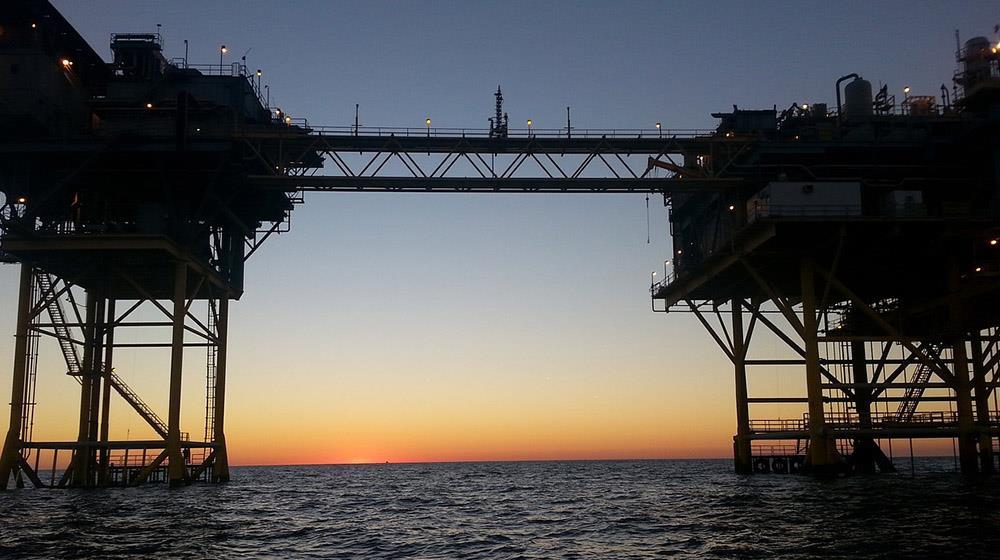
“In view of mounting energy supply concerns because of geopolitical instability, East Mediterranean hydrocarbon reserves in the Greece, Cyprus, Israel axis could help enhance Europe’s energy supply. However, in order to be able to exploit the region’s considerable oil and gas reserves, cooperation needs to improve between all East Mediterranean countries, which must agree on their Economic Exclusion Zones (EEZ) as foreseen by International Law of the Sea (UNCLOS) provisions”, he noted.
It is added that the third panel targeted Geopolitical concerns, moderated by Professor John Nomicos, Director of the Research Institute for European and American Studies (RIEAS). It brought together Marietta Karamanli (Member of Parliament, France), Savet Constantine (Connecticut State Representative, USA), Stacey Travers (Arizona State Representative, USA), Steve Georganas (Member of the Federal Parliament of Australia), Noam Katz, Ambassador of Israel to Greece, and Panagiotis (Peter) Mihalos, President of the Mihalos Foundation and former Secretary General for International Economic Affairs of the Hellenic Ministry of Foreign Affairs.
Each panel concluded with an interactive discussion, providing elected officials from PADEE-WHIA and participants with an opportunity to exchange perspectives on regional security, energy cooperation, and the geopolitical developments shaping the Eastern Mediterranean.
“Shaped by a complex hybrid threat environment in which traditional naval challenges intersect with cyber warfare, subsea infrastructure vulnerabilities, and geopolitical coercion, the Mediterranean remains a strategic hub for European energy security and global trade, while the boundaries between civilian and military activities continue to become less distinct. This evolving security landscape presents a range of interconnected challenges”, it was further noted.
The Summit’s closing remarks and final discussion reaffirmed the visiting legislators’ and parliamentarians’ commitment to strengthening international parliamentary dialogue and cooperation, the statement concludes.
