








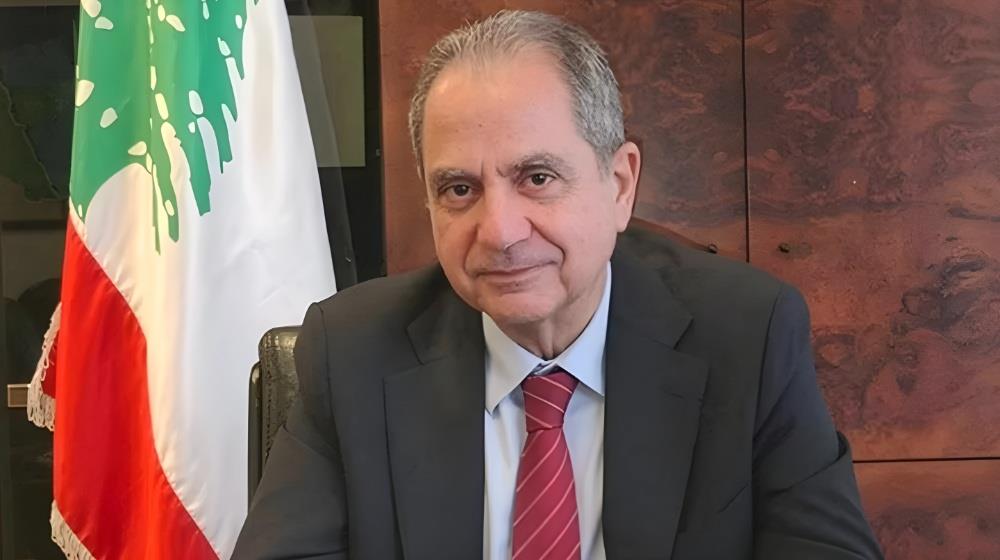
The Cyprus-Lebanon electricity interconnection could be a project of strategic importance for the entire Eastern Mediterranean, according to the Minister of Energy and Water of Lebanon, Joseph Al-Saddi, who points out that through Cyprus his country could in the future be connected to the European energy system.
In an interview with the newspaper 'Alithia', published on Sunday, 19 July, Al-Saddi states that the project's prospects take on greater importance if Cyprus completes its own electrical interconnection with the rest of Europe in the future.
“If Lebanon is connected to Cyprus, and since Cyprus may eventually be connected to the rest of Europe, this will be extremely beneficial for the country,” he says, noting that the project could go beyond meeting Lebanon’s immediate energy needs and take on a broader strategic dimension.
The Lebanese Minister explains that the Governments of Cyprus and Lebanon have jointly requested that the World Bank undertake the preparation of a preliminary feasibility study, which will assess whether the interconnection is technically and economically viable.
He said the study will be funded by the World Bank and will be carried out in two stages. The first will involve a high-level economic analysis and is estimated to last approximately six months. This will examine, among other things, the balance of electricity supply and demand, as well as the key economic parameters of the project.
Based on the results of the first phase, it will be decided whether the project will proceed. In case of a positive evaluation, a more detailed technical and economic study will follow, which will examine in greater depth the conditions for implementing the interconnection.
Al-Saddi notes that the immediate benefit for Lebanon will be the enhancement of electrification, as the country still faces serious shortages in electricity generation.
“The obvious benefit is that we will be able to provide more electricity to the Lebanese population,” he says. He adds that such a connection could also act as a “bridge to the European energy system through Cyprus,” strengthening energy cooperation in the Eastern Mediterranean more broadly.
He indicates, however, that key challenges include proving the project's financial viability and securing the necessary resources. He says that funding could come either from the private sector or from international organisations and funding bodies, including the European Commission.
Regarding the timetable, the Lebanese Minister avoids making any predictions before the completion of the first phase of the study, noting that a clearer picture will be available in about six months.
Cyprus and Lebanon have agreed on the Terms of Reference for the study and the creation of a joint technical and steering committee, which will work closely with the World Bank throughout its duration and coordinate the process between the two countries.
Also read: Cyprus and Lebanon are proceeding with a preliminary study for an electrical interconnection
(Source: InBusinessNews)
