



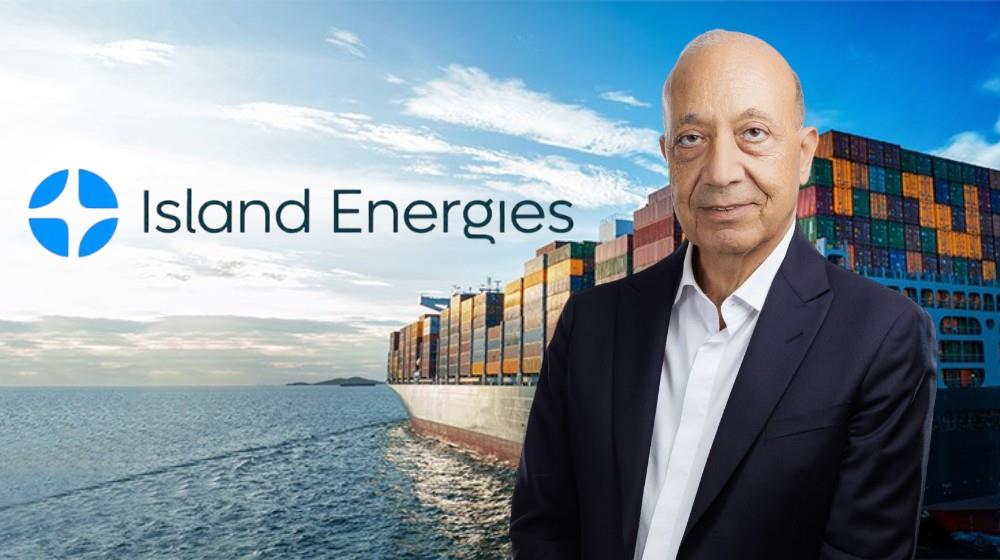
“Cyprus remains an important international maritime centre, supported by its strategic location, established shipping community, professional expertise and strong links with global markets. To maintain and strengthen this position, we must continue investing in people, infrastructure, technology and a regulatory environment that allows responsible businesses to remain competitive,” Chrysostomos Papavassiliou, Founder, CEO & Chair of the Board at Island Energies, suggests.
In an interview with CBN, Papavassiliou discusses the company’s new business identity, plans and recent geopolitical developments.
Island Energies was recently announced as the new corporate identity of Island Oil (Holdings) Limited. Can you reveal more about what was behind the decision?
The decision reflects the natural evolution of our Group. Over more than three decades, Island Oil developed from a primarily marine fuels supplier into a diversified organisation with an expanding international presence and a wider range of energy and maritime services, including ship owning and management of our owned vessels. We therefore felt that the time had come for a corporate identity that better represents who we are today and where we are heading.
Island Energies brings our core activities together under one clear and unified identity, while preserving the fundamental values on which our business was built and on which we operate.
We act as a principal party, building long-term, value-adding business relationships, based on trust and mutuality; always striving to meet and exceed our customers' and business partners’ expectations.
Your company has a decades-long legacy. How will this be incorporated as it moves into new directions in the years ahead?
Our legacy is the foundation on which we are committed to build upon. The essential relationships we have established, the operational knowledge we have gained and the standards we have maintained over the years will continue to guide our development. Since 1992, the Group has expanded into new markets, services, and activities; yet, the principles behind that progress have remained the same: integrity, reliability, transparency and solid partnerships. Island Energies carries these principles forward, while continuing to invest in our people, business assets and infrastructure.
Can you reveal more about what your existing and potential new clients can expect?
Both our existing and potential new clients can expect the same trusted relationship: dependability, quality and competitiveness, coupled with a friendly service and personal attention. Through our international network, operational expertise and market knowledge, we aim to provide responsive and practical solutions across the maritime energy value chain.
More widely, as a sector veteran, what is your view of the maritime sector today, both in connection to Cyprus and on a global level? How do you believe the sector will overcome the challenges of the current geopolitical conditions, including but not limited to the events surrounding the Strait of Hormuz?
The maritime sector has always operated in a complex and changing environment, but the level of uncertainty today is particularly significant. Geopolitical tensions, disruption to major trade routes, changing regulations, the energy transition and increasing operating costs are all influencing the way shipping companies plan and conduct their activities.
Cyprus remains an important international maritime centre, supported by its strategic location, established shipping community, professional expertise and strong links with global markets. To maintain and strengthen this position, we must continue investing in people, infrastructure, technology and a regulatory environment that allows responsible businesses to remain competitive.
Events surrounding the Strait of Hormuz demonstrate how quickly geopolitical developments can affect the safety of crews, the movement of vessels, energy supply, freight markets and insurance costs. There is no single solution to such challenges. The sector must respond through close cooperation between governments, international organisations and the shipping industry, supported by reliable information, careful risk assessment and appropriate contingency planning.
Above all, the safety of seafarers and vessels must remain the first priority. Commercial decisions must be based on current conditions and responsible judgement, with companies remaining flexible enough to adjust routes, supply arrangements and operations when circumstances require it.
Shipping has repeatedly demonstrated its resilience and ability to adapt. I believe that, through cooperation, preparedness and continued investment, the sector will overcome the present challenges and continue to play its essential role in global trade and energy security.