





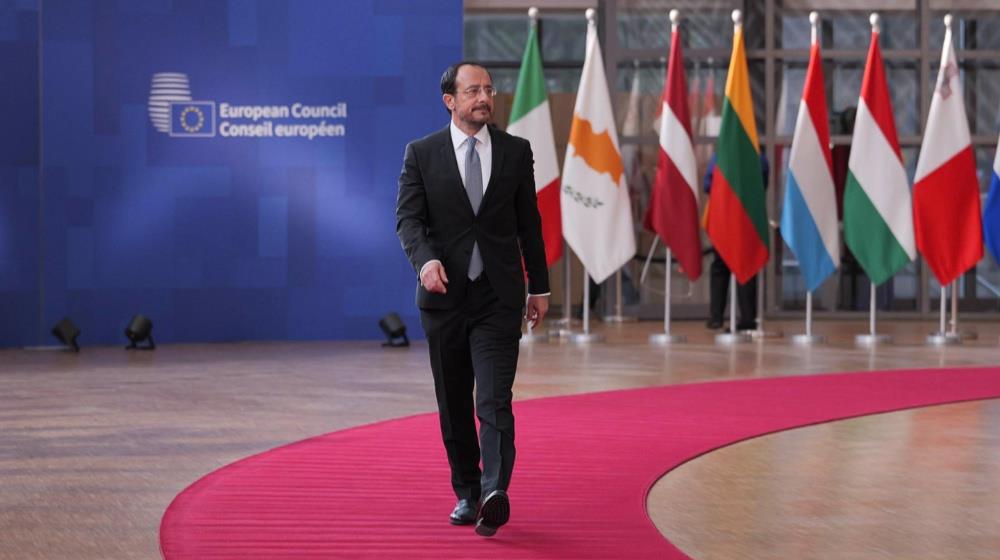
The EU should consider approving a three- or four-year budget, instead of trying to plan the bloc’s financial needs for seven years, Cyprus President Nikos Christodoulides told Politico in an interview on the sidelines of the first day of the EU leaders’ summit in Brussels. “We are discussing the 2034 budget, and now we are in 2026,” the President said, suggesting that a three- or four-year scheme could be more easily accepted by some member states. “Why not open the political discussion?” he wondered.
“We don’t know what the situation will be in 2030, in 2031,” he noted, pointing to successive crises. “Look what happened with COVID, with the war in Ukraine; it is not possible to declare all your priorities today,” he added.
The EU’s seven-year budget, worth around €2 trillion, must be approved unanimously by the 27 member states, with two entrenched camps facing off: the so-called “frugal” countries, including Germany, the Netherlands and Sweden, which want a smaller budget, and the “Friends of Cohesion,” an informal group of 17 states opposed to major cuts to traditional policies, agriculture and regional funds. EU law allows a budget of “at least five years,” although all multiannual frameworks have run for seven years since 1993.
Christodoulides also estimated that the budget will be cut by around one tenth compared with the European Commission’s proposal. “I think we may end up at 10% or 11%. Double digits,” he said. Last week, the Irish Presidency proposed an 8% cut compared with the Commission’s proposal.
As regards the timeline, the President of the Republic noted on Thursday that the chances of reaching a political agreement by the end of the year are dwindling. “Everybody understood that a political agreement must be completed by the end of the year. Now, with the situation in Spain, with the elections there,” it is less likely to happen, he said.
An EU official familiar with the negotiations described the idea of a shorter time horizon as “weird,” according to Politico.