






Cyprus is awaiting clarifications from Greece’s Independent Power Transmission Operator (IPTO/ADMIE) regarding the acquisition of a 66% stake in the Great Sea Interconnector (GSI) company by French investment firm Meridiam, while the project’s expected completion has been postponed by one year to 1 January, 2031, the Cyprus Energy Regulatory Authority (CERA) has said.
CERA Chairman Polys Lemonaris on 20 October told the House Energy Committee that the authority sent IPTO a letter with questions on 26 August, 2026, but has yet to receive a response. He said the licences for ownership and management of the Crete-Cyprus electricity interconnector remain in IPTO’s name, with IPTO also continuing as the project’s implementing body.
Meridiam has acquired 66% of the shares in the inactive GSI company, Lemonaris said, adding that the acquisition price was not known.
CERA is examining the contractual terms and the implications of the ownership structure. Lemonaris noted that Cyprus would have less control if the cable were managed by a company with foreign interests, while provisions exist in the regulatory process for restrictions where national security concerns are identified.
The regulator has also begun examining the application for the Cyprus-Israel section of the wider electricity interconnection project. Lemonaris said the application’s completeness is being assessed, with a joint evaluation to follow in cooperation with Israel’s regulatory authority.
280 kilometres of cable installed
Regarding construction progress on the Crete-Cyprus section, approximately 280 kilometres of submarine cable have been laid out of a total route of around 900 kilometres. A further 232 kilometres of cable have been manufactured but have not yet been laid.
Around 40% of the required marine surveys remain outstanding and are expected to take approximately six months to complete, according to Lemonaris. The cost of these surveys is included in CERA’s provisional approval of €571 million in capital expenditure for the 2024-2025 regulatory period.
The final cost of the project remains uncertain. However, Lemonaris said experience from electricity interconnection projects in other countries suggests that the currently estimated cost of €1.9 billion may be insufficient.
Completion of the marine surveys is considered particularly important because their findings could require changes to the cable route, potentially affecting the overall cost.
Funding and cost-sharing arrangements
Based on the current estimated cost of €1.9 billion and after deducting the €657 million European Union grant, Greece’s 37% share amounts to €440 million, while Cyprus’s share, based on a 63% allocation, amounts to €749 million.
The EU grant is the largest ever awarded by the bloc for an electricity interconnection project, Lemonaris said. However, any increase in EU funding in the event of cost overruns cannot be taken for granted and would require a formal request, with efforts to secure additional support expected to be pursued at ministerial level.
The participating parties share operating expenses equally. These are estimated at €2 million annually until the project is completed and €15.5 million per year once it becomes operational.
Under the agreed incentives for the Crete-Cyprus section, annual payments of €25 million were provided for the period 2025-2029, subject to a maximum total of €125 million.
For 2025, IPTO submitted a request for €302 million in expenses. CERA approved €82 million, which Lemonaris said were supported by the documentation provided. The authority will consider payment of the remaining amount if the expenses are adequately substantiated.
The regulatory framework also provides for the assessment of damages and compensation if the project is terminated due to the implementing body's fault. If termination results from geopolitical risk, reasonable expenses are to be shared under the applicable arrangements.
Lemonaris said any request to revise the agreed cost-sharing ratio would require substantial justification that the increase was not attributable to IPTO. He clarified that Cyprus would not face additional costs simply because difficult seabed conditions were encountered.
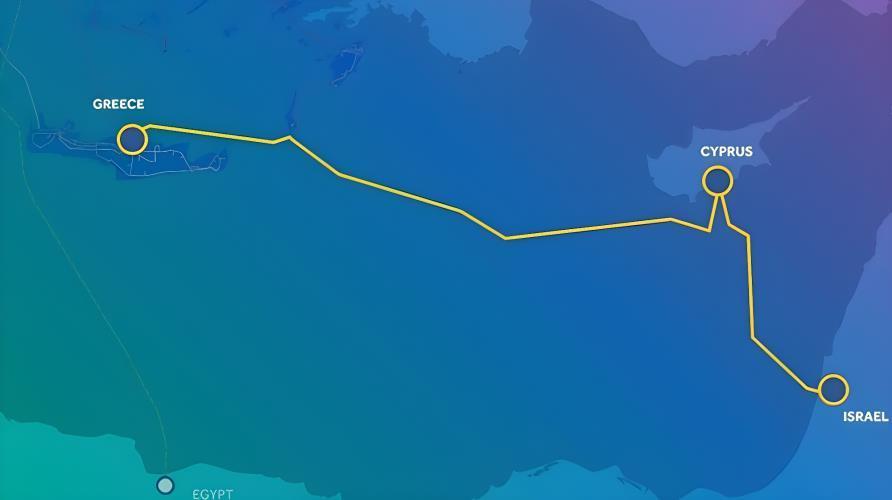
The project, intended to connect the electricity systems of Greece, Cyprus and Israel, is expected to strengthen regional energy links.
(Source: CNA)