







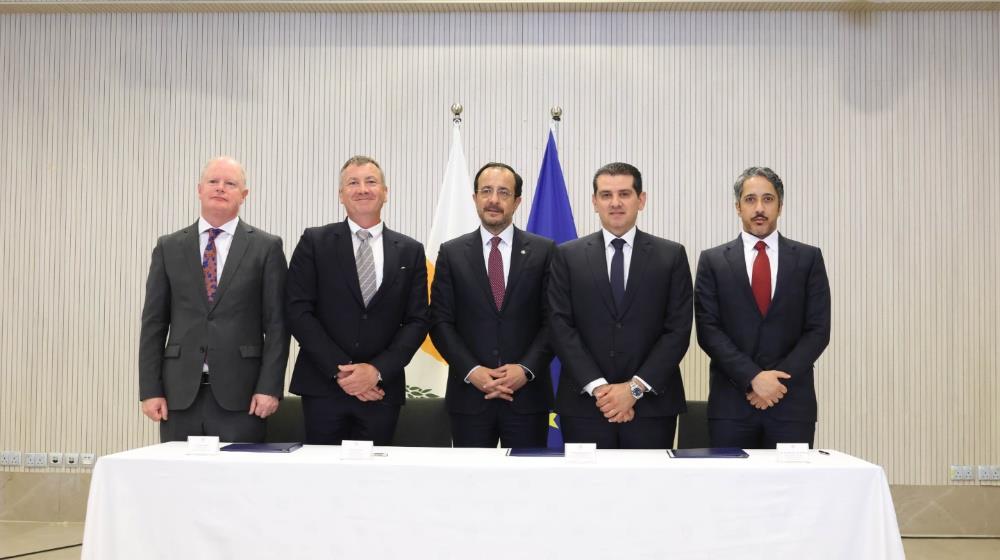
The Republic of Cyprus, ExxonMobil and QatarEnergy signed on Tuesday a declaration of commercial discovery for Glaucus and Pegasus gas discoveries and a continued collaboration statement, with President Nikos Christodoulides speaking of "a milestone of strategic importance" and Energy Minister Michael Damianos pointing out that it further strengthens Cyprus’ position on the regional energy map and offers new impetus to the Eastern Mediterranean’s growing role as an emerging energy hub.
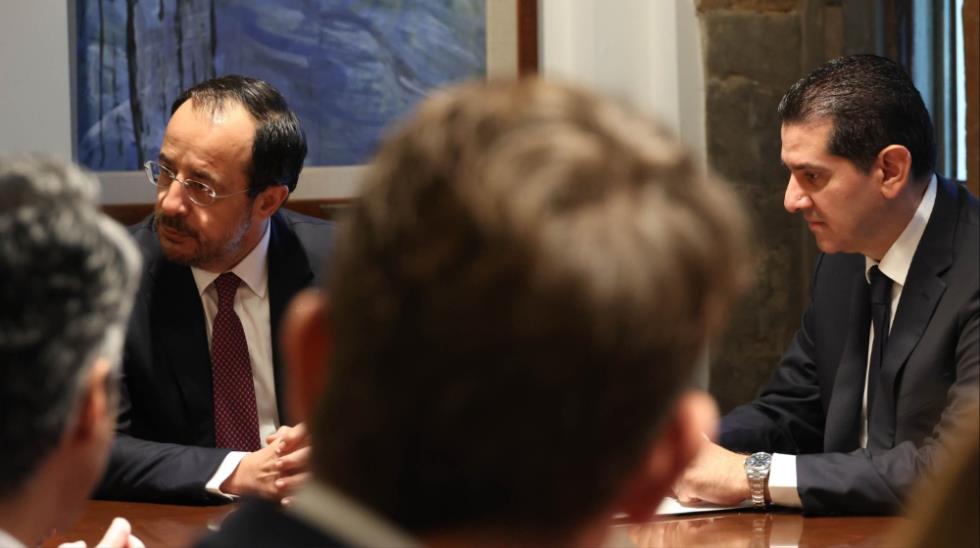
Earlier President Christodoulides had received ExxonMobil and QatarEnergy executives at the Presidential Palace.
Addressing the signing ceremony which followed Damianos said that Exxon's interest in Blocks 4 and 10A is another strong vote of confidence in Cyprus’ energy programme and the country’s credibility as a reliable energy partner.
ExxonMobil’s Vice President for Exploration and New Ventures, John Ardill, said that the company anticipates the final investment decision for Glaucus and Pegasus to occur in 2029 and the production startup in 2033.
In regard to the broader exploration in Block 4 and 10A, he said that the first thing will be to reprocess some existing seismic data to improve the image and then that will help inform the prospect inventory and potential path to drilling, “but we have more work to do before we will be ready to drill on those blocks”.
In his speech, Damianos said that the signing of this declaration is an important milestone for offshore exploration in Cyprus’ Exclusive Economic Zone, reaffirming both its significant potential and shared commitment to the responsible development of the natural gas resources in Block 10.
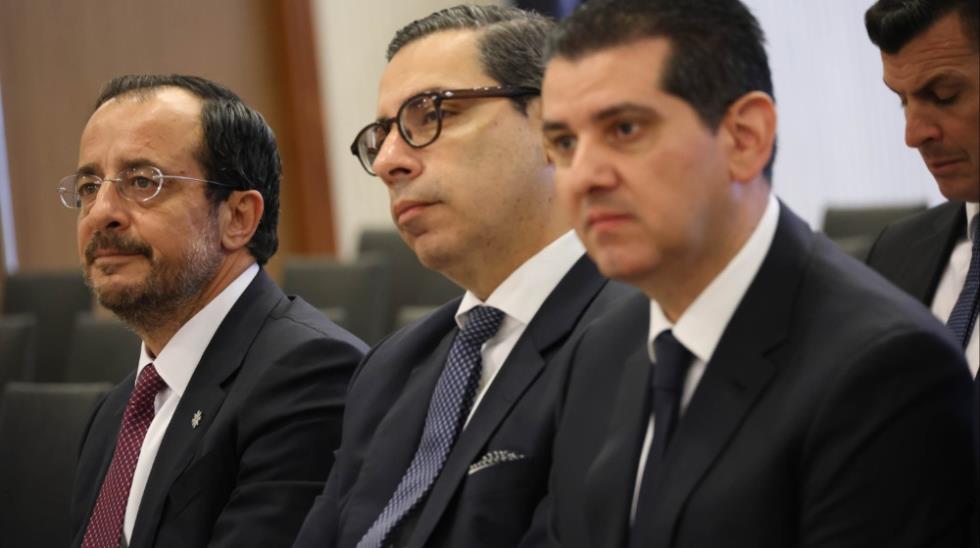
Welcoming, ExxonMobil’s Vice President for Exploration and New Ventures, John Ardill, the Head of ExxonMobil Global LNG, Peter Clarke, and QatarEnergy’s Manager for International Upstream and Exploration, Ali Abdulla Al-Mana, the Minister thanked them for the productive meeting and constructive exchange of views they had earlier with the President of the Republic, and expressed deep appreciation for the strong partnership that has been built over the years.
“The Glaucus and Pegasus discoveries represent two of the most significant achievements of Cyprus’ offshore exploration programme. Today’s declaration of commercial discovery marks the transition to the next phase of their development, bringing us closer to unlocking these valuable resources. At the same time, it further strengthens Cyprus’ position on the regional energy map and offers new impetus to the Eastern Mediterranean’s growing role as an emerging energy hub”, continued the Minister.
He added the government is equally encouraged by the consortium’s interest in pursuing additional exploration opportunities within the country’s EEZ. “The interest expressed in Blocks 4 and 10A is another strong vote of confidence in Cyprus’ energy programme, our country’s credibility as a reliable energy partner, and the prospects for expanding our successful cooperation”, he stressed.
“Looking ahead, we remain committed to working closely together in the same spirit of trust, transparency and effectiveness that has brought us to this point. I am confident that our partnership will continue to deliver results that benefit not only the Republic of Cyprus and our licensees, but also the broader region”, he concluded.
For his part Ardill said that this is a very important day today for Cyprus and Exxon’s investment in energy.
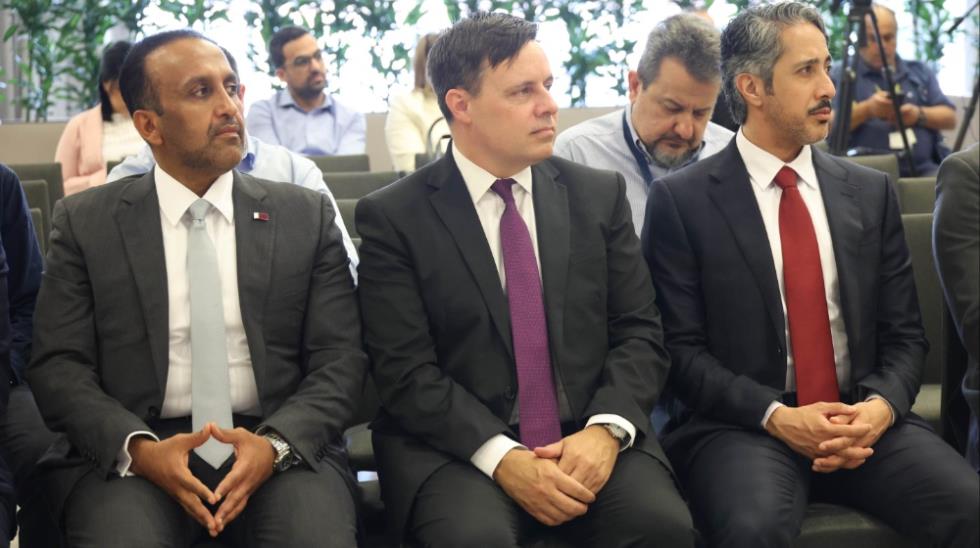
“This has been the culmination of eight years of work since we were awarded the blocks in 2017, discovery in 2019, second discovery last year, so with that under our belt, it is now the second point. It is very important to recognise that exploration success and this declaration of commerciality milestone. That really takes us from looking for energy to developing energy, which is a fundamentally different step, and we have the full team here that's going to help implement that”, he continued.
He added that the concept of a European energy hub is realised when the molecules start flowing, “and that's what we are here to initiate today, so a very historic point”.
On next steps, Exxon’s Vice President said that the company has been successful in block 10 and it wants to expand that.
“We are present in Cyprus, Egypt and Greece, drilling in all three, so looking ahead in the near term, we will be drilling again in Cyprus at the end of this year on the Pegasus appraisal programme. As the minister mentioned, we will expand the exploration acreage footprint to include block 4 and block 10A and continue to look for additional resources”, he explained.
“Being able to work together to put infrastructure in the ground for block 10 enables additional molecules to be developed and that is really the start of unlocking Cyprus's gas development and getting those molecules flowing for Cyprus. This is a hugely important day for all of us, very hard work to get here. Delighted to be here today and this important point, moment in time for ExxonMobil. We are extremely proud of this milestone along with our very strong partnership with Qatar Energy. We are delighted to be here and to share in this important day”, he concluded.
Asked after the signing ceremony about the different scenarios Exxon is exploring, Ardill said that it is great to discover gas, adding it takes longer to develop than most people think.
“We discovered Glaucus in 2019, Pegasus last year and we have been doing appraisal drilling to understand the subsurface and that is enabling us now with sufficient confidence to go towards a declaration of commerciality. A very important milestone, working very closely with the government, with the support of the Minister and the President and to move through this important milestone”, he continued.
“That takes us then on a journey, some additional drilling at the end of this year to get that last piece of information. Then we will go into what is called front-end engineering and design feed, where we design the facility, and then the next step is final investment decision, we anticipate that will occur in 2029, and that is on a critical path to do the subsurface modelling, the engineering work and then make the investment decision and build the facility and we anticipate production startup in 2033”, he further noted, adding that when laying out these schedules, there is always an effort to do better than that, “so we have committed to 2033 but we hope we can move faster”.
Asked if an onshore facility is being contemplated or will gas be channelled to Egypt, Exxon’s Vice President said that right now they have the subsurface fields.
“What we do is a concept challenge, we look at all the different ways we could develop these molecules and the different concepts are a facility in Cyprus with a pipeline tie back to Egypt. and there is existing liquefied natural gas facilities, there are LNG facilities that we can utilise. An alternative concept is floating LNG where we do everything on a floating vessel, typically more challenging from a cost standpoint”, he explained.
“Then if you have a very large resource, you can build onshore LNG trains like there are in Qatar today but that is a bigger resource than we have found to date here. So the leading concept is probably a pipeline tie back to Egypt given the infrastructure and everything you have seen between the government of Cyprus and the government of Egypt gives us a lot of confidence that there is good government-to-government coordination, the agreements in place to leverage that eastern Mediterranean energy hub concept”, he added.
Asked when drilling will start in Block 4 or 10A, Exxon’s senior executive said that they have a rig under contract now. “We anticipate rig delivery around the end of the year, maybe December and that is subject to the rig being freed up from existing work. The first drilling will occur on Block 10 where we have wells that we are designing right now and permitting and that's key to gather that additional information on Pegasus which is a critical path to do the subsurface modelling. So that's the first thing we'll do”, he then said.
In regard to the broader exploration in Block 4 and 10A, he said that the first thing will be to reprocess some existing seismic data to improve the image and then that will help inform the prospect inventory and potential path to drilling, “but we have more work to do before we will be ready to drill on those blocks”.
“We have been working very diligently together between government and investor to make these discoveries and we are working very diligently to get the gas flowing for the people of Cyprus. This is both a revenue stream and energy security and that is extremely important”, he stressed, reiterating that 2033 will be when gas molecules should be flowing and that energy security will be realised.
In his statements, Damianos said that the final investment decision (FID) for the Kronos field is moving forward, as are the Aphrodite field and Exxon’s blocks.
“The next stage will be another licensing round, possibly within the next one to two years, during which decisions will be made once we have completed the projects we have initiated during this period,” he added.
Talks with Israel at "very advanced stage"
Asked if there were any recent developments regarding the “Aphrodite” field, the Minister said that the project is proceeding according to schedule. “We’re moving forward with the FID around December–January, and the final investment decision will be made within six to twelve months, by 2027,” he noted.
Asked whether negotiations with Israel would resume now that the dispute over the Ishai field is coming to an end, Damianos said that the negotiations are at a very advanced stage.
“We had a productive meeting yesterday at the Ministry here in Nicosia, where important commercial terms were agreed upon; some legal issues remain, so we are moving forward by resolving several of the outstanding issues, and we hope to finalize the deal in the near future,” he concluded.
Cyprus enters new phase in natural as resources development, President says
Receiving the ExxonMobil and Qatar Energy delegation earlier today at the Presidential Palace, the President of the Republic, Nikos Christodoulides, said that “we are excited about today’s announcements, they are clear proof and a vote of confidence in the prospects of Cyprus’s EEZ, as well as in the prospects of the Eastern Mediterranean developing into a potential energy corridor for Europe. We look forward to even more positive announcements in the near future”.
He added they would be specifically discussing additional blocks, and expressed the hope they would be soon be in a position to make announcements.
“For us, the fact that ExxonMobil and Qatar Petroleum are operating in our EEZ is one of the most significant developments, and I must publicly commend your work, your professionalism, and your leadership in the energy sector; we are very happy and excited to be working with you”, he noted
For his part, ExxonMobil Vice President noted that it had been a long journey for the company since 2017, pointing out that results are never a given, yet here they have discovered two deposits, which is wonderful for Cyprus, as he said, noting that the next challenge is to develop the fields. “The project was very successful for everyone involved”, he added.
In a post on X following the signing ceremony, President Christodoulides, said that Cyprus country is entering a new phase in the development of its natural gas resources within the Exclusive Economic Zone of the Republic of Cyprus.
“Today’s signing of the ‘Declaration of Commerciality’ for the Glaucus and Pegasus discoveries marks a milestone of strategic importance for the Republic of Cyprus and a decisive step forward in the implementation of our national energy strategy. It also represents a major step towards establishing the Eastern Mediterranean as a credible alternative energy corridor for Europe”, he continues.
He added the signing further confirms the significant potential of Cyprus’ Exclusive Economic Zone, marks the transition to the next stage of development of the discoveries in Block 10, and highlights the opportunities that lie ahead for the Cypriot economy, energy security, investment, and the further strengthening of our country's geostrategic role.
He further noted that the advanced discussions with the ExxonMobil–QatarEnergy consortium regarding Blocks 4 and 10A are progressing towards their successful completion, building on the significant progress already achieved and opening up new opportunities for the Republic of Cyprus.
“Through trusted partnerships with leading international energy companies such as ExxonMobil and QatarEnergy, our country continues to strengthen its position as a reliable energy partner, a pillar of stability and cooperation, and a bridge between the Eastern Mediterranean and Europe, contributing to regional energy security, the diversification of energy supply, and the European Union’s broader strategic objectives”, he concluded.
