





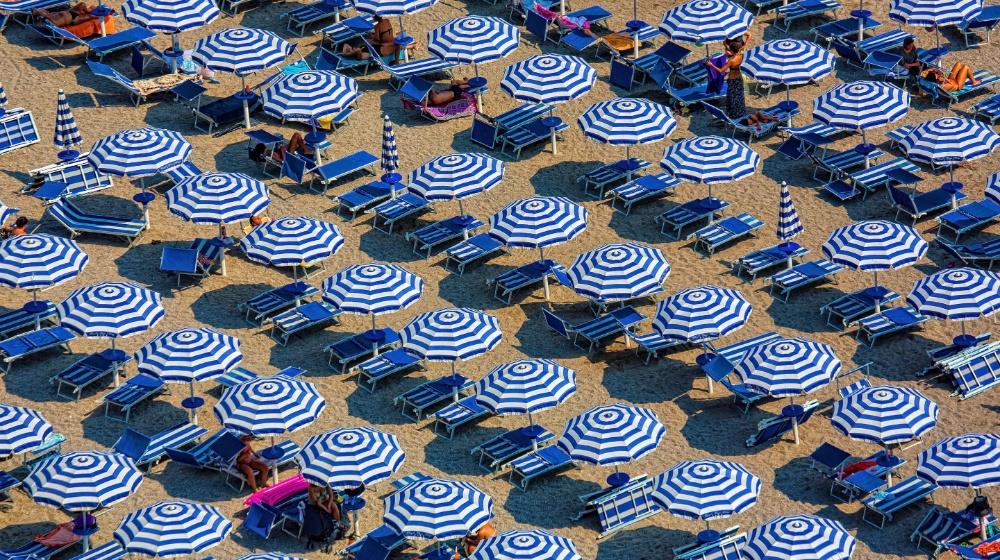
Last-minute bookings have helped strengthen hotel occupancy in Limassol, Paphos and Famagusta this August, bringing performance close to or in line with last year's levels in some districts, while Larnaca continues to record lower occupancy despite signs of improvement, local hotel association representatives have revealed.
Last-minute bookings have helped strengthen hotel occupancy in Limassol and Paphos this August, bringing performance close to or in line with last year's levels, while Larnaca continues to record lower occupancy despite signs of improvement, local hotel association representatives told CNA.
President of the Limassol Hoteliers Association (PASYXE), Christos Tsanos, said that expectations expressed earlier in the summer for a recovery in bookings appear to have been confirmed.
"The defining feature of this year's season has been last-minute bookings, and developments have confirmed what we said at the end of June," he told CNA, noting that August bookings are moving at the same level as in August 2025.
Hotel occupancy in Limassol and the surrounding district is currently around 90%, he said, adding that demand received a further boost during the week of 10-17 August, largely due to bookings from the domestic market.
In late June, Tsanos had expressed optimism that the tourism market would recover following the revision of travel advisories issued by several countries after the conflict in Iran. At the time, he had said the summer months were expected to perform better than initially anticipated, while cautioning that "three good months cannot save an entire year".
In Paphos, tourism activity is also expected to remain strong throughout August, with hotel occupancy forecast at between 85% and 90%, according to Paphos Hoteliers Association President, Euripides Loizides.
He said the 15 August holiday period is expected to be particularly busy, with increased visitor arrivals and strong demand for accommodation. The high occupancy rates confirm that August remains one of the most important months of the tourism season for the district, despite the pressures facing the wider market.
Loizides said he remained cautiously optimistic about the remainder of the month, noting that a significant share of bookings continues to be made at the last minute. He attributed this trend largely to the financial pressures facing consumers, who are delaying decisions on their holidays while searching for the best available prices.
Meanwhile, things have improved in Famagusta district. According to Famagusta Hoteliers Association President and PASYXE Vice-President, Panayiotis Constantinou, the tourism season in the Famagusta district has improved significantly after a difficult start to the year, with hotel occupancy expected to reach around 80%-85% in August.
He told CNA that tourism traffic strengthened considerably in July and August, supported mainly by visitors from the United Kingdom, Israel, Poland, Scandinavia and Central Europe, while arrivals from Switzerland and the Netherlands have declined, partly due to reduced summer flight capacity.
Prospects for September are also positive, helped by an increase in last-minute bookings, although Constantinou cautioned that “there is still ground that needs to be covered”. He added that if the trend continues, September could also record relatively strong occupancy levels, while it remains too early to make a reliable forecast for October.
Constantinou said some of the district’s larger hotels are considering extending their operations into November in an effort to offset losses incurred during the weaker opening months of the season. Revenue in July and August is estimated to be broadly in line with 2025 levels, and could be higher in August due to increased prices, but the sector continues to face rising operating costs.
The picture is less encouraging in Larnaca, where hotel occupancy in both July and August has fallen by around 15% compared with the corresponding period last year, according to Larnaca Hoteliers Association President, Marios Polyviou.
He said the district had been significantly affected by the conflict in the Middle East and the broader geopolitical situation, which created uncertainty in the tourism market. While the situation stabilised after the initial impact, July ended with occupancy about 15% lower than in 2025, while August began "on a subdued note," with occupancy standing at around 75%, compared with approximately 90% during the same period last year.
Polyviou said, however, that last-minute bookings are gradually improving the outlook and expressed hope that the month would finish on a much stronger note.
He also described recent agreements signed between hotels in Larnaca and British tour operators TUI UK and Jet2 as particularly important, saying they are expected to provide a significant boost to the district's tourism sector in the coming seasons.
(Source: CNA)