








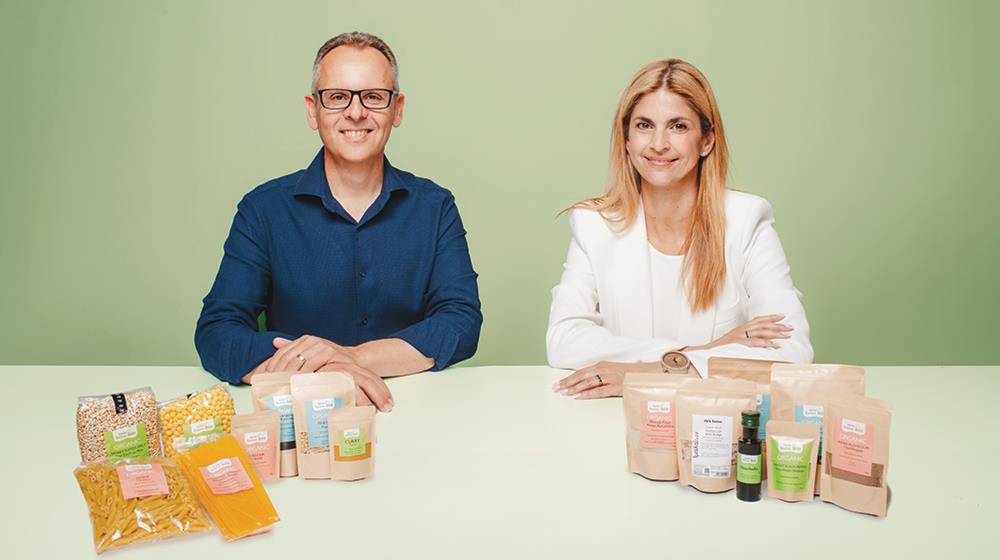
Nestled in the natural surroundings of the Machairas forest, Agia Skepi Therapeutic Community has developed a unique approach to rehabilitation—one that combines therapy with organic farming, meaningful employment and social entrepreneurship. Through its Agia Skepi Bio product range, the community demonstrates how agriculture can become a powerful tool for recovery while contributing to sustainable rural development.
Its experience also highlights how the European Union's Common Agricultural Policy (CAP) can support initiatives that combine organic production with social inclusion, creating opportunities for both people and rural communities.
As part of the Eat Wisely Cyprus project, co-funded by the European Union under the IMCAP programme and implemented by IMH, Eat Wisely spoke with representatives of Agia Skepi about the community's work, the development of Agia Skepi Bio, and the role of agriculture in supporting long-term recovery.
Recovery through community
Established in 1999 as an initiative of Machairas Monastery, Agia Skepi is Cyprus' first and only residential therapeutic community for people with long-term substance dependence.
Its programme extends well beyond addiction treatment, offering a structured pathway towards independent living. Residents spend around 12 months in the therapeutic community at Filani, followed by a period in a social reintegration hostel in Nicosia and continued support after completing the programme.
As Tina Pavlou, Clinical Director, explains:
"Agia Skepi is the first and only therapeutic community in Cyprus providing residential support to people with chronic substance dependence."
Over the past 25 years, the community has helped hundreds of people rebuild their lives by combining therapy with education, work and personal responsibility.
Why nature matters
The location of Agia Skepi is an important part of its philosophy.
Surrounded by the forests of Machairas, the peaceful environment provides ideal conditions both for recovery and for organic farming.
According to Giorgos Pastelas, the area's natural isolation also benefits agricultural production.
"The area acts as a natural shield against contamination."
Beyond its agricultural advantages, daily contact with nature plays an important therapeutic role. Working outdoors encourages routine, patience and responsibility while helping members reconnect with themselves and their surroundings.
Organic farming as part of the therapeutic journey
At Agia Skepi, agriculture is not simply vocational training, it is an integral part of the recovery process.
Members take part in the daily cultivation of organic crops, learning practical skills while developing discipline, teamwork and self-confidence.
For Tina Pavlou, choosing organic farming reflects the community's broader philosophy.
"Our choices must be clean at every level."
The community follows organic farming practices based on biodiversity, crop rotation and natural soil management. Compost produced on-site enriches the soil, while natural plant extracts are used whenever crop protection is required.
As Giorgos Pastelas, Excecutive Director, explains:
"When you have a strong, healthy plant, it can face challenges on its own."
This approach promotes healthy ecosystems while producing certified organic products that reflect the community's commitment to sustainability and quality.
From organic farming to social enterprise
The creation of the Agia Skepi Bio product range marked an important milestone in the community's development, transforming agricultural activity into a sustainable social enterprise.
Today, the community produces a variety of certified organic products, available through supermarkets and specialised organic food stores across Cyprus.
More importantly, production serves a purpose beyond commercial success. It provides members with practical work experience, vocational skills and the confidence needed to re-enter the labour market.
"Our organic products achieved their dual objective," explain the community's representatives, referring to both their economic contribution and their therapeutic value.
By linking production with rehabilitation, Agia Skepi has created a model where every product reflects a wider social mission.
Quality rooted in sustainability
Organic production at Agia Skepi is based on respect for nature rather than intensive farming methods.
Crop rotation, biodiversity and natural composting help maintain healthy soils, while carefully selected varieties are suited to the local climate and growing conditions.
When crop protection is required, the community uses natural plant extracts, including nettle and garlic, instead of synthetic chemicals.
Every stage of production, from cultivation to harvesting and packaging, is monitored under certified organic standards, ensuring consistency and quality.
For Agia Skepi, however, quality goes beyond certification.
"When there is respect for the land, the land gives back products of real value."
This philosophy has helped establish Agia Skepi Bio as a trusted brand while reinforcing the community's commitment to environmentally responsible farming.
Creating opportunities through work
Employment plays a central role in Agia Skepi's rehabilitation programme.
Through daily participation in farming and production, members develop practical skills alongside qualities such as responsibility, teamwork, discipline and consistency, attributes that are highly valued by employers.
The community also creates employment opportunities for programme graduates, allowing many to continue working within the organic production unit after completing their recovery.
"Employers keep asking for our graduates because they know they are reliable and committed."
This transition from therapy to meaningful employment is one of the programme's greatest achievements, helping participants rebuild independent and productive lives.
Growing with the support of the Common Agricultural Policy
The development of Agia Skepi Bio reflects how the European Union's Common Agricultural Policy (CAP) can support initiatives that combine sustainable agriculture with social inclusion.
European rural development measures have encouraged organic farming, product development and improved market access, helping strengthen the long-term sustainability of the initiative.
By supporting environmentally responsible production and value-added rural enterprises, CAP has enabled Agia Skepi to demonstrate that agriculture can generate both economic and social value.
Changing perceptions through social entrepreneurship
Beyond producing organic food, Agia Skepi has helped change public perceptions of addiction and recovery.
Every Agia Skepi Bio product represents more than sustainable farming, it reflects the opportunity for people to rebuild their lives through meaningful work and personal responsibility.
Rather than relying on donations, the community has created a model where consumers support its mission by purchasing high-quality products.
"People support us not through charity, but by choosing our products."
This approach reduces stigma, promotes social inclusion and demonstrates that recovery can lead to long-term personal and professional success.
Looking ahead
As demand for its services continues to grow, Agia Skepi is focused on expanding its impact.
Future priorities include strengthening prevention programmes, supporting younger people at risk of addiction and creating more opportunities for rehabilitation and employment.
The community also aims to further develop its organic production, ensuring that Agia Skepi Bio continues to generate both social and economic value while remaining true to its founding principles.
For its team, recovery is not simply about overcoming addiction, it is about creating the conditions for people to live independently, contribute to society and build a sustainable future.
Growing hope through agriculture
Agia Skepi demonstrates that agriculture can be far more than food production. When combined with education, employment and social entrepreneurship, it becomes a powerful tool for inclusion and personal transformation.
Through organic farming, meaningful work and community support, the organisation has created a model that restores confidence, develops skills and opens new opportunities for people seeking a fresh start.
Its experience also highlights the broader role of the Common Agricultural Policy in supporting rural initiatives that combine sustainability with social impact, proving that investment in agriculture can also be an investment in people.
By cultivating both the land and human potential, Agia Skepi shows how recovery, dignity and sustainable development can grow together.
About Eat Wisely Cyprus
This feature was produced as part of the Eat Wisely Cyprus project, co-funded by the European Union under the Information Measures Relating to the Common Agricultural Policy (IMCAP) programme and implemented by IMH.
The views and opinions expressed are those of the authors and do not necessarily reflect those of the European Union.
This interview first appeared in the July edition of InBusiness magazine. Click here to view it.
