





Following the publication of its Annual Report, Wizz Air today highlights the key messages from its Financial Year 2026 (FY26) Sustainability Report, demonstrating how a disciplined, efficiency-driven operating model continues to support both its environmental performance and long-term competitiveness.
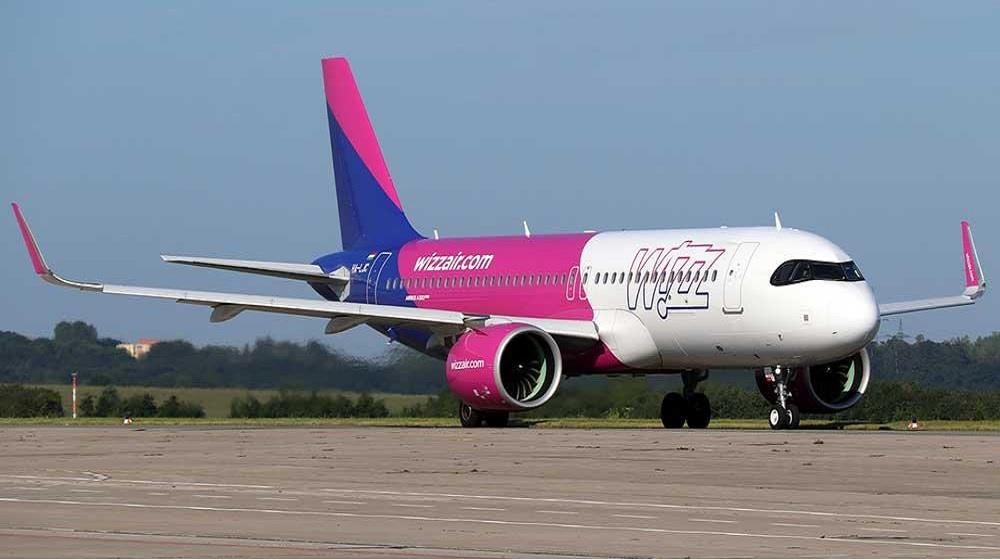
During the financial year, Wizz Air achieved its lowest-ever carbon emissions intensity[1], reaching 50.6 grams of CO₂ per revenue passenger kilometre (CO₂/RPK), a 3% improvement year-on-year. This performance is underpinned by the airline’s continued investment in one of the youngest and most fuel-efficient fleets in the industry, with an average aircraft age of 4.57 years as of 31 March 2026. The fleet expanded to 262 aircraft, 75% of which are new-generation Airbus A320neo family aircraft, supporting both lower emissions and a sustained structural cost advantage.
The Company also remains committed to its people and inclusive culture, with over 100 nationalities represented across its workforce. In FY26, Wizz Air expanded its team by 2,775 employees, supporting its continued growth across Europe and enabling the airline to deliver reliable, affordable travel at scale. In line with its decarbonisation efforts, Wizz Air used more than 27,000 tonnes of Sustainable Aviation Fuel[2](SAF) during the financial year, as mandated by the EU under ReFuelEU Aviation requirements. Looking ahead, the airline aims to further scale SAF usage and invest in innovative solutions that support long-term emissions reductions, while continuing to operate efficiently, recognising that the limited availability and higher cost of SAF continue to constrain the pace of aviation decarbonisation.
Wizz Air’s sustainability efforts have been widely recognised across the industry. During the financial year, the airline received several awards, including:
- Most Sustainable Low-Cost Airline 2025 – World Finance
- World’s 3rd Youngest Aircraft Fleet (100+ aircraft category) 2025 – ch-aviation
- Gold status, Europe’s most emissions‑efficient airline and second globally 2025– Cirium (EmeraldSky)
- Sustainable Airline of the Year 2025 – Airline Economics
Dorottya Durucsko, Head of Government Affairs and Sustainability at Wizz Air, said, “At Wizz Air, sustainability is driven by efficiency; how we operate every day through disciplined execution, continuous fleet renewal and an engaged workforce. This allows us to reduce emissions intensity while maintaining a resilient and cost-efficient model. At the same time, further progress will depend on broader industry developments, particularly in scaling Sustainable Aviation Fuel and improving system-level efficiency. Our focus is to remain optimised for today, while contributing pragmatically to the long-term decarbonisation of aviation.”
The FY26 Sustainability Report is available as part of Wizz Air’s Annual Report on the Company’s website: wizzair.com.
[1] CO₂ emissions intensity is typically measured as the amount of carbon dioxide (CO₂) emitted per unit of transport output. In aviation, the most common metric is CO₂ per Revenue Passenger Kilometre (CO₂/RPK).
[2] Sustainable Aviation Fuel (SAF) is an alternative to conventional aviation fuels, potentially reducing the industry’s reliance on fossil fuels. While SAF emits similar CO₂ levels during combustion, its lifecycle CO₂ impact is significantly lower – at least 65% less than fossil-based kerosene – thanks to its production from non-fossil resources like used cooking oil. Nonetheless, the CO2 emissions caused during the flight remain almost the same.