




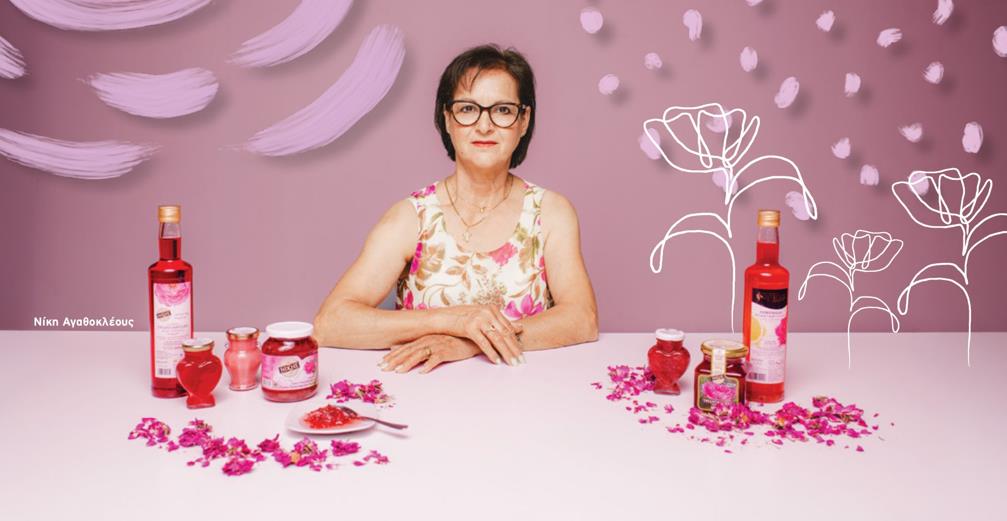
For nearly four decades, Niki's Sweets has demonstrated how a family business can grow from humble beginnings into one of Cyprus's leading producers of traditional sweets without losing sight of its roots. Based in Agros, the company has built its reputation on authentic recipes, locally sourced ingredients and continuous innovation, bringing the distinctive flavours of Cyprus to consumers around the world.
Its journey also illustrates how the European Union's Common Agricultural Policy (CAP) supports rural entrepreneurship, helping small agri-food businesses modernise, innovate and remain competitive while preserving local traditions.
As part of the Eat Wisely Cyprus project, co-funded by the European Union under the IMCAP programme and implemented by IMH, Eat Wisely spoke with founder Niki Agathocleous about the company's evolution, its commitment to quality and sustainability, and its contribution to preserving the culinary heritage of Agros.
A business built on determination
The story of Niki's Sweets began in 1986 during a challenging economic period, when Niki Agathocleous and her family decided to create a new source of income.
"We decided to start our small workshop because of the financial difficulties at the time. I had two children and was pregnant with my third."
Working from a workshop measuring just two square metres, the family began producing traditional spoon sweets using surplus fruit and vegetables from the surrounding area.
"We started in a very small workshop, processing traditional fruit and vegetable surpluses."
What began as a practical solution soon developed into a long-term business vision. In 1989, the company was officially established, marking the transition from home production to an organised food processing business.
Today, Niki's Sweets produces around 90 products, including traditional spoon sweets, fruit preserves, syrups and other specialty products that combine authentic recipes with modern production standards.
Taking the flavours of Agros to the world
From its base in Agros, the company has steadily expanded beyond Cyprus, exporting its products to France, the United Kingdom, the United States, Australia and Japan, while maintaining a strong presence in the domestic market.
"We supply customers all over Cyprus and export our products to international markets."
This international growth has been driven by continuous investment in quality, innovation and product development, allowing the company to respond to changing consumer preferences while remaining true to its traditional identity.
Agros Rose Preserve: A signature product
Among the company's extensive range of products, Agros Rose Preserve (PGI) has become its flagship product and one of the most recognisable delicacies associated with the village.
Prepared using the petals of locally cultivated Rosa damascena, the preserve reflects Agros' unique microclimate, long-standing rose-growing tradition and culinary heritage.
For Niki Agathocleous, the product also carries deep personal meaning.
"My grandmother used to call it medicine. It was something people relied on in difficult times."
The recognition of Agros Rose Preserve as a Protected Geographical Indication (PGI) product has further strengthened its reputation, highlighting its close connection to Agros and the traditional methods used in its production.
"PGI recognition has helped increase our sales, especially among international customers who value certified traditional products."
Beyond protecting the product's identity, PGI certification has enhanced the company's competitiveness in export markets, where consumers increasingly seek authentic products with a recognised geographical origin and guaranteed quality.
Innovation rooted in tradition
While traditional recipes remain at the heart of the business, innovation has always been one of the company's driving forces. Over the years, Niki's Sweets has adapted to changing consumer preferences without compromising the authenticity that defines its products.
One of its most notable achievements came in the 1990s with the development of sweets suitable for people with diabetes an innovative step at a time when specialised products were still relatively uncommon.
"At first, people didn't trust us, but today demand has grown significantly."
The company continues to invest in modern production methods and strict quality management systems, ensuring that traditional craftsmanship is supported by high standards of food safety, consistency and product quality.
Making the most of local resources
Sustainability is an integral part of Niki's Sweets' production philosophy.
Each year, the company processes around 250 tonnes of fruit and vegetables, much of it supplied by growers from Agros and other regions of Cyprus. Every effort is made to minimise waste and maximise the use of raw materials.
Fruit residues are reused as animal feed or supplied to the pharmaceutical and cosmetics industries, while organic waste is composted and returned to the soil.
"Nothing goes to waste. Whatever remains is composted and used as fertiliser."
This circular approach reduces environmental impact while reinforcing the company's long-standing commitment to responsible production and efficient resource management.
Supporting the local economy
Beyond producing traditional sweets, Niki's Sweets plays an important role in supporting the local economy.
The company employs around 25 people and works closely with fruit growers and rose producers, creating a reliable market for local agricultural production and helping sustain rural livelihoods.
"Our business provides income not only for local employees but also for the farmers who supply us with their fruit."
Maintaining production in Agros has enabled the company to remain closely connected to the community where it was founded while contributing to the economic vitality of the wider region.
Growing with the support of the Common Agricultural Policy
Operating a food processing business in a mountainous community presents unique challenges, including higher transport and production costs.
For businesses such as Niki's Sweets, support provided through the European Union's Common Agricultural Policy has created opportunities to modernise facilities, improve competitiveness and continue investing in quality.
As Niki Agathocleous explains:
"Things have changed. Today, the European Union offers significant support to young entrepreneurs."
The company's experience illustrates how European rural development measures can help family businesses grow sustainably while preserving traditional products and strengthening local economies.
Looking ahead
Today, the second generation is actively involved in the business, ensuring that the values on which the company was founded continue to guide its future.
"My children are continuing what I started—with love and dedication."
Looking ahead, the company's priorities remain clear: maintaining the highest quality standards, expanding into new markets and continuing to innovate while preserving the traditions that have defined the business for nearly four decades.
For Niki Agathocleous, entrepreneurship is ultimately about courage and perseverance.
"Young people must dare. They must be willing to take risks."
A tradition that continues to inspire
From a two-square-metre workshop to an internationally recognised producer, Niki's Sweets has shown how determination, innovation and respect for tradition can create a successful and resilient business.
By preserving authentic Cypriot recipes, supporting local producers and investing in quality, the company continues to bring the flavours of Agros to consumers around the world while contributing to the sustainable development of rural Cyprus.
Its journey is a powerful example of how family entrepreneurship, local know-how and European support can work together to create lasting value for communities, producers and future generations.
About Eat Wisely Cyprus
This feature was produced as part of the Eat Wisely Cyprus project, co-funded by the European Union under the Information Measures Relating to the Common Agricultural Policy (IMCAP) programme and implemented by IMH.
The views and opinions expressed are those of the authors and do not necessarily reflect those of the European Union.