








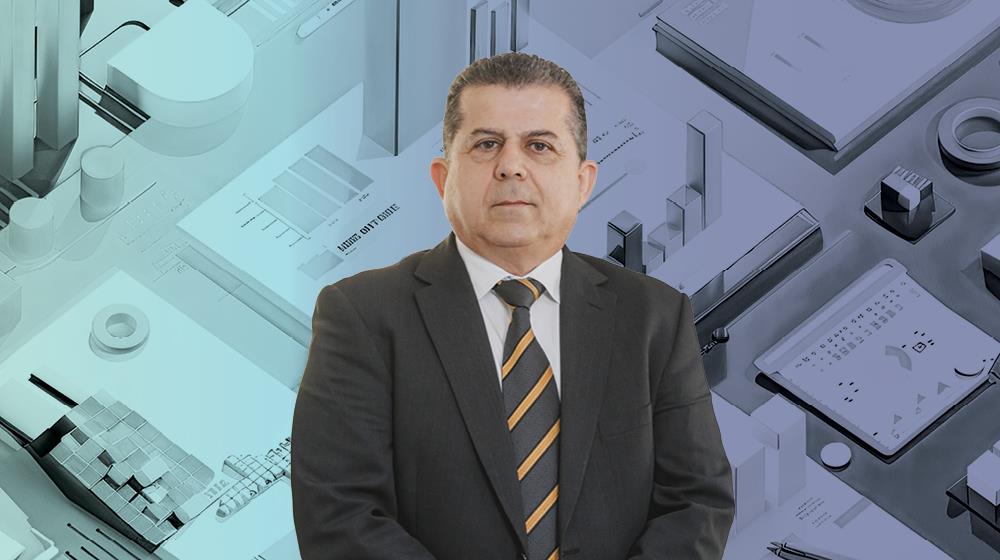
“Investors and multinational organisations rely on high-quality financial reporting, transparency and strong governance frameworks. Accountants and auditors are therefore essential in ensuring that these standards are consistently maintained. Beyond regulatory compliance, the profession provides valuable expertise in areas such as tax structuring, risk management, corporate governance and business advisory, contributing to a credible and efficient business environment,” suggests Odysseas Christodoulou, the newly elected president of the Institute of Certified Public Accountants of Cyprus.
With three decades of experience in accounting and finance, Christodoulou assumes the presidency at a pivotal moment for the profession. In an interview with GOLD magazine, he shares his vision for navigating the sweeping tax overhaul, the push to align with global standards, and the rapid advance of digital technology.
As the newly elected President of ICPAC, what are your main objectives for the Institute?
It is both an honour and a responsibility to serve as President of ICPAC at a time when the profession is evolving rapidly. My primary objective is to strengthen the Institute’s role as a pillar of trust, quality and professional excellence in Cyprus. We will focus on safeguarding the profession’s reputation, enhancing the quality of professional services and ensuring that our members remain aligned with international developments. A key priority is investing in professional education and lifelong learning, as digitalisation, regulatory changes and the increasing complexity of global business reshape the profession. At the same time, ICPAC will continue to support Cyprus’ economic development through constructive dialogue with the government, regulators and international stakeholders.
As Cyprus continues to grow as an international business and services centre, how important is the accounting profession in maintaining the country’s competitiveness in this area?
The accounting profession plays a pivotal role in supporting Cyprus’ position as an international business and services centre. Investors and multinational organisations rely on high-quality financial reporting, transparency and strong governance frameworks. Accountants and auditors are therefore essential in ensuring that these standards are consistently maintained. Beyond regulatory compliance, the profession provides valuable expertise in areas such as tax structuring, risk management, corporate governance and business advisory, contributing to a credible and efficient business environment. Equally important is the profession’s commitment to international standards and ethical conduct, reinforcing the confidence and trust that international investors place in Cyprus.
As of January 1, 2026, Cyprus has undergone the most extensive tax reform in over two decades. What is your overall assessment of the main elements of the new tax regime?
The recent tax reform represents a significant milestone for the Cypriot economy. It reflects the need to modernise the tax system in line with global developments, particularly the OECD’s initiatives on tax transparency and fairness. Overall, the reform strikes a careful balance between maintaining Cyprus’ attractiveness as an investment destination and aligning the country with international tax standards. It introduces important changes that strengthen the credibility and sustainability of the tax framework while preserving key competitive advantages. That said, tax systems must always evolve alongside economic developments. It will be important to closely monitor the practical implementation of the reform and ensure that administrative procedures remain efficient. Ongoing dialogue among the Government, the professional community and the business sector will be essential to address areas that may require refinement over time.
A key feature of the reform package is the increase in corporate tax from 12.5% to 15%. How do you expect this to affect Cyprus’ competitiveness?
While the increase in corporate tax to 15% represents a notable change, it must be viewed within the broader global context. Many jurisdictions are now moving toward similar levels of taxation as part of the OECD’s global minimum tax framework. Cyprus’ competitiveness has never been based solely on tax rates. It is supported by a combination of factors, including a highly skilled professional services sector, a strong legal framework, access to European markets, a reliable regulatory environment and an attractive business infrastructure. If these strengths continue to be maintained and enhanced, Cyprus will remain a competitive and appealing jurisdiction for international businesses despite the adjustment in the corporate tax rate.
The reform also introduces tax incentives aimed at innovation, green investment and new forms of business activity. How do you expect these measures to affect your clients?
The introduction of targeted incentives for innovation, technology development and green investment is very positive. These measures reflect the need for Cyprus to move towards a more knowledge-based and sustainable economic model. For businesses, such incentives can significantly encourage investment in research and development, digital transformation and environmentally responsible initiatives. They also create opportunities for companies to diversify their operations and pursue new areas of growth. From the perspective of professional advisers, these developments will allow us to support clients in identifying opportunities that align with their strategic objectives and with broader economic and environmental priorities.
Artificial intelligence is rapidly changing the broader professional services sector. Which areas of the accounting profession do you believe will be most transformed by AI?
Artificial intelligence is already reshaping several aspects of the accounting profession, particularly in areas involving large volumes of data and routine processes. Tasks such as data processing, transaction categorisation, audit sampling and certain compliance functions are increasingly being automated.
However, rather than replacing professionals, AI will enable accountants to focus more on higher-value activities such as strategic advisory, financial analysis and business decision support. The accountants of the future will therefore need a broader skill set. In addition to strong technical expertise, they will need digital literacy, analytical thinking, adaptability and strong communication skills. Equally important will be professional judgement and ethical awareness, as these are areas where human expertise remains indispensable.
Younger professionals and their work expectations are changing the culture of accounting firms. What can these firms do to ensure that young talent is recruited, retained and nurtured?
The expectations of younger professionals are, indeed, evolving and firms must adapt accordingly. Today’s talent is looking not only for professional advancement but also for meaningful work, continuous development and a healthy work-life balance. Firms should therefore invest in modern and flexible working environments, offer structured mentoring programmes and provide clear career development pathways. Continuous training, exposure to new technologies, and opportunities for international experience can also significantly enhance engagement. Equally important is fostering an inclusive and collaborative workplace culture. Young professionals want to feel that their contributions are valued and that they are part of an organisation with a clear purpose and vision. By embracing these changes, accounting firms can create an environment where talented professionals are motivated to build long and successful careers within the profession.
This interview first appeared in the April edition of GOLD magazine. Click here to view it.
