








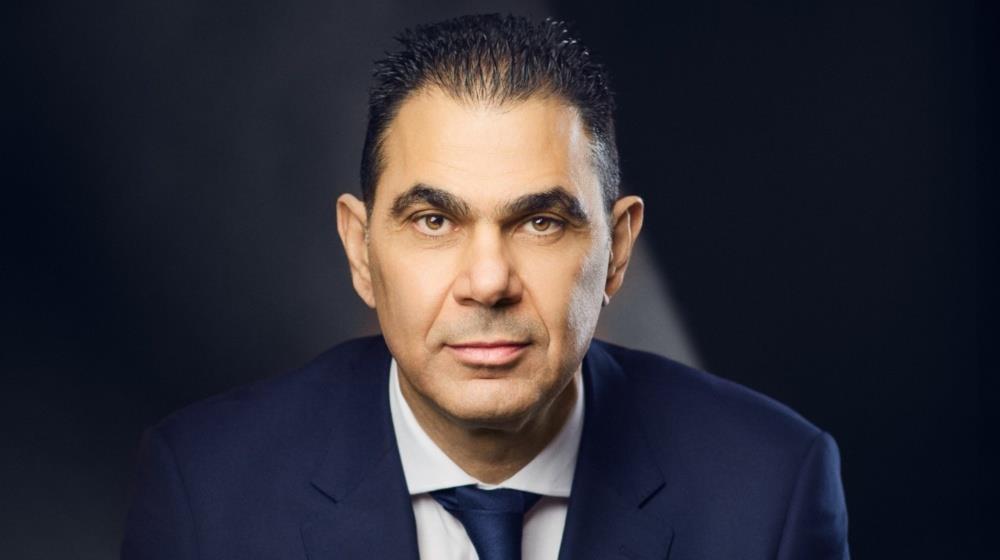
The Cypriot insurance market is evolving rapidly, driven by international investment, technological innovation and changing consumer expectations. Yet, according to George Nicolaides, Founder and CEO of Gan Direct, the country's biggest opportunity lies not in the market's recent growth, but in fundamentally redefining the role insurance plays in the economy. In this interview, he outlines a bold vision for a more competitive, customer-focused and resilient insurance sector.
The insurance sector in Cyprus is undergoing significant changes, with continuous acquisitions and the entry of major international organisations. How do you see the market evolving over the coming years?
There is no doubt that the Cypriot insurance market is going through a period of profound transformation. Over the past few years, we have seen major international investors entering the sector, insurance companies changing ownership, and banking institutions strengthening their presence through the acquisition of insurance businesses.
On the one hand, this is a positive development because it brings fresh capital, know-how, international best practices, greater technological capability and faster access to modern insurance products. On the other hand, however, it raises a question which, in my opinion, has yet to be answered: What is Cyprus' national strategy for the insurance sector? This is a fundamental question that deserves serious consideration.
For decades, insurance has been viewed as an important, yet secondary, service sector. More often than not, it has unfortunately been treated as a sub-sector of banking. I believe the time has come to view it differently. Insurance is not just about claims and insurance policies. It is also a mechanism for capital accumulation, risk management, investment promotion and economic resilience. If we compare the sector with tourism—which undoubtedly fuels the economy during the summer months but has historically received enormous government support while repeatedly going through various crises—it becomes evident that public support has been disproportionately allocated, despite insurance being a sector with tremendous growth potential.
Do you believe the State has failed to give the insurance sector the attention it deserves? Why do you say that?
Because the facts speak for themselves.
Over the years, Cyprus has strategically invested—primarily through tax policy—in shipping, professional services, banking and, more recently, technology. Dedicated policies were developed, investment incentives were introduced and international promotional campaigns were launched. We have never seen anything comparable for the insurance industry, apart from a few fragmented initiatives, usually introduced at the last minute and only because circumstances required them.
Yet insurance already accounts for approximately 4% to 5% of Cyprus' GDP. When compared with the average penetration rate of approximately 9% in developed economies, it becomes clear that Cyprus is operating well below its true potential.
This means there is substantial untapped potential in terms of investment, employment, service exports and economic activity. More importantly, however, there is significant added value that could ultimately benefit citizens through more competitive pricing, broader insurance protection and better management of their personal assets.
Let me give you a simple example that illustrates just how underestimated the sector remains by the State. Despite the significant international investment that has flowed into the insurance industry in recent years, the sector has never been meaningfully represented in decision-making bodies responsible for attracting investment. Not even today, as we discuss Cyprus' transition towards Vision 2035. This demonstrates that we still do not regard insurance as a strategic pillar of economic development.
How could the insurance industry contribute more to the Cypriot economy?
If we are serious about Vision 2035, then the insurance sector must have a seat at the table.
Today, insurance companies manage assets exceeding €2.5 billion. A portion of these funds could be channelled more actively into green infrastructure, renewable energy projects, critical national infrastructure and municipal development projects, while simultaneously reducing the State's dependence on external borrowing.
At the same time, Cyprus faces a demographic challenge that will increasingly burden public finances. Insurance companies can become part of the solution through occupational pension schemes, private pensions and supplementary healthcare plans that complement the General Healthcare System (GeSY).
In Cyprus, the State continues to operate as a business itself, often under monopolistic conditions—in electricity, water supply and healthcare—while internationally the benefits of public-private partnerships are widely recognised and successfully utilised. In healthcare, for example, why did we not establish a common risk pool involving both the public and private sectors, allowing for greater risk diversification and stronger safety nets?
At the same time, climate change is creating new risks for agriculture, tourism and businesses. The insurance market can provide resilience mechanisms that protect jobs, prevent bankruptcies and stabilise economic activity following major crises.
The biggest challenge, however, lies in our collective inability—both as a State and as an industry—to convince citizens that insurance is not merely something compulsory or simply "nice to have", but an essential investment that protects them when difficult times arise or when the unexpected occurs.
This is precisely why we repeatedly see governments using taxpayers' money to compensate uninsured losses or cover damage caused by natural disasters.
A modern State ensures in advance that both it and its citizens are adequately protected. It does not spend its time reacting after disasters occur, trying to salvage what can still be saved. Nor should it penalise responsible citizens by asking them to pay for the shortcomings and inadequate planning of others.
A recent example is the legislation concerning elderly drivers, which simply prohibits increases in insurance premiums. Instead of addressing the real issues—the lack of public transport and the absence of proper driver fitness assessments—we concluded that insurance companies were somehow the problem.
In other words, insurers—whose costs continue to rise across the board, from mechanics, panel beaters and painters to healthcare and legal expenses, while premiums have remained relatively stable based on the risks they assume—were ultimately portrayed as being responsible for all the country's shortcomings.
What should be done immediately to strengthen the competitiveness of the sector?
Before discussing new tools and new policies, we need to acknowledge a simple truth. Our economy has yet to fully appreciate both the potential and the modern operating model of the insurance industry.
For decades, we have operated under a culture of protectionism. As a result, the interests of various intermediaries have often been protected more vigorously than those of the customer. Consequently, hundreds of millions of euros in added value remain hostage to outdated and obsolete practices. A free market should not fear competition. It should embrace it.
Consumers should be able to compare products, switch providers easily, and know exactly what they are buying and what they are paying for. When genuine competition exists, prices become more competitive, services improve and innovation accelerates.
Gan Direct was founded precisely on this philosophy.
We were the first company to introduce direct insurance to Cyprus. We educated consumers that they could purchase insurance directly—by telephone or online—without having to visit branches or go through multiple layers of intermediaries. We built our own service model, established clear Service Level Agreements and introduced services that, despite considerable practical obstacles, were previously considered unimaginable in the Cypriot market.
From a practical perspective, I would highlight the following priorities:
- The competent authorities must be strengthened both in terms of human resources and in terms of processes and technical expertise.
- We must move to fully digital licensing and approval procedures with clearly defined timelines. We cannot speak about attracting international investment when investors wait months for procedures that take only weeks in competing jurisdictions.
- Cyprus should establish a genuine InsurTech Sandbox, similar to that of the United Kingdom, allowing start-ups and insurance companies to test innovative products and technologies without unnecessary bureaucracy.
- We should leverage Cyprus' competitive IP Regime to develop a vibrant InsurTech ecosystem. Modern insurance increasingly relies on algorithms, artificial intelligence, risk modelling, telematics, cyber insurance platforms and specialised software. Attracting companies developing these technologies could create an entirely new pillar of economic growth.
- Cyprus should develop an innovative legislative framework for Captive Insurance Companies and Protected Cell Companies. Malta did so years ago and successfully attracted significant international business. Cyprus enjoys a low corporate tax rate, competitive operating costs and full access to the European market. It could become the natural gateway for insurance and reinsurance activities between Europe, the Middle East, North Africa and even Asia.
- A National Insurance Policy Guarantee Fund should be established. Such a mechanism strengthens public confidence and provides an important safety net in exceptional circumstances.
- Cyprus should establish its own reinsurance organisation. Every year, substantial sums are paid to foreign reinsurance organisations with very little benefit returning to the country. It is our collective responsibility to finally create our own.
- Finally, training and professional development programmes must be modernised and reassessed. Internationally, the industry has changed dramatically. We, as a company, have trained hundreds of professionals over the past decades and know what is realistic, what creates value, what is unnecessarily expensive and what no longer reflects today's market realities.
Which areas do you see offering the greatest opportunities for future growth?
Firstly, private pensions and long-term savings management. Secondly, cybersecurity and digital risk insurance. Thirdly, insurance solutions for renewable energy projects, maritime activities and major energy developments across the Eastern Mediterranean. Fourthly, parametric insurance products for agriculture and tourism.
Today, we have access to data, satellites, artificial intelligence and technologies that allow compensation to be triggered automatically when a predefined event occurs. There is no longer any need to wait months for damage assessments.
You have spoken publicly about mortgage insurance. Why do you consider this issue so important?
Because it directly affects thousands of households.
For years, people have been led to believe that mortgage insurance is simply an extension of the mortgage itself—that when they obtain a mortgage, they automatically accept the insurance solution presented to them.
The European market, however, is moving in a different direction. Today, the emphasis is on transparency, consumer mobility and stronger competition.
Borrowers have the right to compare insurance providers and choose the one they prefer, provided that the level of cover offered is equivalent to that required by the lending institution.
This is not simply a matter of consumer rights. It is fundamental to the proper functioning of the market. Rights such as data portability and the right to erasure share a common objective: empowering consumers.
The underlying philosophy is simple. Consumers should never feel trapped within a particular organisation or provider simply because it already holds their personal information.
Unfortunately, while these rights formally exist, they often remain hidden in practice, making them extremely difficult for consumers to identify and exercise.
Do you believe there is room for stronger competition?
Absolutely. Over the past few years, we have seen a significant expansion of bancassurance, as banks continue to strengthen their presence in the insurance market. There is nothing inherently wrong with this. Banks have every right to grow their business.
What must be safeguarded, however, is the consumer's genuine freedom of choice. Competition should never be taken for granted, particularly in a small market such as Cyprus. This is why I believe the role of the Commission for the Protection of Competition and the Consumer Protection Service is crucial. They must ensure that the market operates in the best interests of consumers.
Let me give you a specific example: insurance intermediary commissions. Although the Insurance Distribution Directive (IDD) has been transposed into Cypriot legislation, Cyprus—unlike several other European countries that went one step further—did not introduce mandatory disclosure of the exact commissions paid by insurance companies to intermediaries.
The obvious question is: Why shouldn't policyholders know exactly how the cost of the insurance product they purchase is broken down?
At the same time, we also need to change our own mentality as a society. Unfortunately, we have developed a tendency to be a little too "clever" in the wrong way. A significant number of drivers choose to purchase only the compulsory third-party insurance, believing that if something serious happens, somehow a solution will be found. A relative, an insurance adviser, an acquaintance, political intervention—or even the State itself—will somehow come to the rescue.
That is not a culture of risk management. It is a culture of shifting responsibility to others. Ultimately, the cost is borne by responsible citizens and taxpayers.
What practical changes could be implemented?
Quite a lot.
The European philosophy of data portability and consumer empowerment already points the way forward. There could—and should—be a common information exchange standard between banks and insurance companies to support Easy Switch or white-glove switching services.
At Gan Direct, we already offer the Easy Switch service, through which we undertake the entire transfer process on behalf of policyholders when they decide to move their insurance from another company to us. This is just one of the innovations we have introduced to the Cypriot market over the past 30 years.
Without wishing to tire you, I believe it is important to highlight some of the pioneering and innovative services we have introduced, including:
- Claims settlement within 24 hours
- 24-hour roadside and emergency assistance
- Assistance reaching the customer in less than 24 minutes
- Cover for labour costs and replacement parts relating to home security, heating systems, plumbing, drainage and electrical wiring
- A complimentary replacement vehicle following an accident
There are, of course, many more, but let's stop there.
In recent articles you argued that Cyprus needs to move from crisis management to risk management. What do you mean by that?
It means we need to change our mindset. For decades, we measured success by how effectively we reacted after a disaster had already occurred.
Today, international best practice measures success by how well you prepared before disaster strikes. True success lies in reducing the impact before it materialises.
That requires better planning, better data, more advanced early warning systems and more resilient infrastructure. The recent announcement regarding the implementation of an Early Warning System is certainly a positive step, but it is only one part of the solution.
What is missing is the entire operational ecosystem that must stand behind every early warning system. Without that supporting mechanism, warnings will inevitably fail to be sufficiently timely or accurate.
At the same time, proper planning and public education are equally important. Citizens must learn how to interpret these alerts correctly and, more importantly, how to react calmly and appropriately.
What role does the insurance industry have to play in this discussion?
Insurance companies possess expertise, data and sophisticated risk transfer mechanisms. They can contribute to building more resilient societies, not only by compensating losses but also by encouraging prevention.
Across many countries we are already witnessing the development of parametric insurance, where claims are triggered automatically based on objective indicators such as rainfall or temperature levels, enabling much faster compensation.
These are solutions that could also be implemented in Cyprus, particularly within agriculture—just consider the recent outbreak of foot-and-mouth disease affecting livestock—as well as tourism.
We live in an era defined by data, connectivity, supercomputers and Artificial Intelligence. It makes little sense for the public sector to view the private sector as an adversary or to approach it with distrust. Every public institution exists to serve citizens using resources provided by citizens and businesses alike. Collaboration should not be regarded as the exception. It should become the rule.
What is your final message?
As a country, we must acknowledge these challenges and address them decisively and substantively. The opportunities are enormous and are waiting for us.
Whether we seize them—or simply remain attached to outdated ways of thinking while watching other countries reap the benefits—is entirely up to us. What Cyprus lacks today is ambition.
As long as we continue to operate through slow procedures, micro-politics, shortages of specialised expertise and a fear of innovation, other countries will continue to capitalise on opportunities that could very well be ours.
Insurance has the potential to become one of the next major pillars of the Cypriot economy. The real question is whether we are ready to think with the mindset of 2035, or whether we will continue making decisions with the mindset of 1995.
