








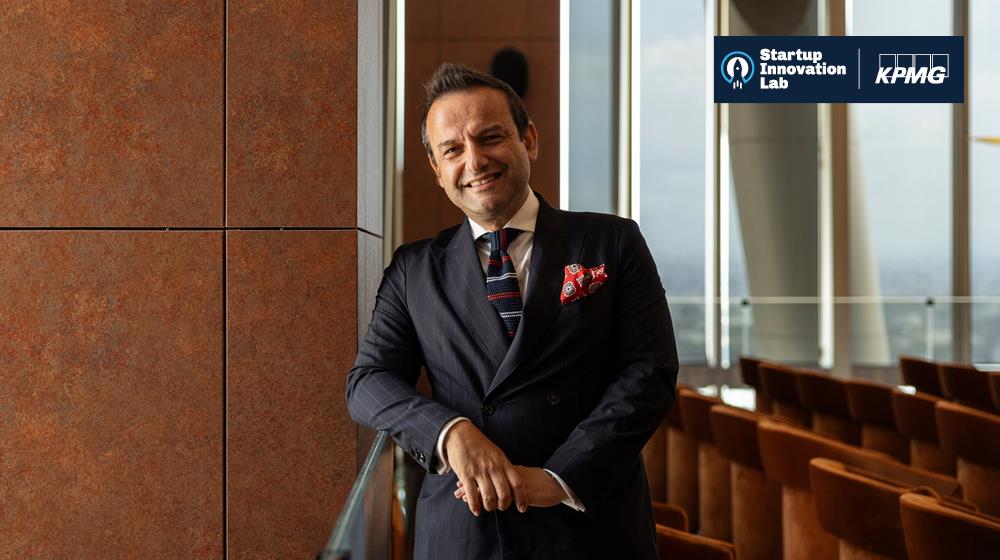
“To further strengthen the startup ecosystem in Cyprus, we need to move from individual initiatives to a more coordinated and long-term framework that can support companies from ideation through to scale. The priority is not simply to create more startups, but to create more investable companies, stronger founders and a deeper pipeline of opportunities that can attract both local and international capital,” suggests Pangratios Vanezis, Board Member and Head of Innovative Deal Advisory and KPMG’s Startup Innovation Lab (SIL), suggests.
In an interview with CBN, Vanezis shared his views on KPMG’s startup lab progress, Cyprus’ innovation ecosystem, key growth sectors, and need for stronger investment support.
It has now been over a year since the launch of KPMG’s Startup Innovation Lab (SIL). What would you highlight as the initiative’s key achievements to date?
KPMG Startup Innovation Lab has progressed from an idea into a structured platform with a clear purpose: to support promising founders, improve the quality of early-stage ventures, and create a more visible and credible space through which investor facilitation can take place. It enables startups and investors to connect around high-potential opportunities in a more structured and credible way. For me, this is one of the most important achievements to date. We have created a framework that gives startups access not only to mentorship and strategic guidance, but also to the wider business, investment and advisory capabilities of KPMG. A platform with which an investor facilitation can take place.
Equally important, we are now building stronger synergies internally with other KPMG member firms, while also leveraging KPMG’s Emerging Giants network. This gives the initiative a much broader dimension. It allows us to connect startups with international experience, sector knowledge, potential markets and investor conversations that would otherwise be more difficult to access. That is where KPMG SIL can be truly differentiated: by bringing local entrepreneurial talent closer to a global platform.
Another important development is the investor platform going live in the following few weeks, which is designed to bring more structure and consistency to the way investors engage with startups. The objective is not just to organise introductions, but to build a more credible pipeline of investor-ready companies and facilitate more meaningful deal-making discussions. Beyond supporting individual startups, KPMG SIL is therefore helping to strengthen the wider ecosystem by connecting founders, investors, corporates, advisors and international networks around a more coordinated innovation agenda.
Which startups are currently participating in KPMG SIL Accelerator?
The current cohort of KPMG SIL Accelerator includes Artemis Intelligence, My Student Flat, Pace It, RAVATAR, Realytics and Vinoteqa. What is important is that this is not a one-dimensional cohort. These companies operate across AI infrastructure, proptech, AI avatars, retail intelligence, fitness tech and hospitality technology, and they reflect the kind of sectoral diversity and commercial relevance that we want to see developing in the Cypriot ecosystem.
For us, the key point is not only the number of startups participating, but the quality of the founders, the relevance of the problems they are addressing, and the potential for these solutions to scale beyond Cyprus. This is exactly where KPMG SIL can add value: by helping promising ventures become more structured, more visible and more investor-ready, while connecting them with the right strategic guidance, market access and investment conversations.
Which sectors currently demonstrate the strongest growth potential in Cyprus?
Cyprus should focus on sectors where it can combine technology, market relevance and its own structural advantages. We do not need to compete in every vertical. The opportunity is to be selective and build depth in areas where Cyprus has credibility, talent, regional relevance and the ability to scale beyond the local market.
Artificial intelligence and AI-enabled technologies: AI is a clear priority because it can improve productivity, reshape business models and create scalable solutions across sectors. For Cyprus, the focus should be on practical AI applications that solve real business problems and can be commercialised beyond the local market.
Proptech and real estate innovation: This is particularly relevant given the importance of real estate to the Cypriot economy. There is significant scope to modernise how property is searched, transacted, managed, financed and experienced, creating solutions that can also be relevant in comparable regional markets.
Energy transition and sustainable technologies: Energy is not only a sustainability issue, but also a competitiveness and resilience issue. Cyprus and the wider region need cleaner, smarter and more efficient energy solutions, which creates clear opportunities for innovation in energy management, resource efficiency and transition-related technologies.
Tourism-related innovation and technology-enabled professional services: These are sectors where Cyprus already has experience, infrastructure and market knowledge. The opportunity is to apply technology in ways that improve customer experience, productivity, decision-making and service delivery, while creating models that can scale across the region.
Defence and security technologies: This is an emerging area that should not be overlooked. Cyprus’ strategic location and the wider regional focus on security, resilience and dual-use technologies create opportunities in areas such as cybersecurity, surveillance, critical infrastructure protection and operational efficiency.
Overall, the strongest growth potential lies in sectors where Cyprus can move from participation to specialisation. The objective should be to create companies that are not only relevant locally, but capable of competing regionally and internationally.
How would you assess the current startup ecosystem in Cyprus?
The startup ecosystem in Cyprus has clearly progressed, and this is important. We are no longer speaking only about ambition or isolated activity; we are seeing more structured initiatives, stronger founders, better quality conversations with investors, and a broader recognition that innovation must be part of the country’s long-term competitiveness agenda.
At the same time, we need to be pragmatic & realistic. The ecosystem is still maturing, and the next phase must be less about creating more activity and more about creating outcomes. That means deeper access to early-stage and growth capital, stronger pathways from startup to scale-up, closer links with international markets, and more support structures that help founders become investor-ready. If we can bring more consistency, focus and execution into the ecosystem, Cyprus can turn its innovation potential into real economic value.
What additional changes or support mechanisms are needed to further strengthen the ecosystem and encourage the growth of more early-stage startups?
To further strengthen the startup ecosystem in Cyprus, we need to move from individual initiatives to a more coordinated and long-term framework that can support companies from ideation through to scale. The priority is not simply to create more startups, but to create more investable companies, stronger founders and a deeper pipeline of opportunities that can attract both local and international capital.
This requires additional capital for early-stage and growth-oriented ventures, stronger support for ecosystem facilitators, and closer alignment between the public sector, private sector, academia and the investment community. Cyprus should also look more actively at how it can support equity funds and venture capital vehicles, including through public-private co-investment structures or fund-of-funds mechanisms, similar to what has been implemented in Greece. Such mechanisms can help mobilise private capital, create more depth in the financing ecosystem and give startups a clearer path from validation to international growth.
Ultimately, the next stage of the ecosystem must be about execution, consistency and scale. If Cyprus can align policy, capital and market access around a common objective, it has a real opportunity to position itself as a credible regional hub for innovation, entrepreneurship and investment.
Our 2030 mission for KPMG Startup Innovation Lab is bold: to help multiply innovative deal-making in Cyprus tenfold, turning ambition into capital, ideas into ventures, and Cyprus into a true regional powerhouse for startups, innovation, and investment and we have already begun laying the foundations for that future.
