







“It is imperative that full freedom of navigation is respected by all parties in accordance with international law. Freedom of navigation, legal certainty and the predictable application of international conventions are essential to the efficient movement of goods and to long-term investment decisions. Where international law is questioned, selectively applied or bypassed altogether, the ability of shipping to operate safely and efficiently is undermined,” Thomas A. Kazakos, the Secretary-General of the International Chamber of Shipping (ICS) believes.
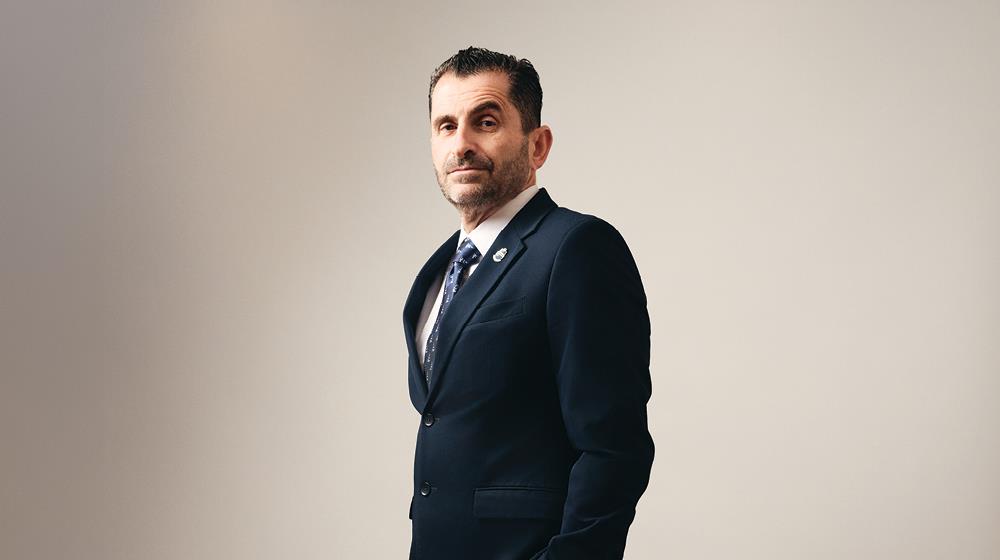
Speaking to GOLD magazine, he discusses the realities of leading shipping through turbulent times, the need for global regulatory clarity and why seafarers remain at the heart of the industry’s future.
Just over a year ago, you were appointed ICS Secretary-General and recently Lloyd’s List ranked you among the Top 100 influential figures in maritime. What has surprised you most since stepping onto the global stage?
As Director-General of the Cyprus Shipping Chamber, the national Member Association of Cyprus at ICS, for 30 years, I was well-versed in the International Chamber’s great work. Yet, one of the biggest surprises since joining has been finding that ICS and its team do so much more than I had realised, covering a huge breadth of topics within shipping. Hence, the global recognition that ICS enjoys and the ranking it has received for many years now. At ICS we heavily engage with IMO and the International Labour Organisation (ILO) and many other shipping-related bodies actively representing more than 40 national shipowner associations and 80% of commercial shipping globally. Our team deals with all the “hot” issues that affect international shipping, from the latest crisis in the Persian Gulf/Strait of Hormuz to decarbonisation and the erosion of the global regulatory framework, whilst continuing our longstanding commitment to improving the seafaring profession and the sustainability of our industry as the “lifeblood” of international trade. This is just a snapshot of the work being done at ICS and I am immensely proud. I look forward to working with ICS Members and the team to move forward on the Chamber’s key priorities.
What are those key priorities?
They are threefold. First and foremost: our seafarers. They are the very heart of our industry, so we must ensure that our work continues to support them during these uncertain and turbulent times. Second: the decarbonisation of our industry. There are big gaps between ambition and capability, and this fundamentally comes down to the lack of availability of alternative fuels and the need to decarbonise. No single actor within the shipping ecosystem can deliver the energy transition alone and this is where strategic partnerships are critical. Third: a move away from the current erosion of the international regulatory framework. The benefits of open trade and global regulations are clear but, despite this, we are witnessing a steady wearing away of the multilateral spirit that has long underpinned global commerce. ICS will focus a lot of its work on this.
You have warned that attacks on commercial shipping in the Gulf and surrounding waters are not just a regional crisis but a threat to the integrity of global trade. Are we now entering an era where geopolitical risk must be permanently priced into how global shipping operates?
The increasing impact of geopolitical conflict on global shipping is one of the greatest challenges facing our industry, particularly for our seafarers who are operating in high-risk regions. Their safety and welfare must remain the industry’s top priority. Seafarers are the backbone of global trade and any threat to their wellbeing is unacceptable. Governments must safeguard freedom of navigation and ensure that seafarers are not exposed to unnecessary risk. At the same time, ICS continues to work closely with international organisations to support seafarers, improve protection and ensure that they can operate safely, even in complex environments. It is imperative that full freedom of navigation is respected by all parties in accordance with international law. Freedom of navigation, legal certainty and the predictable application of international conventions are essential to the efficient movement of goods and to long-term investment decisions. Where international law is questioned, selectively applied or bypassed altogether, the ability of shipping to operate safely and efficiently is undermined.
You have said that, while the industry supports the goal of net zero by or close to 2050, what is needed now is regulatory clarity. What is the bigger danger in 2026: weak ambition or regulatory ambiguity that freezes investment?
The shipping industry is fully committed to achieving the ambitions of the 2023 IMO GHG Strategy and has already delivered substantial GHG emissions reductions. What is required is regulation to support the industry during its transition. Following the IMO’s Marine Environment Protection Committee (MEPC 84) meeting at the end of April, we welcomed the decision to convene additional negotiations in September and ICS intends to contribute ideas on a possible way forward to achieve the necessary support amongst all Member States. It is vital that governments move towards the adoption of a comprehensive fit-for-purpose global framework as soon as possible to enable the industry to further accelerate its rapid transition to alternative energy sources.
ICS represents national shipowner associations, covering over 80% of the world’s merchant fleet. In this period of fragmentation, how difficult is it to preserve a truly global industry voice when your members are operating under very different political, regulatory and commercial pressures?
I do not believe that it is difficult to preserve our global voice. Of course, we have differing opinions at times as we represent a truly international membership, encompassing shipowners from all regions and political backgrounds. For me, though, this is a benefit. It is through this diversity that we are able to maintain a balanced, practical view on global issues impacting our industry without bias and for the good of all. This is what makes the Chamber so effective and it is through the collaborative spirit we are able to reach consensus.
(Original photo by TASPHO)
This interview originally appeared in the May edition of GOLD magazine. Click here to view it.
