






“Continued investment in digital infrastructure remains essential. Stronger and more structured collaboration between academia and industry is also critical, ensuring that education translates into employability and innovation. There is already alignment between local authorities, government and the private sector. The priority now is consistent delivery. If this is achieved, Larnaca is well-placed to realise its full potential,” Floros Voniatis, CEO and Chair of the Council of UCLan Cyprus and Vice-President of LCCI, Services Sector says in an interview with GOLD magazine.
He explores Larnaca’s future development in the services sector and highlights the importance of academia forging links with industry to create more employment and a competitive market.
Larnaca has ambitions to become a services hub in Cyprus, through its various offerings in higher education and other growth sectors. What sets the city apart in these areas?
Larnaca stands out through its combination of strategic infrastructure, a growing services base and a strengthening higher education presence. It is the only city in Cyprus that combines a major international airport with a deep-water port, positioning it as a natural gateway between Europe, the Middle East and the wider region. This connectivity supports the development of professional services, logistics, maritime activity and international business. At the same time, higher education is playing an increasingly important role. Institutions such as UCLan Cyprus, alongside new academic developments, are contributing to a knowledge-driven environment through education, research and the development of talent aligned with market needs. What distinguishes Larnaca is that these elements are advancing in parallel. The city offers competitiveness while maintaining a high quality of life, remaining safe, accessible and family-friendly. This balance is increasingly attractive to both investors and skilled professionals and it gives Larnaca both a solid foundation and clear momentum.
UCLan Cyprus, of which you are the CEO and Chair of the Council, has had a presence in Larnaca since 2012. Following further investments in the city’s education sector (the new CUT Marine Sciences School, the National Kapodistrian University of Athens, etc.), how do you see these high-calibre educational facilities shaping the city?
The presence of multiple universities reflects a broader structural shift in the local economy. Cities increasingly compete on talent. Universities contribute to talent development, innovation and international visibility. When several institutions operate within the same environment, they strengthen the economic base of the city. At UCLan Cyprus, our contribution is clear. We provide graduates whose skills are aligned with industry needs, we work closely with businesses and we support professional development. This impact is measurable. Our graduate employability rate is approximately 95%, reflecting strong alignment between academic provision and labour market demand. This supports job creation, strengthens businesses and contributes to long-term economic growth.
What challenges does Larnaca face in the services sector and how can they best be handled? What government policies would like to see to help tackle these issues?
Larnaca is at a critical stage of its development and the challenges it faces are those of a city moving towards a more advanced services model. Infrastructure must continue to develop in line with increasing investor interest. At the same time, administrative processes, particularly in licensing and planning, need to be faster, clearer and more predictable. Talent is another priority. While progress has been made through the presence of universities, continued alignment between education and industry is essential to meet the needs of high-value sectors. From a policy perspective, several actions would have an immediate impact. Streamlined and fully digitalised procedures would improve efficiency and transparency. Targeted incentives for sectors such as technology, fintech, maritime services and green transition activities would enhance competitiveness. Continued investment in digital infrastructure remains essential. Stronger and more structured collaboration between academia and industry is also critical, ensuring that education translates into employability and innovation. There is already alignment between local authorities, government and the private sector. The priority now is consistent delivery. If this is achieved, Larnaca is well-placed to realise its full potential.
What makes Larnaca attractive to high-skilled professionals and how can they city increase their numbers?
Larnaca offers a compelling combination of quality of life and emerging professional opportunities. The city provides safety, accessibility and a family- friendly environment, together with a competitive cost structure. English is widely used and the business framework is familiar to international investors. However, long-term attraction depends on opportunity. Professionals choose locations where they can build careers and access international markets. Continued growth in sectors such as technology, professional services, education and maritime activity will therefore be essential. Stronger links between universities and industry will support both talent development and retention. At the same time, promoting Larnaca internationally as a destination that combines career prospects with quality of life will strengthen its position. The objective is to create a city where professionals can build their future.
In your capacity as Vice-President of the LCCI Services Sector, can you elaborate on what other services are on the rise in Larnaca and how you see them developing?
Larnaca is experiencing strong and diversified growth across its services sector, reflecting the city’s positive trajectory. Professional services, including legal, accounting, compliance and corporate advisory, remain a key pillar. At the same time, financial services and fintech are expanding, supported by the regulatory framework and expertise in cross-border operations. Technology and digital services are also developing, driven by improved connectivity and access to skilled graduates. This is creating opportunities in software development, digital solutions and data services. Maritime and logistics activities are evolving further, supported by the city’s port and airport infrastructure, strengthening its role in regional connectivity. In addition, relocation, immigration and business support services are growing, as more international companies and professionals establish a presence in Larnaca. What is particularly positive is the way these activities are developing together, strengthening the overall business environment. Looking ahead, I expect continued growth in higher-value services, supported by closer coordination among education, industry and policy makers.
Where do you see Larnaca’s services sector in the next five to ten years?
I am very confident about Larnaca’s overall direction. The fundamentals are strong, including location, connectivity, a growing education sector and increasing investor interest. The focus now must be on consistent execution. I expect further development in high-value sectors such as technology, professional services, education and maritime activity, supported by a stronger talent base and improved business infrastructure. At the same time, Larnaca has the advantage of growing in a balanced way, strengthening its economic position while maintaining its quality of life. With effective coordination between public and private stakeholders, the city can position itself as one of the most competitive and attractive destinations in Cyprus and the wider region. The opportunity is clear. The priority now is to deliver on it.
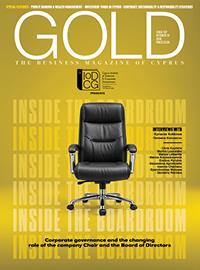
This interview first appeared in the April edition of GOLD magazine. Click here to view it.