





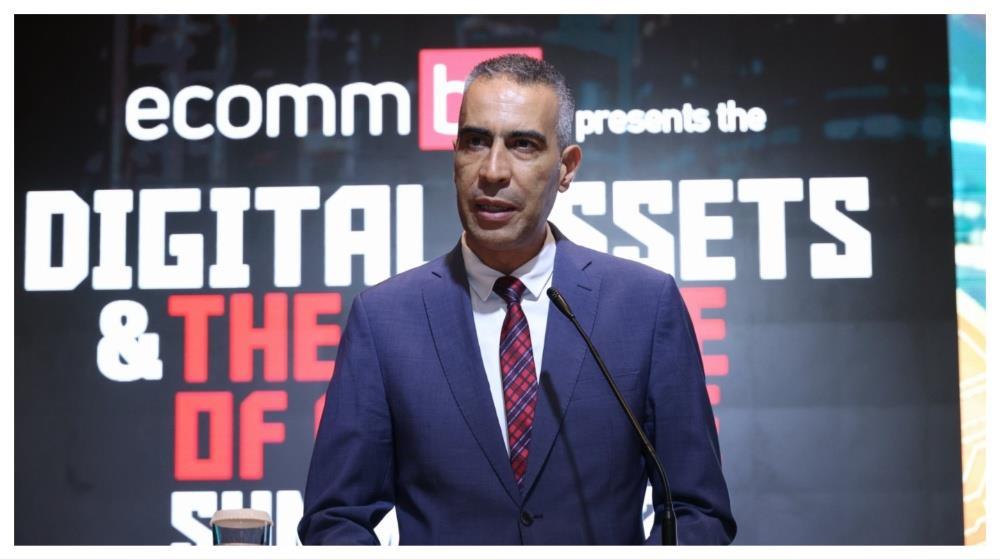
The position that the transition to digital forms of money is now a reality, but its success depends on trust, proper supervision and a strong regulatory framework, was expressed by George Karatzias, Executive Board Member, Central Bank of Cyprus.
In the context of the recent Digital Assets and the Future of Finance Summit 2026, presented by ECOMMBX, Karatzias referred to the transformation of payments in the new digital reality, analysing the changes that new technologies bring to the financial ecosystem, the growing role of stablecoins and the importance of the European regulatory approach.
During his speech, he said that “digital money is no longer a theoretical concept, but is gradually becoming part of the very architecture of the financial system,” adding that “innovation in money requires oversight, not just enthusiasm.” As he noted, Europe’s goal must be “to ensure that the future of payments remains anchored in public trust.”
At the same time, he underlined that distributed ledger technology (DLT) opens a new chapter in financial services, as it reduces the distance between the transfer of information and the transfer of value. As he explained, the possibilities of transaction programming now extend beyond crypto-assets, with stablecoins, tokenisation of deposits and central bank digital currencies (CBDCs) being the subject of active policy, supervision and implementation.
Referring specifically to stablecoins, he noted that they have evolved from a regional innovation to a key element of the global financial system, used as a bridge between traditional finance and digital markets, as well as a tool for cross-border payments. However, he stressed that “growth brings responsibility, and responsibility requires oversight,” noting that the benefits of stablecoins must be assessed alongside the risks they pose to financial stability.
In closing, he emphasized that “the critical question is not whether a token claims to be stable, but why we should trust it to remain stable in times of stress.” According to him, their credibility depends on the quality and transparency of their reserves, redemption rights, corporate governance, and compliance with anti-money laundering rules.
He finally noted that the European MiCA Regulation creates the first comprehensive supervisory framework for crypto-assets, enhancing transparency, investor protection and the resilience of the European financial ecosystem.
(Source: InBusinessNews)