








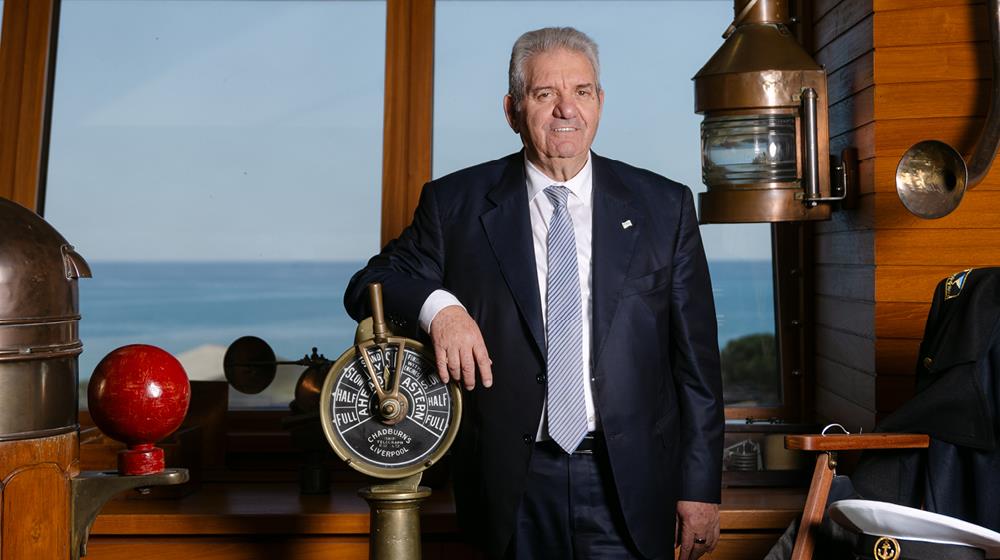
“Trade protectionism has clearly intensified in recent years, reshaping not only the global economy but also the shipping industry that underpins it. Tariffs and state interventions have disrupted established trade routes, created volatility in demand and increased operational costs. At the same time, we have seen a reconfiguration of supply chains and the emergence of new trade flows, which have brought both challenges and opportunities for shipping. The Chamber has actively contributed to international efforts to mitigate the impact of protectionism and to restore efficiency and certainty in global trade,” Andreas Neophytou, the President of the Cyprus Shipping Chamber (CSC) tells GOLD.
In a recent intervie, he talks about the challenges facing the global shipping industry and what Cyprus needs to do to maintain the growth of the local maritime sector.
Thanks to its key location, membership of core institutions and supportive government policies, Cyprus’ shipping sector continues to thrive. Where should the focus be if it is to sustain this growth?
Looking ahead, a key priority for sustaining the growth of Cyprus’ shipping sector is decarbonisation and ensuring a fair and workable global transition. The Chamber supports the need for global solutions that keep the industry competitive, while ensuring that environmental targets remain realistically achievable. In this context, we advocate that revenues generated in Cyprus through the EU Emissions Trading System (EU ETS) should be reinvested in the Cyprus maritime sector to support its green transition, innovation and competitiveness. We call for a balanced national approach, ensuring that these funds are used to strengthen the very sectors that contribute to them. Equally important is the preservation and strengthening of the Cyprus Shipping Taxation System beyond 2029. We look forward to the timely initiation of this process and to working closely with the Shipping Deputy Ministry for its renewal, to ensure the continued stability, growth and attractiveness of Cyprus shipping.
Geopolitical shocks have renewed the focus on the so-called “shadow fleet” which, many say, is increasing and capitalising on the chaos of war. What role does the Chamber play helping its members navigate this issue?
The Chamber closely follows developments related to the so-called “shadow fleet,” particularly in light of ongoing geopolitical tensions and the risks this poses to safety, compliance and fair competition in global shipping. Through our active membership of ICS and ECSA, as well as close coordination with Cypriot authorities and EU institutions, we remain fully informed of regulatory and policy developments. Our role is to translate this information into timely, practical guidance for our members, helping them navigate these challenges with clarity and confidence. Ultimately, the Chamber stands ready to provide prompt advice and continuous support, ensuring responsible shipping practices and compliance with international standards.
With protectionism on the rise – from tariffs to state intervention – is the concept of free trade coming to an end? How does the Chamber view these shifting tides and how is Cyprus positioned within this highly sensitive sector?
Trade protectionism has clearly intensified in recent years, reshaping not only the global economy but also the shipping industry that underpins it. Tariffs and state interventions have disrupted established trade routes, created volatility in demand and increased operational costs. At the same time, we have seen a reconfiguration of supply chains and the emergence of new trade flows, which have brought both challenges and opportunities for shipping. The Chamber has actively contributed to international efforts to mitigate the impact of protectionism and to restore efficiency and certainty in global trade. We remain firmly committed, through our international and EU partners, to advocating for free trade, open markets and a level playing field. Shipping depends on a harmonised global regulatory framework and Cyprus continues to position itself as a reliable, competitive and stable maritime hub within this environment.
This year marks 20 years since the establishment of the CSC’s “Adopt a Ship” Programme. What role does the Chamber play in promoting shipping careers for the younger generation?
Education and training have always been a priority for the Chamber, based on the belief that investing in people is key to sustaining a strong maritime industry. Over the years, the Chamber has developed a range of initiatives to raise awareness of shipping and promote it as a modern and attractive career path. The Chamber’s flagship “Adopt a Ship” Programme, launched in 2006 in cooperation with CYMEPA, connects elementary school classrooms with specific vessels or groups of vessels. Through direct email communication between students and ship crews, children learn about the vessel’s itinerary, life onboard and daily operations at sea. This unique interaction brings shipping to life in classrooms and builds early interest in maritime careers. To date, over 1,000 classes in more than 110 schools have participated and the programme has gained international recognition. In addition, the Chamber actively promotes shipping careers through school presentations, career fairs, university engagement, internship opportunities and support for cadet placements in member companies, thereby helping connect young people with real pathways into the industry.
Which technological developments are you most optimistic about for the shipping industry and how can Cyprus position itself to capitalise on them?
I am particularly optimistic about the convergence of digitalisation, autonomy and decarbonisation technologies. We are already seeing AI and machine learning being used for voyage optimisation, predictive maintenance and real-time risk management, all of which improve efficiency, safety and fuel performance. At the same time, developments in connectivity, cyber-secure systems and the gradual introduction of autonomous and remotely operated solutions are reshaping operational models across shipping. However, technology must go hand-in-hand with people. Continuous training and upskilling of seafarers remain essential, as they are the ones who will ultimately drive and operate this transformation. Cyprus is well positioned to lead by combining innovation with investment in human capital and strong industry-education partnerships.
This interview first appeared in the May edition of GOLD magazine. Click here to view it.
