








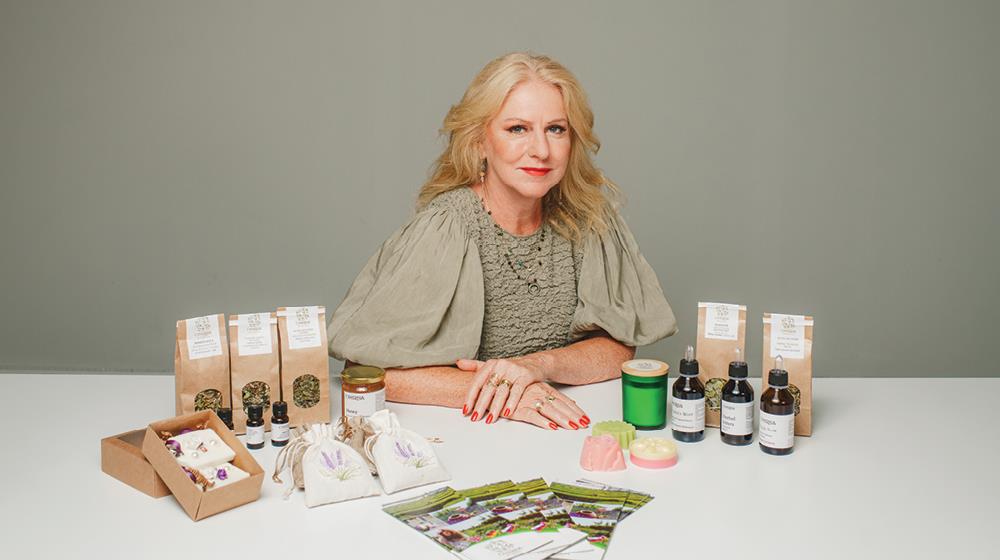
Combining organic cultivation, botanical knowledge and agritourism, Cyherbia Botanical Park has transformed a personal vision into one of Cyprus' most distinctive rural destinations.
In the village of Avgorou, in Cyprus' Famagusta district, Cyherbia Botanical Park has created a unique model that combines organic farming, environmental education and agritourism. More than a botanical garden, it is a place where visitors discover Cyprus' rich herbal heritage while experiencing nature through learning, wellness and sustainable living.
Its success also demonstrates how the European Union's Common Agricultural Policy (CAP) can support innovative rural businesses that combine agriculture with education, tourism and environmental responsibility.
As part of the Eat Wisely Cyprus project, co-funded by the European Union under the IMCAP programme and implemented by IMH, Eat Wisely spoke with Miranda Tringis, botanist and co-founder of Cyherbia, about the park's journey and its vision for promoting Cyprus' botanical heritage.
A vision rooted in nature
Cyherbia began not as a business plan but as a personal mission.
Searching for natural alternatives to conventional medicine, Miranda Tringis became fascinated by the therapeutic properties of Cyprus' native herbs, including thyme, sage and lavender.
"Cyherbia was a crazy dream of two people with big ideas," she says.
Determined to share this knowledge, she and her family transformed previously uncultivated land into a botanical park dedicated to education, organic cultivation and sustainable living.
The project took almost eight years to complete before opening its doors in 2012.
"Every tree you see has been planted by our own hands."
Today, the park welcomes thousands of visitors each year while continuing to expand its educational and environmental activities.
Working with nature
Organic cultivation is at the heart of Cyherbia's philosophy.
No chemical pesticides or synthetic fertilisers are used. Instead, the park relies on biodiversity and natural ecological balance, allowing birds, insects and other wildlife to contribute to healthy cultivation.
"When we work together with nature, there is nothing better."
Different herbs are grown together following the principles of polyculture, creating healthier ecosystems and reducing the need for external interventions.
"Plants help each other."
This approach not only protects biodiversity but also produces high-quality herbs that form the basis of Cyherbia's products.
Preserving Cyprus' botanical heritage
Education is one of the park's main priorities.
Through guided tours, workshops and educational programmes, Cyherbia introduces visitors of all ages to Cyprus' medicinal plants, traditional herbal knowledge and the importance of protecting native biodiversity.
"People no longer know herbs," says Miranda Tringis.
By encouraging visitors to experience nature first-hand, the park helps reconnect people with Cyprus' botanical heritage while promoting healthier and more sustainable lifestyles.
From herbs to premium products
Cyherbia transforms organically grown herbs into a wide range of natural products, adding value to local agricultural production while preserving traditional knowledge.
Its product range includes herbal teas, essential oils, hydrosols, tinctures, natural cosmetics and lavender honey, all produced using carefully selected herbs grown within the park.
Harvesting takes place at the optimal stage of each plant's growth, while herbs are naturally dried to preserve their aroma and beneficial properties.
"Light destroys the properties of herbs," explains Miranda Tringis.
Steam distillation is used to produce essential oils and hydrosols, creating high-quality natural products for culinary, cosmetic and wellness applications.
By processing its own raw materials, Cyherbia demonstrates how primary agricultural production can be transformed into innovative, value-added products.
An experience beyond the botanical garden
Cyherbia has become one of Cyprus' best-known agritourism destinations, offering visitors an immersive experience that combines nature, education and recreation.
The Park features themed herb gardens, a botanical labyrinth, interactive activities and educational workshops, while annual events such as the Lavender Festival and the Pumpkin Festival attract thousands of visitors.
Rather than simply observing nature, guests are encouraged to engage with it-learning about medicinal plants, traditional uses of herbs and sustainable cultivation practices.
"We want people to enter another world," says Miranda Tringis.
This hands-on approach has helped position Cyherbia as a destination that offers authentic rural experiences beyond Cyprus' traditional tourism model.
Supporting the local economy
Cyherbia also contributes to the economic development of Avgorou and the wider Famagusta region.
By collaborating with schools, tourism organisations and local businesses, the park attracts visitors throughout the year, extending tourism activity beyond the summer season and creating opportunities for the local community.
Its success shows how agriculture can diversify into education, tourism and product development while strengthening rural economies.
Growing with the support of the Common Agricultural Policy
The development of Cyherbia has been supported by European rural development programmes, including LEADER, which helped finance essential infrastructure such as irrigation systems, herb processing facilities and visitor areas.
"Without this support, we would never have been able to start this project."
Beyond infrastructure, the Common Agricultural Policy has encouraged sustainable farming, organic cultivation and the diversification of rural businesses, enabling initiatives like Cyherbia to combine agriculture, education and tourism within a single sustainable enterprise.
Looking ahead
For Miranda Tringis, Cyherbia's future lies in continuing to grow while staying true to the philosophy on which it was founded.
The park aims to expand its educational programmes, develop new natural products and strengthen partnerships with schools, universities and tourism organisations, encouraging more people to discover the value of Cyprus' botanical heritage.
At the same time, sustainable cultivation and biodiversity will remain at the heart of every new initiative.
Growing a different future
Cyherbia Botanical Park demonstrates how agriculture can evolve beyond primary production by combining organic farming, product development, education and agritourism within a single sustainable business model.
Built on a personal vision and supported by opportunities created through the Common Agricultural Policy, the park has become a destination that celebrates Cyprus' natural heritage while contributing to the local economy and promoting healthier, more sustainable lifestyles.
"It is time to return to nature for our health and wellbeing," says Miranda Tringis.
Today, Cyherbia stands as an inspiring example of how innovation, environmental responsibility and entrepreneurship can work together to create lasting value for rural communities. By reconnecting people with nature and showcasing the richness of Cyprus' botanical heritage, the park demonstrates how sustainable rural initiatives can benefit both local economies and future generations.
About Eat Wisely Cyprus
This feature was produced as part of the Eat Wisely Cyprus project, co-funded by the European Union under the Information Measures Relating to the Common Agricultural Policy (IMCAP) programme and implemented by IMH.
The views and opinions expressed are those of the authors and do not necessarily reflect those of the European Union.
This interview first appeared in the July edition of InBusiness magazine. Click here to view it.
