






A discussion on issues related to the coexistence of maritime activities and the directions of future European ocean policy took place during the plenary session of the European Parliament in Strasbourg.
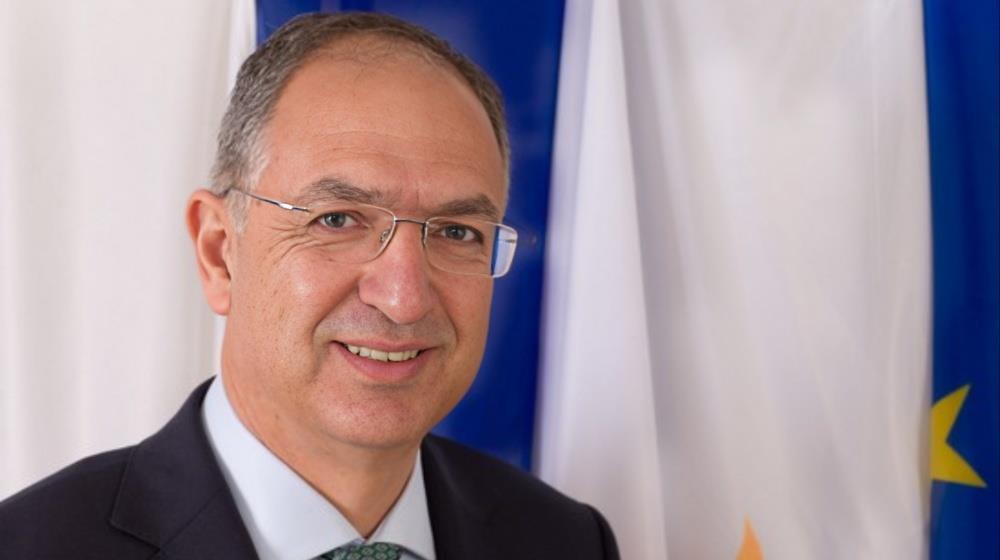
The European Commission was represented by the Commissioner for Fisheries and Oceans, Costas Kadis, who congratulated the rapporteur of the report and the shadow rapporteurs for their work, noting that maritime spatial planning is at the heart of the European policy agenda. In particular, he added, this is especially relevant in view of the preparation of the forthcoming Ocean Act under the relevant European Ocean Pact, which is expected to be adopted by the end of the year.
The Commissioner stressed that the report includes coherent maritime spatial planning, which presupposes the shared use of maritime space by different activities and stakeholders. He explained that national maritime spatial plans are increasingly exploring ways to combine multiple uses of the sea, such as fisheries, aquaculture, and marine protected areas.
The objective, Kadis noted, is to ensure sustainable and adaptive, climate-smart management. To achieve this, Member States must rely on the best available and up-to-date data and information, which is available through the maritime spatial planning platform.
The Commissioner also underlined the importance of fisheries and aquaculture for food security and the economy of coastal regions, stressing that the future Ocean Act will seek to preserve sufficient maritime space for these activities, in combination with other uses such as renewable energy sources and maritime transport. He added that the objective of further integrating aquaculture and shellfish farming is in line with the EU Strategic Guidelines for Aquaculture.
He also referred to the need to strengthen regional cooperation and governance at sea-basin level, noting that the cross-border nature of many maritime activities makes coordination between Member States and third countries essential.
He stressed that the Ocean Act will examine the strengthening of regional governance, building on the work of regional organisations and enhanced cooperation with non-EU countries.
Following the conclusion of Members’ interventions, the Commissioner stated that the Commission’s vision for fisheries and aquaculture with a horizon of 2040 will form a coherent policy framework aimed at addressing the needs of both sectors, which are considered strategic users of maritime space and crucial for the EU’s food sovereignty and security.
Kadis: Implementation of the new steel regime is essential
During a debate held in the plenary session of the European Parliament in Strasbourg on the negative trade-related effects of global overcapacity in the Union steel market, extensive reference was made to the pressures faced by the European steel industry and to the measures promoted by the European Commission to protect it. It is noted that the relevant vote on the report will take place on Tuesday, 19 May.
The Commissioner for Fisheries and Oceans, Costas Kadis, in his address underlined that Europe is the third-largest steel producer worldwide, with the sector supporting around 300,000 jobs in the EU, stressing that this is a critical part of the economy and that maintaining a strong and sustainable European steel industry is essential.
He pointed out that in recent years the sector has been affected by high levels of global overcapacity, which are expected to reach 721 million tonnes by next year—an amount corresponding to more than five times the EU’s annual steel consumption. He noted that this development has already led to losses of 65 million tonnes in production and up to 100,000 jobs in Europe over the past two decades.
The Commissioner stated that international efforts within the framework of the Global Forum on Steel Excess Capacity have not delivered the expected results, which has led the European Union to the need to adopt an autonomous protective measure for the sector, following the expiry of the current safeguard mechanism on 30 June 2026.
Kadis noted that the timely adoption and implementation of the new framework from 1 July 2026 is considered critical in order to avoid a protection gap that could lead to increased imports, price pressure, stockpiling, and potentially further losses in production activity within the EU.
The Commissioner also stressed the importance of international cooperation in addressing global steel overcapacity, while expressing his gratitude to the co-legislators and the Presidency of the Council for their contribution to reaching an agreement and advancing a workable framework for the sector.
He stated that the final text reflects the scale of the challenge faced by the European steel industry and highlights the EU’s ability to act swiftly and in a coordinated manner to protect strategic industrial sectors.
