








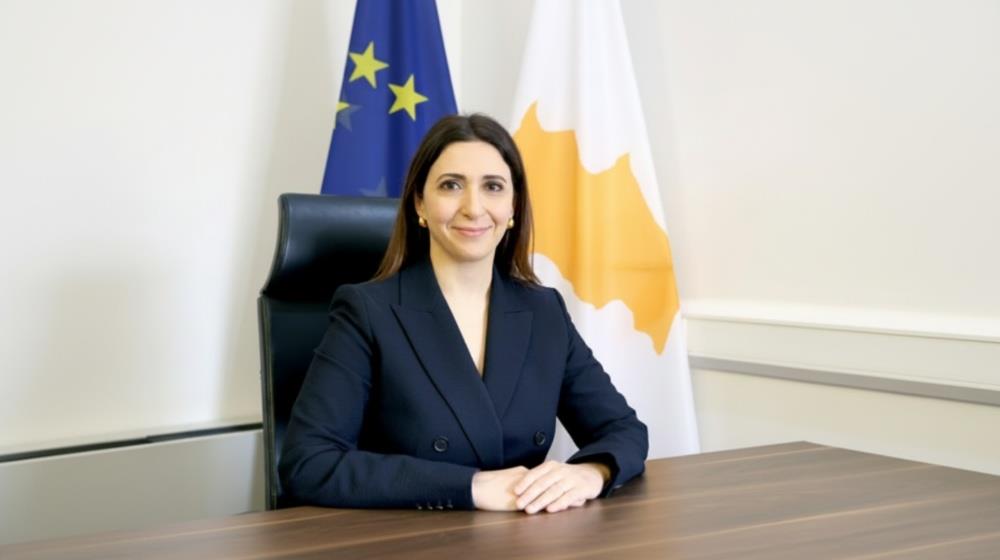
Cyprus, with the vision of 'An Autonomous Union, Open to the World,' has completed the first half of its six-month Presidency of the Council of the European Union.
The results so far have been particularly positive and can be seen in all policy areas and indeed with significant benefits for the everyday life of European citizens.
This is has also been emphasised by the Deputy Minister for European Affairs Marilena Rauna who, in an interview with InBusinessNews, reviews the achievements of the Cyprus Presidency of the EU so far, while also analysing Nicosia's aims and priorities on a number of important issues, such as the security of the European Union, strengthening competitiveness, and housing.
According to Raouna says, one of the main issues that the Cyprus Presidency of the EU is being called upon to manage is the negotiations for the new Multiannual Financial Framework 2028-2034, which will determine the strategic priorities and resources of the Union for the coming years, emphasising that "our goal is, by June 2026, to present a mature and comprehensive negotiating package, which will allow for the achievement of a political agreement by the end of 2026."
"The Cyprus Presidency is therefore working to leave a substantial imprint on the European construction, contributing to the promotion and shaping of European policies with a tangible and positive impact on the everyday lives of citizens, while strengthening the Union's position in the world," the Deputy Minister for European Affairs emphasises, among other things.
The first quarter review
The first three months of the Cyprus Presidency have been completed. How do you assess the work that has been done to date?
Now entering the fourth month of the Cyprus Presidency, we can report with satisfaction that the results achieved to date are particularly positive and measurable in all policy areas.
At the same time, they confirm, on the one hand, the correct and substantial preparatory work that took place over approximately two years, and on the other hand, the seriousness and effectiveness with which Cyprus exercises its institutional role.
By formulating consensual proposals even in particularly difficult dossiers that require unanimity, while demonstrating the necessary flexibility in light of international and regional developments.
In this context, the vision of the Cyprus Presidency, which is summarised in our central message, "An Autonomous Union, Open to the World," as well as the key priorities we set, with emphasis on the wider Middle East and Gulf region, the geopolitical and geoeconomic dimension and importance of developments in our region as well as in maritime security, prove not only timely but also essentially necessary for the EU in the current circumstances.
As for the results of the Cyprus Presidency so far, they are assessed as being particularly positive, with significant benefits for the everyday life of European citizens, but also in direct connection to the goals we set per priority pillar.
For example, under the pillar 'Autonomy through Security, Defence and Preparedness,' the Cyprus Presidency took specific and measurable steps to strengthen European security.
Following the significant progress made over the past year at EU level, with the potential to mobilise up to €800 billion for defence, the activation of the SAFE financial instrument for joint investments was promoted. Through this, support has been approved for 16 Member States since February, including Cyprus, which secured €1.2 billion in funding to strengthen their defence capacity, with a significant amount immediately disbursed.
Simply put, these are specific investments that enhance the security of the EU, as well as of individual member states, including Cyprus, in a period of increased geopolitical challenges.
In the same context, the Cyprus Presidency is promoting the Regulation on Military Mobility, an important step towards a “military Schengen zone” in the EU.
The aim is to move military personnel and equipment between member states faster and more simply, through common standards and less bureaucracy, as well as investments in critical infrastructure such as roads, ports and railways.
Simply put, it strengthens the EU's ability to respond quickly to crises and ensure the security of its citizens.
I should also mention that the Cypriot Presidency successfully concluded the negotiation on the legal framework for the implementation of the European Council agreement, for the granting of a loan of €90 billion to Ukraine, for the years 2026-2027, which will cover its urgent financial needs.
Furthermore, within the framework of our priority pillar for a 'Union Open to the World,' just one week after taking over the Presidency, Cyprus contributed to reaching an agreement, after 25 years of negotiations, for the adoption of two EU Council Decisions on the signing of the Partnership Agreement and the Interim Trade Agreement between the EU and the Mercosur countries.
These agreements, which create one of the largest free trade areas in the world, open up new opportunities and prospects for European businesses, while providing strong safeguards to protect our most sensitive sectors, on the basis of a fair and sustainable trade framework. At the same time, they strengthen the EU's geopolitical and economic footprint.
Under the pillar of strengthening the EU's competitiveness, it is also particularly important to reach an agreement within the Council on a targeted amendment to the market stability reserve, in relation to the new emissions trading system for buildings, road transport and other sectors. This amendment is important for many Member States as it aims to protect consumers from large fluctuations in carbon prices which affect the cost of energy.
The Cyprus Presidency also reached an agreement with the European Parliament on the biggest reform of the Customs Union framework since 1968, establishing the new European Customs Authority. This new Authority will oversee the EU Data Hub where Member States will submit customs data. A very significant achievement, as it is estimated that this will save Member States up to €2 billion per year.
At the same time, we are promoting the simplification of European legislation, working in parallel on seven legislative packages, aiming to reduce administrative burdens, especially for small and medium-sized enterprises. These legislative proposals are estimated to lead to significant savings for companies, amounting to around €15 billion per year in administrative costs, enhancing their competitiveness.
Work continues at an intensive pace, at all levels, with the aim of achieving tangible results in a wide range of policy areas, including defence, trade, energy, environment, agriculture, competitiveness and health, EU enlargement and of course the new Multiannual Financial Framework.
Regarding the meetings that have taken place during the first quarter of the Cyprus Presidency, the numbers clearly reflect the size of the undertaking. Specifically, 73 informal meetings of high and technocratic level have already taken place in Cyprus, in all the provinces, during which approximately 6,000 participants have been hosted.
By the end of the Presidency, it is estimated that approximately 260 meetings will be held in our country, in the context of which a total of approximately 30,000 visitors will be hosted.
In Brussels, 21 ministerial meetings, two EU-Montenegro intergovernmental conferences, as well as two informal ministerial meetings on the accession process of Moldova and Ukraine, were held under the Cyprus Presidency.
Two extraordinary online ministerial meetings were also organised, on housing and energy, respectively – two of the most important European challenges.
More than 860 meetings were also held at the level of the Permanent Representatives Committee, Committees and Working Groups, while the Cyprus Presidency represented the Council in 21 political trilogues and in more than 30 interinstitutional technical meetings with the European Parliament.
What Cyprus wants to achieve
What does Cyprus want to achieve through its Presidency of the Council of the EU?
Our main aim is to give substantive content to an objective that has been discussed at the European level for years - the strategic autonomy of the European Union. Our ambition is to contribute as a Presidency to turning theory into practice, through specific policies and tangible results.
This approach runs through all of our priorities, as well as our work: From strengthening European defence and security and the safety of citizens to strengthening the competitiveness of the European economy, promoting important trade agreements, and also the energy union, with an emphasis on interconnections and energy networks, to the social cohesion of the Union.
At the same time, we place particular emphasis on policies that directly touch the everyday lives of European citizens, such as housing, but also on building a Union that leaves no citizen behind.
In this context, initiatives such as the European policy on critical medicines - which aims to ensure the adequacy and unhindered access to pharmaceuticals, such as antibiotics, insulin and analgesics - are characteristic examples of strengthening the resilience and social dimension of the Union, which we as the Presidency are promoting.
Essentially, we approach the Presidency as an important opportunity to move forward with further European integration across a wide range of policies - from the completion of the common market, to the Energy and Health Union.
At the same time, we seek, through the Cyprus Presidency, to further strengthen the role of Cyprus, both within the European Union and at a regional level.
And another equally important aspect concerns the Cyprus Problem: for three months now, and for another three, the heart of the entire European Union has been beating from its last occupied member state. This creates, at the national level, an important opportunity for highlighting and raising awareness of the Cyprus Problem as a European issue, which we are systematically exploiting through many actions of our Presidency.
As an example, I would like to mention the visit of the President of the European Commission and the College of Commissioners to the Green Line, as part of their established visit to the presiding country, which offered the opportunity to see firsthand the consequences of the Turkish occupation on European territory.
The Cyprus Presidency is therefore working to leave a substantial imprint on the European construction, contributing to the promotion and shaping of European policies with a tangible and positive impact on the everyday lives of citizens, while strengthening the Union's position in the world.
The priorities of the Cyprus Presidency
What are the main issues that our country is being called upon to manage during its Presidency?
The agenda that the Cyprus Presidency is being called upon to manage is particularly broad and demanding, and reflects the multiple and complex challenges that the European Union faces today.
Security issues are at the heart of the agenda. Strengthening European defence, defence preparedness and security of the EU is a key priority, with particular emphasis on maritime and internal security, the protection of critical infrastructure, as well as economic and water security.
At the same time, the Union is being called upon to strengthen its resilience against hybrid threats, effectively defending democratic institutions.
Migration is also a key issue - as a key aspect of the Union's security - in both its internal and external dimensions, with the aim of shaping a comprehensive, effective and balanced European policy.
In the same context, the fight against organised crime, with an emphasis on drug trafficking, terrorism and radicalisation, is also a priority. Moreover, a comprehensive Union Security Strategy is also being formulated.
In the area of competitiveness, the Cyprus Presidency is negotiating over 20 legislative proposals to reduce bureaucracy and simplify rules for European businesses, advancing negotiations on seven “simplification packages”. The aim, as I mentioned above, is to substantially reduce the administrative burden, especially for small and medium-sized enterprises. These proposals are estimated to lead to savings of approximately €15 billion per year in administrative costs, thus strengthening the competitiveness of the European economy.
At the same time, particular emphasis is placed on completing the Single Market, attracting investment and deepening capital markets. Of central importance are energy security, the green and digital transition, as well as strengthening connectivity, especially for island states, along with the protection of agricultural and food systems.
We are working closely with the European Commission, which is progressing in the preparation of the European Strategy for Islands and Coastal Regions, and at the end of June, we will host a high-level conference in Cyprus to present the strategy, under the auspices of the Cyprus Presidency and the Executive Vice-President for Cohesion and Reforms, Raffaele Fit.
In the field of foreign policy, the Cyprus Presidency works within the institutional framework set by the Treaties to promote the enlargement of the Union, the strengthening of relations with the Southern Neighbourhood, the Middle East and the Gulf countries, as well as with strategic partners such as the United States and the United Kingdom. At the same time, a strong, open and sustainable trade policy for the Union is promoted.
It is important that at this juncture, and despite the successive challenges, the European model proves to be particularly strong and resilient. The European Union, as a single market of almost half a billion citizens and the largest economic and trading bloc in the world, operates in an increasingly unpredictable international environment, as the most reliable and predictable partner.
At the same time, under the current circumstances, the Union is being called upon to combine its non-negotiable principles and values with the defence of its strategic interests. Its trade policy, based on international trade law and the creation of an extensive network of trade agreements and alliances, is a typical example of this balance between principles and interests.
Particular emphasis is also given to social issues, such as the rule of law, affordable housing, addressing child poverty and protecting our children online, the rights of people with disabilities, as well as strengthening European health policy, including mental health.
The Cypriot Presidency is finally called upon to manage one of the most critical institutional issues: the negotiations for the new Multiannual Financial Framework 2028-2034, which will determine the Union's strategic priorities and resources for the coming years.
Despite the challenges, which are many, the European Union has proven over time that it can produce results and turn crises into opportunities.
In light of current geopolitical developments, the need for the Union to harness this potential arises once again: to move decisively towards a true Energy Union, as reflected in the important decisions of the March European Council on energy prices, but also to further strengthen its collective security and defense, to complete the Single Market and to overall safeguard its resilience and social cohesion.
This includes the holding of the Informal Council of Heads of State and Government in Cyprus on 23-24 April, where leaders will be invited to discuss developments in the region and European security issues, including the mutual assistance clause (Article 42(7) of the Treaty on European Union).
Following the practical solidarity shown towards Cyprus by Greece, France, Italy, the Netherlands, and Spain, following the isolated incident at the Akrotiri Base, Cyprus, together with other member states, have highlighted the need to determine the operational application of the article, if it is activated by any member state.
The new Multiannual Financial Framework will also be discussed at the Informal Leaders' Council in Cyprus, while at the same time, a special Summit is planned with the participation of leaders from the wider region, in light of recent developments.
Only a more competitive Europe can be a more autonomous Europe
Specifically regarding economic and competitiveness issues, what are the priorities of the Cyprus Presidency?
Cyprus places at the centre of its Presidency a clear and strategic message: Only a more competitive Europe can be a more Autonomous Europe.
We therefore prioritise strengthening and deepening the Single Market, so as to fully exploit its potential as a key driver of growth, investment and resilience.
At the same time, as I mentioned before, we are focusing on simplifying legislation and reducing the administrative burden, especially for small and medium-sized enterprises, which constitute the backbone of the European economy.
A central priority is also to strengthen innovation and technological development. In an environment of intense geo-economic competition and rapid technological developments, Europe must invest in research and innovation, digital sovereignty and productivity growth.
The green and digital transitions are not seen as burdens, but as opportunities for sustainable development and the creation of quality jobs.
We place particular emphasis on the energy and digital autonomy of the Union. On the diversification of suppliers and routes, on ensuring affordable and predictable energy prices, as well as on strengthening interconnections and modern infrastructure. Energy security is both an economic and strategic goal.
International trade is a key driver of competitiveness. The Cyprus Presidency is promoting an ambitious, open and sustainable trade agenda, aiming at diversification and ensuring market access. In this context, emphasis is placed on free trade agreements with partners such as Australia, the United Arab Emirates and India, while leveraging the IMEC economic corridor as a strategic tool for connectivity.
At the same time, the aim is to strengthen the transatlantic economic relationship with the United States, with the goal of enhancing predictability and confidence in the markets.
At the same time, we are promoting economic security, with an emphasis on protecting supply chains, critical infrastructure and sensitive technologies, as well as reducing strategic dependencies. Deepening capital markets is also important, in order to facilitate access to financing and mobilize more private capital for investment.
Competitiveness, however, must concern all regions of Europe. From the islands to the most remote areas, ensuring strong connectivity, sustainable production and resilient agricultural and food systems. In this context, the first comprehensive European strategy for islands and coastal regions is being promoted during our Presidency, in cooperation with the European Commission, which will be presented around the end of June in Cyprus, at a high-level conference under the auspices of the Cyprus Presidency and the Executive Vice-President of the European Commission for Cohesion and Reforms, Raffaele Fit.
This strategy will allow for the effective integration of the specific needs and conditions of island regions into European policies and financial instruments.
Our overall goal is a Europe that is strong, technologically advanced, with strong regional cohesion and capable of acting confidently in an environment of increasing international competition.
The new Multiannual Financial Framework and the role of Nicosia
Do you think that during the Cyprus Presidency, the conclusion of the new Multiannual Financial Framework will be possible? And if so, what will this mean for our country?
The new Multiannual Financial Framework is undoubtedly one of the most important files, if not the most important, that the Cyprus Presidency has "inherited" and is negotiating. For this very reason, the new MFF will also be one of the topics of discussion at the leaders' level, at the Informal Council of Heads of State and Government that will take place in Cyprus in a few days, on 23-24 April.
The MFF is a fundamental pillar of the functioning of the Union, as it constitutes the budgetary instrument through which the European Union implements its policies and promotes its strategic objectives and priorities. At Union level, it is an expression of political solidarity and collective strategy of the Member States.
Therefore, the development and outcome of the MFF negotiations is the collective responsibility of all Member States, which are called upon to contribute to achieving convergences and compromises, based on solutions that benefit both the Member States and Europe as a whole.
At the same time, reaching an agreement on the Union's long-term budget in a timely manner is crucial, as it ensures a smooth transition between programming periods, avoiding interruptions in the financing of projects in areas of strategic importance and enhancing political and economic stability and predictability, ensuring the Union's long-term financial capacity.
The objective set by the European Council in December 2025, reflecting the political will of EU leaders, is to reach an agreement on the new MFF by the end of 2026, in order to enable the start of implementation of the financial programmes of the new period 2028-2034, from 1 January 2028.
The Cyprus Presidency is therefore working intensively, both at a technocratic and political level, and our goal is to present a mature and comprehensive negotiating package by June 2026, which will allow for the achievement of a political agreement by the end of 2026. The Irish Presidency will continue the negotiations from the point we deliver, to achieve the goal set by the European Council.
It is a fact that the discussions in the Council so far have highlighted significant divergences between the Member States, in several of the key parametres of the new MFF.
As the Cyprus Presidency, we operate as an honest mediator, formulating compromise proposals, facilitating open and constructive dialogue with the institutions and with all member states, and seeking to shape the necessary convergences.
Our goal is a budget that responds in a balanced way to the EU's existing and new strategic priorities, while taking into account the particular needs and challenges of all Member States and regions of the Union.
Housing is a central social priority
One of the most serious issues that concerns Europeans is the issue of housing, which led to the preparation of an ambitious European Affordable Housing Plan. What measures does this Plan include and what role is the Cyprus Presidency called upon to play in its implementation?
It is important to mention that the Cyprus Presidency is the first to set housing as a central social priority, recognising its importance for citizens and social cohesion of the European Union, but also its connection to competitiveness.
Affordable housing has become a major social issue at European level and is increasingly recognised as a fundamental social right, with direct implications for social cohesion, sustainable development and demographic balance. The increasing pressures on the housing market, particularly for young people, middle-income workers and vulnerable groups, have led to an intensification of the debate at EU level.
In this context, the European Affordable Housing Plan was presented, marking the transition towards a more coordinated European approach, with full respect for national competences. The Plan includes, among others, measures to strengthen the supply of affordable housing, accelerate and simplify permitting procedures, make better use of European financial instruments, and more effectively address pressures in areas with severe housing problems.
Although housing policy remains primarily a national competence, the EU now recognises its importance and is gradually developing a more coherent policy framework.
In Cyprus, the Christodoulides Government has placed housing high on its priorities, implementing important targeted policies and plans to enhance access to affordable housing. The challenges faced by Member States share common characteristics, which make European cooperation particularly important.
During the recent informal videoconference of the Ministers responsible for housing, there was broad consensus on the need for coordinated action. The Cyprus Presidency is building on and strengthening this momentum, contributing to the development of common lines at the political level.
The Informal Ministerial Meeting on Housing to be held in Cyprus in May will provide an opportunity for substantive dialogue to determine the next steps.
Furthermore, the presentation of further initiatives by the European Commission is expected in the coming months, particularly on issues related to short-term rentals and strengthening the supply of housing, including through the European Housing Strategy, within the framework of the European Affordable Housing Plan.
Affordable housing is not a privilege. It is a prerequisite for dignity, social stability and a sustainable perspective for future generations. Through this approach, the Cyprus Presidency has highlighted housing as one of the most important social issues that it promotes at the European level.
(Source: InBusinessNews)
