






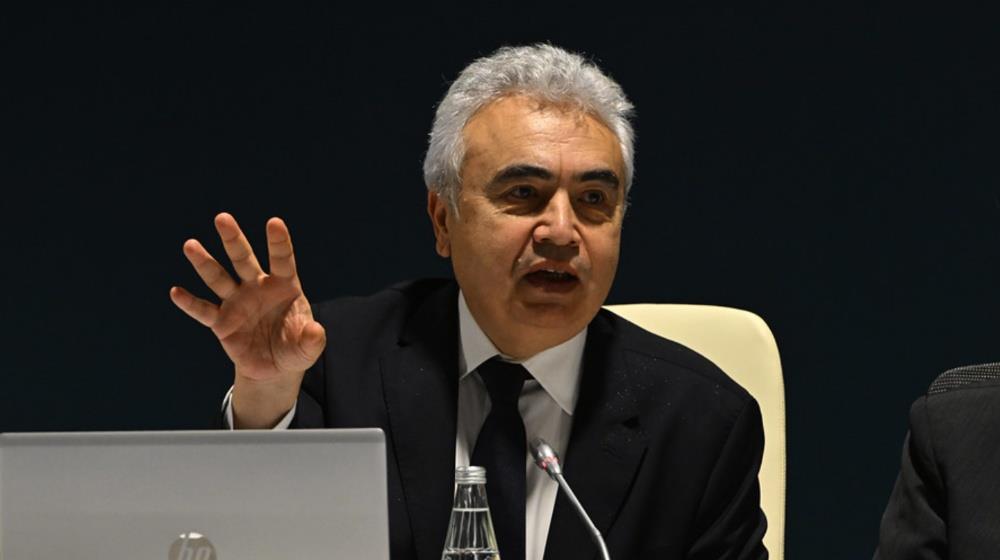
April is expected to be “even worse than March” for the global energy sector, even if the war in Iran ends soon, the Executive Director of the International Energy Agency (IEA), Fatih Birol, warned on Monday.
Speaking at a press conference following a meeting with International Monetary Fund (IMF) Managing Director Kristalina Georgieva and World Bank President Ajay Banga, Birol said the three institutions are coordinating their response to the economic fallout from the conflict in the Middle East.
While oil tankers delivered cargoes in March that had been “loaded before the crisis began,” Birol noted that “nothing has been loaded” onto tankers this month, highlighting a sharp disruption in supply.
“This is the biggest energy crisis in history,” he said. “It affects oil and natural gas, but also other essential commodities such as fertilisers, petrochemicals, and even helium.”
Georgieva stressed that the three organisations are pooling their “capabilities” to assess not only how the crisis is evolving, but also “how countries are responding.”
Both the IMF and the World Bank said they are each able to disburse at least $20 billion to support the countries most affected. Banga added that, if the crisis persists, the World Bank could redirect other programmes, making between $50 billion and $60 billion available within the next six months.
However, Georgieva warned that the crisis could drag on even after the war ends due to “damage to infrastructure” in the oil and gas sectors across Gulf countries.
According to the IEA, more than one-third of energy infrastructure in the Gulf has suffered significant damage since the war erupted on February 28, following attacks by the United States and Israel on Iran, which responded by effectively closing the Strait of Hormuz.
Despite the grim outlook, Birol struck a more optimistic note, pointing out that more than 80% of global strategic reserves remain available.
He also urged countries not to impose export restrictions, calling on them to act as “responsible members of the international community.”
(Source: CNA)
