







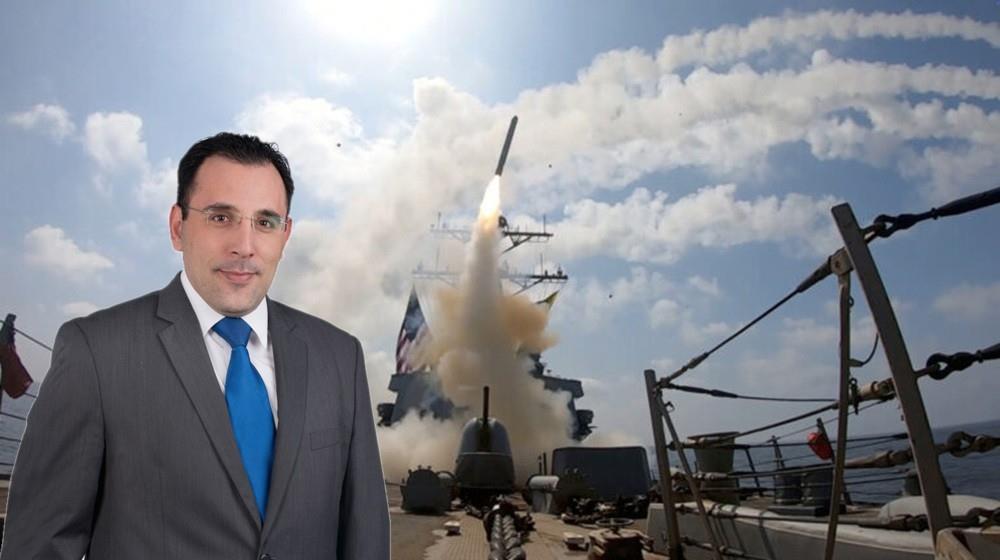
Tourism, shipping, investments, energy, inflation and household purchasing power are expected to be affected due to developments in the Middle East, economist Tassos J. Yiasemides has said, adding that the magnitude of the impact on the Cypriot economy will depend on the intensity and duration of the conflicts.
He also mentioned that an increase in energy prices for households and businesses is likely, as electricity generation depends largely on fossil fuels and imports.
"The point is for the whole issue to be temporary," he said, noting that last time, during the twelve-day war, fuel price increases were temporary and could be managed accordingly.
"This time, however, there is the involvement of more countries and Cyprus has to deal with the events of recent days, a result of the attack on the British bases," Yiasemides emphasised.
Furthermore, he stated that "Cyprus is an open economy with a strong dependence on imports of goods, so the general disruption in global trade may lead to increased prices and delays in the receipt of some products."
Yiasemides stressed that "the economic impact and how the growth rate of the economy and the budget for the year will be affected should be evaluated on an ongoing basis," because if the conflict lasts more than a few weeks or months, as he noted, "Cyprus may see slowing growth and budgetary pressures."
More specefically, Yiasemides said that widespread conflicts in an energy-sensitive region cause concerns and negative consequences for both the global and European economies, while any problems that cause a contraction in the production and transportation of oil and natural gas, which are the main energy raw materials, drive the prices of these goods.
"It is understandable that the prolonged period of increased oil and gas prices will lead to a period of price increases and inflationary pressures," he noted.
According to Yiasemides, in addition to the problems in the Strait of Hormuz, through which 20% of global oil trade passes, oil and natural gas production infrastructure is being affected, while many tankers are anchored in the Persian Gulf, with insurance companies either not insuring them or increasing premiums.
"So in addition to the price of fossil fuels, transportation costs are also increasing," he said.
The shipping sector will also be affected.
As a result, he continued, the shipping sector is also expected to be affected in Cyprus, but the magnitude will depend on the coming weeks, he said.
He noted, however, that Trump announced that the US would offer political risk insurance for ships transiting the Persian Gulf at a favorable cost and, if deemed necessary, there would be a Navy escort in the Strait of Hormuz.
"We are waiting to see whether the US President will release from US reserves if he sees prices increasing rapidly, an increase that is certainly considered beneficial for Russia, which exports considerable quantities of oil through pipelines to India and China," he added.
Yiasemides said that whenever there is an increase in the cost of importing oil and natural gas, this is expected to burden the cost of production and transportation within Cyprus.
He also mentioned that an increase in energy prices for households and businesses is likely, as electricity generation depends largely on fossil fuels and imports.
Impact on household purchasing power
According to Yiasemides, inflationary pressures, mainly due to increased energy costs and rising import prices, can affect the purchasing power of households, the profit margins of businesses and potentially affect the general level of prices and wages in the economy.
"At the same time, the prolonged increase in energy prices is expected to strengthen inflationary trends worldwide, with Central Banks being called upon to make renewed decisions to tighten their monetary policy and possibly increase interest rates," he added.
Reflection on the tourism sector
Moreover, Yiasemides told CNA that the events at the British bases and the cancellations of flights to and from Cyprus are causing concern for the tourism sector.
"Geopolitical instability, especially if international media intensifies the sense of danger for the region, may reduce travelers' confidence to visit Cyprus," he added.
He also mentioned that tourism demand is sensitive to perceived safety, and any negative image can hurt bookings and revenue.
"Careful management is needed since we may not be in a period of high tourist intensity, but it is an important period in terms of booking flow," he added.
Uncertainty reduces investment
Finally, Yiasemides said that geopolitical uncertainty generally reduces business and investment activity worldwide.
"Therefore, the flow of foreign investment in Cyprus is expected to be affected, as investors seek security in more stable markets," he added.
Many investors, in general, he continued, may postpone their investments until the situation normalses.