






The long-standing cooperation between social partners and the state has already yielded significant results, with the rate of workplace accidents having decreased by approximately 48% during the period 2014–2025, the Minister of Labour and Social Insurance, Marinos Moushouttas, has emphasised.
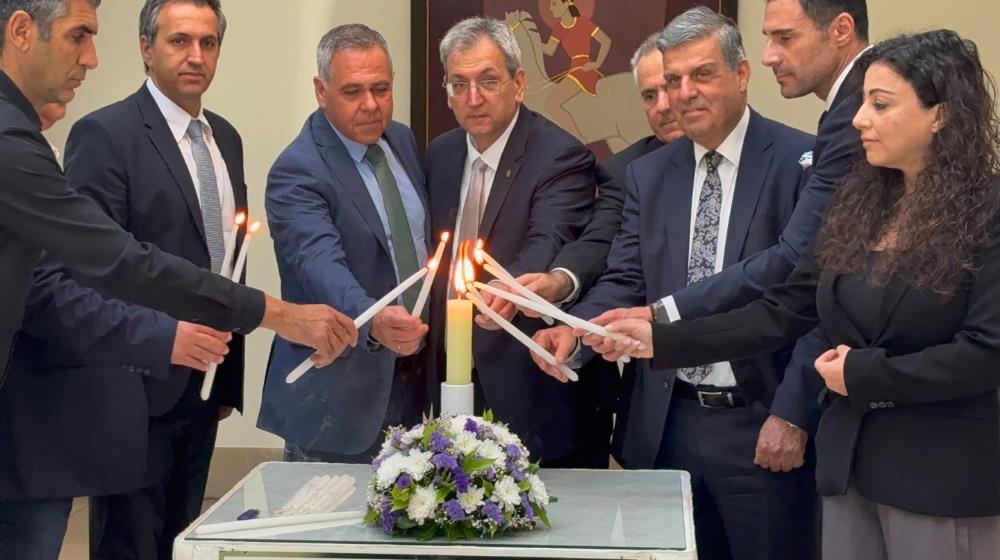
He was speaking at an event organised by SEK trade union, entitled 'Lighting of the Candle,' on the occasion of this year’s World Day in Memory of Victims of Occupational Accidents and Diseases on 28 April.
“Nevertheless, workplace offenses continue to occur, and we must intensify our efforts to achieve the ‘Vision 0’ goal of zero fatal incidents,” said Moushouttas. He stressed the need for stronger efforts by both social partners and the state to safeguard workers’ health and safety, as well as to ensure a healthy psychosocial working environment.
He noted that the event serves as a stimulus for deep reflection on unmet goals and the lives that have been lost.
According to the Minister, “taking into account the new risks brought about by technological progress, climate change, and demographic shifts, we must intensify our efforts to protect workers’ health and safety, which is a fundamental social right.”
He added that this year’s World Day is dedicated to psychosocial factors affecting health and safety at work. “Factors such as workload, role clarity, autonomy, and fair procedures significantly influence workers’ well-being,” he added.
The Minister said that violence and harassment in the workplace are undoubtedly serious problems and recognized risks to health and safety, falling under psychosocial occupational risks and affecting both the physical and psychological well-being of employees.
Referring to a 2024 European survey, Moushouttas noted a lack of specialized personnel for identifying and addressing psychosocial risks, noting that six out of ten employees hesitate to speak openly about the issue.
“This makes the need for coordinated action by social partners and the state even more urgent, in order to create the necessary synergies for a healthy psychosocial working environment,” he stressed.
Finally, Moushiouttas paid tribute to the victims of workplace accidents and occupational diseases. “It is our duty to ensure that every worker returns home to their family and loved ones safe and unharmed,” he concluded.
In his own address, SEK Secretary General, Andreas Matsas, said that “once again this year, we are called upon to honor the victims of workplace accidents and occupational diseases as part of the global effort to raise awareness and further mobilize social partners to reduce, and, if possible, eliminate workplace accidents, at a time when everything around us is changing rapidly.”
He noted that this year the focus is on psychosocial factors, which negatively affect the quality of employment and workers’ health, highlighting that the labor market itself is changing in a way that requires consideration of factors that may have been underestimated in the past.
Addressing the Minister of Labour, Matsas pointed out that one recurring issue concerns the Labour Inspection Department, which, although performing excellent work, “requires further strengthening in human resources so that it can meet its responsibilities in the new working environment more effectively.”
