






“The only way out of this turmoil is through diplomacy,” the European Commissioner for Sustainable Transport and Tourism Apostolos Tzitzikostas, has said.
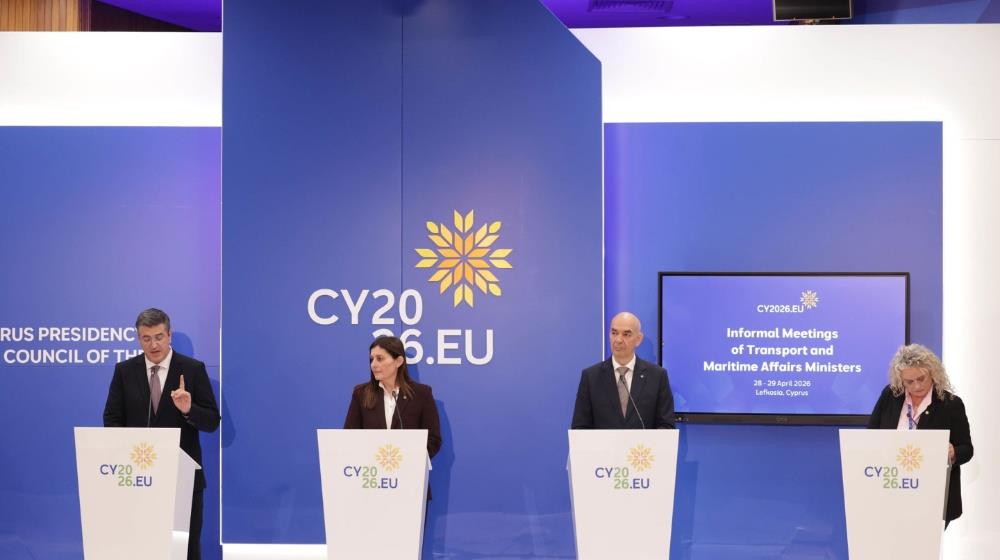
The European Commissioner was speaking at a press conference in Nicosia on 29 April, following the conclusion of the Informal Council meeting of Transport Ministers and Ministers responsible for maritime transport, held under the framework of the Cypriot Presidency of the Council of the EU in 2026.
Tzitzikostas emphasised that EU is working to secure alternative supply routes for Europe, including aircraft fuel imports from the United States, adding that if supply pressures intensify, emergency reserves must be used strategically and responsibly.
As he noted, the EU is preparing guidelines for the sector, including on airport slots, rules against fuel transfers, public service obligations, and the use of imported fuels. And if the situation deteriorates further, we are ready to propose temporary adjustments to the existing regulatory framework.
He added that the situation serves as a stark reminder of why we must accelerate the transition to alternative fuels, stressing that “the European Union must become energy independent.”
The Commissioner expressed concern, noting that without the full and lasting restoration of freedom of navigation, the consequences would be catastrophic. “Not only for Europe, but for the rest of the world,” he emphasised, while highlighting the EU’s priority for the safe evacuation of European ships currently in the Strait of Hormuz. “My thoughts are with the sailors trapped in this crisis,” he said.
Alternative supply routes for Europe
Tzitzikostas added that for the time being the market is absorbing the shock in the fuel market, although commercial aircraft fuel stocks are under pressure in certain parts of Europe, noting that Europe maintains emergency reserves that can be mobilised only if necessary.
Regarding Europe’s plans on the matter, he stressed that preparedness is essential, which is why “the ‘Accelerate EU’ plan has been promoted to limit the impact of the crisis on the transport sector,” noting also the creation of a new fuel observatory to monitor supply levels and stocks for all transport fuels, including aviation.
“We are also working to secure alternative supply routes for Europe, including aircraft fuel imports from the United States,” he said.
The Commissioner also referred to ports and the need for them to diversify toward clean energy, digital services, and innovation, noting that significant public and private investments will be required. He also said that attention will be given to small and medium-sized ports as well as those located in remote areas.
Regarding the Declaration signed on Wednesday in Nicosia, he said that “it marks a turning point in the way we view seafarers in Europe.” He added that this is a strong political commitment to the human dimension of the European shipping sector. “The declaration recognises that our competitiveness and resilience are important, but they are based on our human capital.”
Fuel data recording in Cyprus
Transport Minister Alexis Vafeades referred to the proceedings of the Informal Transport Council held that morning, noting the further strengthening of European transport infrastructure as a key pillar of resilience, competitiveness, and strategic autonomy.
The Minister of Transport also noted that all Member States agree on the need to strengthen the role of the Commission and improve coordination among Member States, noting that “the Presidency will summarise the main points that emerged from today’s discussion,” he noted.
In response to questions that followed the initial statements, Vafeades was asked to provide quantitative data on the reduction in fuel reserve levels and the estimated timeframe for the use of strategic reserves. He said that approximately 14 million barrels of oil passed through the Strait of Hormuz, but noted that “Europe does not depend on the Strait of Hormuz" clarifying that we still are affected.
He also said that in Cyprus “we are recording all activities related to fuel consumption,” explaining that the resulting data will be shared with member states. “This may lead to some understanding of how fuel is consumed and how we might be able to take some additional measures.”
In response to a question about state aid and the absence of the aviation sector from the European Commission’s relevant proposals, it was clarified that the Commission is willing to examine the issue should the need arise.
Protection of seafarers and support for shipping
In her own statement, Deputy Minister of Shipping Marina Hadjimanolis highlighted the importance of signing the Nicosia Declaration, describing it as “a joint political commitment with a clear message. That the future of European shipping depends first and foremost on its people.”
She noted that the Declaration underscores the strategic importance of maritime and shipping professions at a time of intense geopolitical developments, technological transformations, and increased demands for the green and digital transition.
She emphasised that its content provides answers to “real and shared challenges,” such as the skills shortage, the aging of the maritime workforce, the growing risks to seafarers’ safety, and the historically low participation of women in the maritime profession, highlighting the need for a more inclusive shipping industry.
“With this declaration, we, the Member States, commit to strengthening the education and training of our seafarers, with an emphasis on retraining and upskilling, so that they can adapt to new technologies, digital systems, cybersecurity requirements, and alternative fuels that are already transforming the shipping industry,” she noted.
Responding to a question regarding maritime safety and the possibility of creating a European force to ensure freedom of navigation in the Strait of Hormuz, she said that the issue is under discussion within the EU, with the aim of finding a diplomatic solution and in cooperation with the International Maritime Organization.
The Republic of Cyprus currently holds the Presidency of the Council of the EU for a six-month term that started on 1 January, 2026, as part of a Trio Presidency along with Poland and Denmark.
(Source: CNA)
