






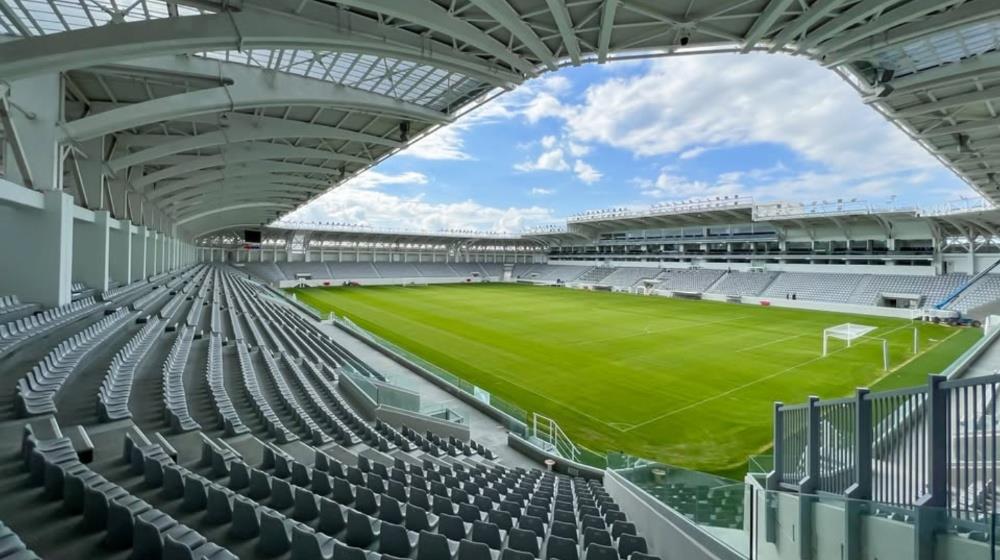
The European Commission has approved, under European Union State aid rules, public funding of €44.5 million by the Republic of Cyprus to cover the construction of the already-built new football stadium in Limassol, as well as its subsequent use by three professional football clubs under preferential conditions, according to an official announcement.
According to the decision, the first part concerns public financing amounting to €44.5 million for the construction of the Alphamega Stadium, which was completed in 2022. It is stated that “the new stadium replaced the city’s former stadium, which no longer met modern safety and technical standards and could not be upgraded to host international competitions.”
The funding was granted to the Cyprus Sports Organisation, which owns and manages the stadium. According to the Commission’s decision, “the new stadium provides a modern and safe sports facility for professional football, while it can also host events of public interest, such as educational and cultural activities, strengthening the region’s sports infrastructure and the city’s broader cultural life.”
The second measure approved by the Commission is the signing by the Cyprus Sports Organisation of a 20-year user licence agreement with the clubs Apollon Limassol, AEL Limassol and Aris Limassol. According to the Commission, through this agreement, “the clubs acquire the right to use the stadium for their home matches, paying a fixed annual rent set below market level.” In addition, “the preferential pricing is accompanied by specific obligations for the clubs relating to the operation, maintenance and safety of the facilities, as well as ensuring public access to the stadium.”
The Commission assessed the above measures and concluded that they are “appropriate to achieve the objective of providing and ensuring the effective use of modern sports infrastructure serving social, educational and cultural purposes.”
At the same time, it was “found that the measures are necessary, given the absence of private financing, and proportionate, as they are limited to what is strictly required to implement the project, while the effects on competition and trade between Member States remain limited,” on the basis of which approval of the State aid measures was granted.
(Source: CNA)
