







Over the past few years, short-term rentals have become one of the key factors influencing housing availability in major cities, both in Cyprus and Greece.
The conversion of thousands of apartments into “tourist accommodation” has significantly reduced the stock of properties available for long-term rental, putting upward pressure on rents and making access to housing more difficult for students, young professionals, and families.
Government responses have been largely inevitable. In several European countries, the short-term rental market is now subject to stricter regulation, including limits on new property registrations, higher taxation, and enhanced compliance controls. In Greece, since last year, the registration of new short-term rental properties has been prohibited in specific areas of major urban centres, while stricter operational and tax requirements have also been introduced. Similar discussions and policy interventions are now taking shape in Cyprus.
As a result, the short-term rental market is undergoing a significant transformation. Activity is increasingly concentrated among professional management companies that operate with scale, expertise, and the ability to absorb regulatory costs. In contrast, “retail” property owners — those managing one or two apartments — are finding the model progressively less attractive. Higher taxation, intense competition, periods of low occupancy, and growing operational complexity are unavoidably reducing net returns. It is therefore unsurprising that many owners are seriously considering switching their properties from short term to the long-term rental market, particularly where this transition is supported by targeted tax incentives, as is already the case in markets such as Greece.
However, the shift from short-term to long-term leasing is not an easy case. Many property owners remain cautious, primarily due to concerns over tenant reliability, potential wear and damage to their properties, and lengthy legal procedures in cases of problematic tenancy. These concerns, while largely justified, act as a deterrent even in periods when demand for long-term rental housing remains strong like it is nowadays.
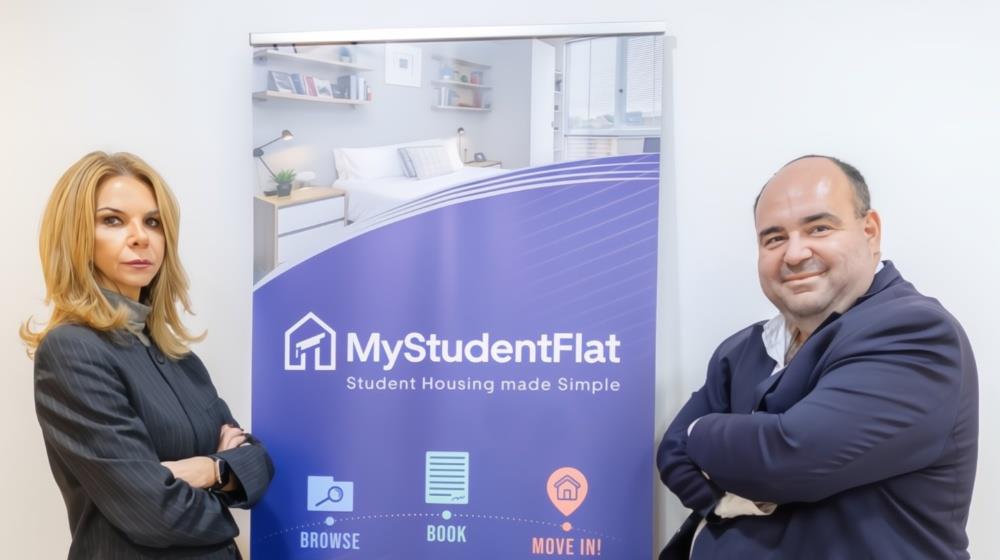
Within this evolving landscape, new business models that seek to bridge the gap between property owners and the real housing needs of society are emerging. One such example is MyStudentFlat, a Cypriot PropTech startup focusing on long-term leasing of apartments to students and young professionals, operating as an Institutional Anchor Tenant and Property Manager, supported by a robust digital tech infrastructure.
The company leases exclusively newly built apartments in major Cypriot cities for a minimum period of four years and subsequently makes them available for long-term rental to students and young people seeking to establish independent living, through the award-winning platform that it operates. All apartments are fully furnished and equipped, significantly reducing relocation and setup costs — an important consideration for both students and early-career professionals. The leasing process itself is end-to-end digital, from property search and selection to contract execution and payment of deposits and rent. After moving in, tenants benefit from 24/7 support through the company’s exclusive Tenant App and customer service centre, as well as optional additional services such as household equipment packages, weekly cleaning, and all-inclusive rent options covering electricity, water, communal charges, and internet.
At the same time, property owners working with MyStudentFlat, benefit from guaranteed rental income and stable investment returns, from the first day of collaboration, as they lease their units to a reliable corporate tenant. They are relieved of concerns regarding property upkeeping or day-to-day tenant management, as the company assumes full responsibility for the use & care of the apartment throughout the lease period, ensuring that the property is maintained in the good condition in which it was leased from the beginning.
Based on our experience during the first seven months of successful operation in Cyprus, we have observed firsthand that such Tenancy Management models can act as effective mechanisms for switching properties from short-term to long-term rental market, gradually easing pressure on housing availability. An increase in the availability of quality rental units can provide great relief for students and young professionals, in particular — groups often excluded from the housing market due to affordability constraints and limited supply.
What is clear is that housing pressure will not resolve itself automatically. The re-positioning of even a part of the housing stock absorbed by short-term stays into the long-term rental market, represents one of the few immediately available policy levers. Whether this can be achieved on a meaningful scale will depend on the creation of an environment of transparency, stability, and predictability for both property owners and tenants. It is within this context that the broader value of business models such as that of MyStudentFlat can be assessed — seeking to combine business sustainability with a clear social impact, by expanding housing supply, particularly for population groups with acute housing needs.
*Elena Orfanidou & Dimitris Economou, Co-Founders of MyStudentFlat
