

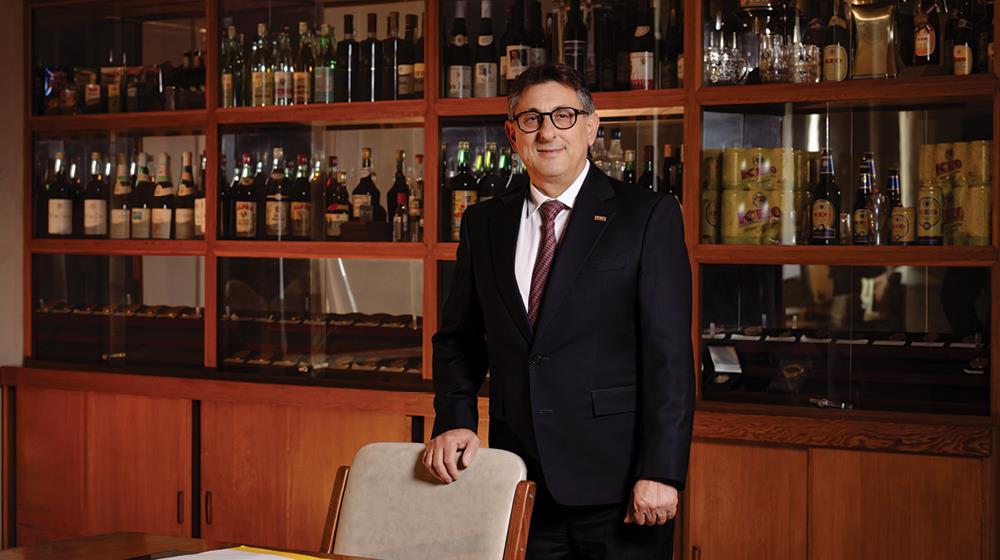
"An effective relationship between the Board and executive management relies on absolute transparency, mutual respect and clear role demarcation. A strong Chair-CEO relationship does not mean that the two must always agree. In fact, constructive disagreement can be extremely valuable. When different views arise, we foster a culture of constructive debate within the boardroom," suggests Ioannis Charilaou, Chairman at KEO plc.
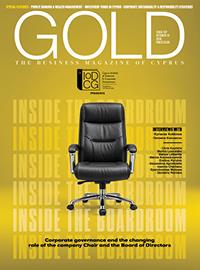
In an interview with GOLD magazine, Charilaou weighs in on the changes corporate governance is facing, as he shares what an effective relationship between the Board and executive management looks like.
What does your role as Chair look like in practice? Where do you draw the line between providing oversight and becoming involved in the organisation’s day-to-day operations and decision-making?
I see the Chair’s role primarily as one of stewardship, direction and accountability. A Chair must ensure that the company has a clear strategy, that appropriate governance and control mechanisms are in place, and that management has both the resources and the accountability required to deliver. A Chair should challenge management but also provide support. The line between oversight and management is strictly clear and well-defined: the Board sets the strategic direction, risk appetite and governance policies, while executive management retains full operational autonomy to run KEO’s day-to-day business. In addition, a Chair should be sufficiently close to the business but independent from management to exercise objective judgment. Day-to-day management belongs to the CEO and management team.
Is corporate governance in Cyprus genuinely changing the way companies are run, or does a box-ticking mentality still persist? How has the role and the expectations of a Chair evolved over the past decade?
The Board agenda has become significantly broader. Considerable attention is now devoted to geopolitical developments and conflicts affecting entrepreneurship and the wider economy, cost pressures, changing consumer behaviour, technology, sustainability, regulatory requirements, talent and the resilience of the business in an increasingly unpredictable environment. For a company such as KEO, which has a long and distinguished history and a strong connection to the Cyprus market, this takes on particular importance as it approaches 100 years of operation in 2027. A key consideration is how to protect the values, reputation and strengths that have been built over many decades while ensuring that the company continues to evolve and remain relevant. Businesses today do not have the luxury of adapting slowly. Consumer expectations, technology, competition and regulation can all change rapidly. The challenge for a Board is, therefore, to distinguish between short-term developments and structural changes that require the company to rethink how it operates, competes and creates value.
How do you distinguish between the roles of the Chair and CEO and what makes for an effective relationship between the Board and executive management? How do you handle situations when different views arise?
The distinction is quite clear: the Chair and the Board govern and provide strategic oversight; the CEO leads and manages the business. The Chair’s responsibility is to ensure that the Board functions effectively, while the CEO is responsible for executing the strategy and running the organisation. An effective relationship between the Board and executive management relies on absolute transparency, mutual respect and clear role demarcation. A strong Chair-CEO relationship does not mean that the two must always agree. In fact, constructive disagreement can be extremely valuable. When different views arise, we foster a culture of constructive debate within the boardroom. Divergent perspectives are welcomed as vital checks and balances; they are resolved through rigorous, data-driven analysis, ensuring that final decisions align strictly with KEO’s long-term strategic objectives and core values.
What has been the most difficult decision you have had to make as Chair and why?
During my tenure as Chair, one of the most difficult decisions I faced involved implementing significant changes that were necessary to protect the organisation’s long-term strategy, strength and sustainability. This is because every major decision carries a responsibility, not only to today’s stakeholders but also to future generations and to the legacy of the organisation.
Looking five to ten years ahead, what development do you believe could fundamentally reshape your industry, and what should boards be doing now to prepare for it?
I believe that the combination of continuous modernisation of facilities, business expansion, optimal asset utilisation, technological advancements, understanding evolving consumer behaviour, and increasing sustainability requirements – together with the need to understand and respond to geopolitical developments – will fundamentally reshape our industry over the next decade. Boards should therefore take proactive measures and work closely with executive management. Where appropriate, they must also engage external consultants to provide additional expertise and support. Their objective must be to anticipate potential challenges, address them in a timely manner and ensure that they remain ahead of developments rather than having to react at a later stage.
Is corporate governance in Cyprus genuinely changing the way companies are run, or does a box-ticking mentality still persist? How has the role and the expectations of a Chair evolved over the past decade?
Corporate governance in Cyprus has undoubtedly progressed. Regulation, increased transparency, greater scrutiny from stakeholders and the experience gained by Boards themselves have all contributed to raising standards. The era of box-ticking is rapidly disappearing, replaced by an imperative for genuine value creation, transparency and accountability. That said, good governance cannot simply be a compliance exercise. Policies, committees and procedures are necessary but they only provide the framework. The real test is whether there is a culture in which difficult questions can be asked, different views can be expressed and decisions are taken in the long-term interests of the organisation and its stakeholders. The expectations placed on a Chair have also increased considerably. Today’s Chair is no longer merely a formal meeting facilitator; they are expected to be an active steward of stakeholder trust, corporate culture and sustainability. Regulatory requirements and investor expectations have elevated governance into a core strategic driver rather than an administrative burden.
KEO plc
Founded in 1927, KEO plc operates in the production and distribution of beverages, with brands including KEO Beer, Agios Nikolaos Natural Mineral Water, KEO and Mallia Winery wines, St. John Commandaria, Five Kings Brandy, KEO Zivania, and SWS, Sun Island and KEO juices. At the same time, it imports and distributes a wide range of products, including Estrella, Erdinger, Kopparberg, Jim Beam, Teacher’s, Laurent-Perrier, Courvoisier, Lucas Bols, Genever, Roku Gin, Souroti, Loux, Trata, Coffeeway, Craft Beer, MexBeer, Takamaka Rum, Mundo Tequila, Freez Mixers and Vitamin Well.
This interview first appeared in the October edition of GOLD magazine. Click here to view it.