




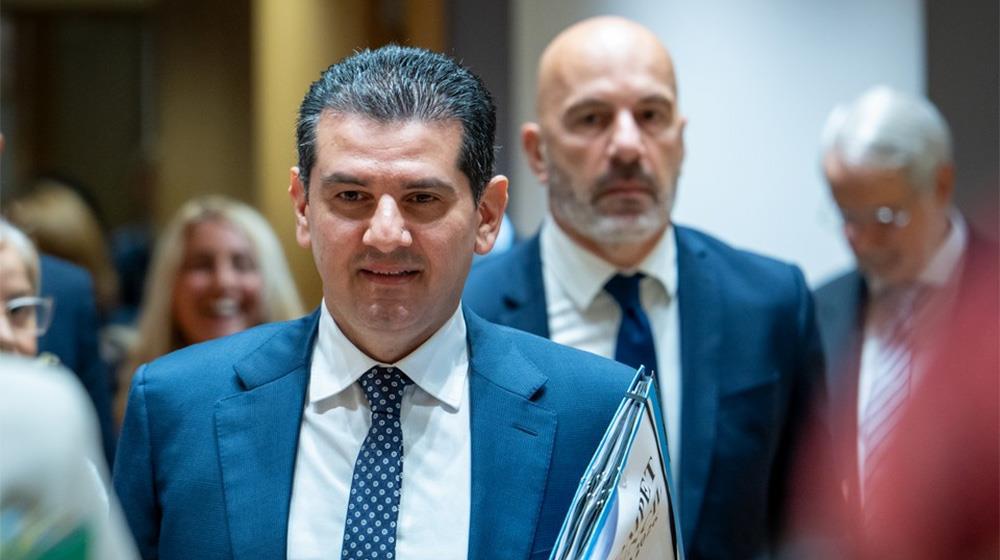
The need to ensure affordable electricity, strengthen energy security and promote a fair and flexible energy transition was discussed at the European Union Energy Council, which Cyprus' Minister of Energy, Commerce and Industry, Michael Damianos, attended on Thursday in Luxembourg.
The minister held two trilateral meetings jointly with Greek Minister for Environment and Energy Stavros Papastavrou. Specifically, he held a meeting with European Commissioner for Energy and Housing Dan Jørgensen, and one with Darragh O'Brien, Ireland's Minister for Climate, Energy and the Environment and Minister for Transport. Ireland holds the Presidency of the Council of the EU. The main topic of the discussions, with both the Commission and the Presidency, was developments on the Cyprus-Greece electricity interconnection (Great Sea Interconnector, GSI).
On the agenda, the minister stressed that the energy transition must deliver tangible benefits for citizens and businesses, contributing decisively to lower energy costs and to preserving the competitiveness of the European economy, while respecting national differences and the needs of all member states.
Looking ahead to winter 2026-2027, he underlined the importance of better coordination among member states and systematic preparation for possible disruptions to energy supply. He also pointed to the need to strengthen the resilience of energy systems and to take Cyprus' particularities into account in European planning.
On the energy policy framework beyond 2030, Damianos backed the adoption of realistic targets that can be adjusted, so that national circumstances, available infrastructure and the cost of the energy transition are taken into account. He made particular mention of the importance of energy storage, stronger electricity grids and the development of interconnections, in order to ensure energy security and a smooth transition to cleaner forms of energy. Finally, he welcomed recent developments concerning the Cyprus-Greece electricity interconnection.
During the discussion on electricity network charges, he highlighted the need for greater transparency and more effective use of the grids, while retaining sufficient flexibility for member states and respecting national competences in the area of taxation.