



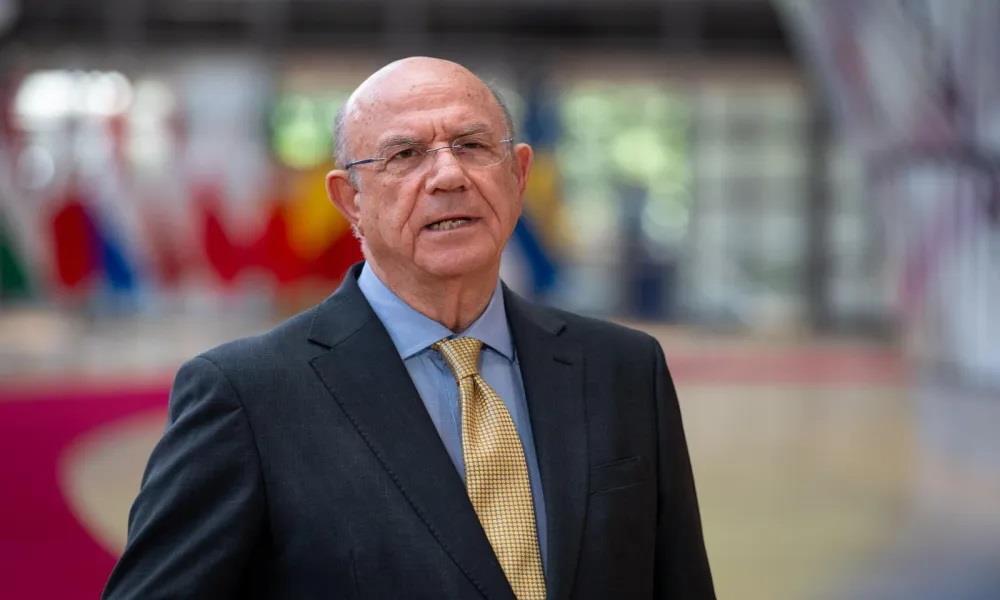
The Government's efforts, under the current conditions of the global energy crisis, are focused on containing fuel prices rather than achieving substantial reductions, Finance Minister Makis Keravnos has said, announcing that he would once again raise at European level the need for greater flexibility in the application of fiscal rules to address the impact of the crisis.
Speaking to journalists on the sidelines of an event marking European Statistics Day on 20 October, Keravnos also said that the Government was monitoring the implementation of the support measures already announced, noting that, according to an initial assessment by the Consumer Protection Service, prices of certain basic products had fallen by 5%.
Asked whether rising oil prices made additional support for citizens necessary, given that price increases appeared to be offsetting the existing measures, the Finance Minister said that the international situation meant that substantial price reductions could not realistically be expected.
"If anyone expects that, while we are at the centre of four wars, particularly in our region, which have created an enormous global energy crisis, then you understand that the effort must be to contain prices rather than expect sharp reductions," he said.
He noted that the Government had already reduced tax rates to the lowest level permitted under the European framework, while also seeking a derogation that would allow further reductions.
As he explained, securing such a derogation was not an easy process, referring also to the relevant discussions held at the level of heads of state.
Keravnos said he intended to raise the issue again at the next meeting of the European Union Finance Ministers, which he is due to attend in approximately two weeks.
"There must be flexibility in the application of European economic governance, because we cannot design a rigid, one-size-fits-all policy that fails to take into account prevailing circumstances, particularly those we are experiencing today," he stressed.
He added that the issue would be raised jointly with other Finance Ministers, as had been the case at a previous meeting.
Support measures being implemented
Referring to the possibility of a new package of measures to tackle the high cost of living, the Finance Minister pointed out that the measures already announced were only just beginning to be implemented.
He said that some were coming into effect today, while others first required parliamentary approval, expressing the expectation that they would be passed within the next few days.
He added that, once the remaining measures had also been implemented, a further assessment would follow, while their impact would be monitored continuously.
"I think we are moving in the right direction, always within our capabilities and within the framework of European economic governance," he said.
He stressed that the Government was closely monitoring developments and would continue, as he put it, to support citizens and businesses according to emerging needs.
No further comment on GSI
Asked about developments concerning the Great Sea Interconnector (GSI) electricity interconnection project, the Finance Minister declined to make any further comment.
"I have no additional comment," he said, noting that the issue had been extensively addressed in recent days, including during yesterday's discussion in Parliament, by the competent Energy Minister.
(Source: CNA)