







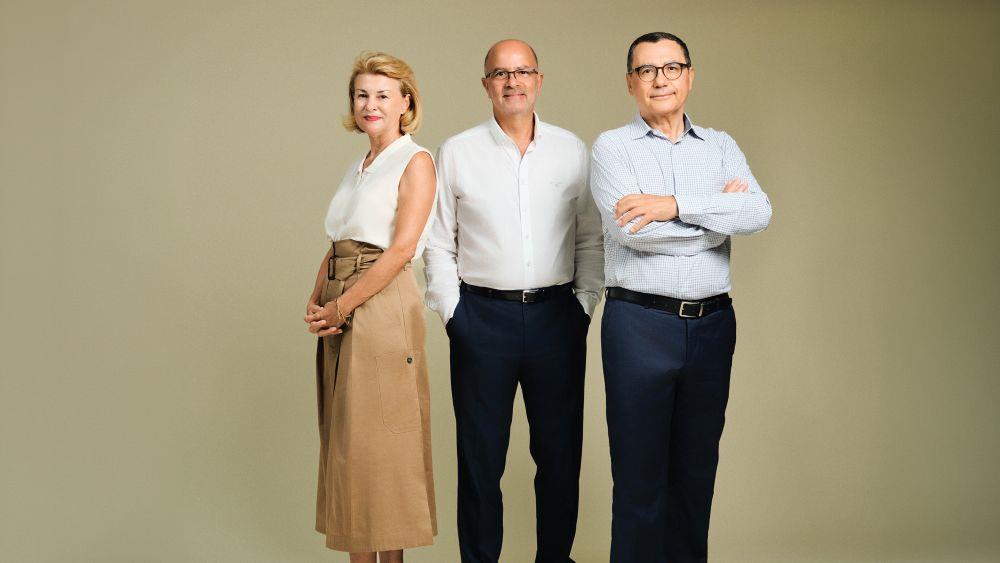
As the Cyprus Association of Cancer Patients and Friends (PASYKAF) marks its 40th anniversary, Treasurer Panicos Kaouris and Board Members Marios Melanides and Barbara Petropoulou Lillikas look back at the milestones that have shaped cancer care in Cyprus, the challenges that remain, and a future driven by prevention, innovation and a stronger patient voice. Above all, they share one enduring belief: however far science and technology advance, cancer care must always remain human.
As PASYKAF marks its 40th anniversary, which achievements do you consider the most transformative in the organisation’s journey and impact?
Marios Melanides: One of PASYKAF’s most transformative achievements has been its evolution from a small voluntary initiative, founded in 1986, into a nationwide organisation providing professional, comprehensive and free support to people with cancer experience and to their families. Key milestones include the introduction of Psychological Support Services in 1990 and Home Palliative Care in 1992, laying the foundations for a comprehensive network addressing the physical, psychological, social and practical challenges of cancer. PASYKAF has also helped change the way cancer is perceived and discussed in Cyprus. Through awareness, prevention and advocacy, it has challenged stigma, strengthened the voice of people with cancer experience and promoted their dignity, rights and quality of life. Ultimately, I believe PASYKAF’s greatest achievement is the trust that it has built – it has transformed solidarity and volunteerism into professional care, advocacy and a strong community that continues to stand beside people throughout their cancer experience.
What do policymakers most often misunderstand about the day-to-day reality of living with cancer, both for patients and their families?
Barbara Petropoulou Lillikas: What is often underestimated is that cancer is not simply a medical diagnosis. It affects almost every aspect of a person’s life and the lives of those around them. Treatment may take place in hospital but people live with cancer every day – at home, at work and within the family. Patients may face fatigue, pain and uncertainty, alongside changes in their ability to work and growing financial pressures, all while trying to maintain a sense of normality. Families and caregivers also carry a significant burden, often balancing work and family responsibilities with providing practical and emotional support. This is why cancer care must extend beyond treatment. It should include psychological and social support, rehabilitation, palliative and supportive care, assistance for caregivers and help for people returning to their everyday and professional life after treatment. Policymakers must also consider the wider financial and social impact of cancer. Prolonged or recurring expenses and a reduced ability to work can create financial insecurity at a time when stability is needed most. We therefore need an ongoing discussion about whether our social protection framework adequately supports those facing the greatest burden, including access to appropriate financial assistance and fair treatment in areas such as insurance. A cancer diagnosis should not create a second crisis for a family in the form of financial insecurity. PASYKAF’s role is not only to provide support services but also to ensure that the experiences of patients and families are reflected in decision-making. Our ambition should be a truly patient-centred model, with coordinated care built around people’s needs throughout their cancer journey.
As personalised medicine, genetic testing and AI reshape cancer prevention, diagnosis and treatment, how do you expect patients’ needs –and, therefore, your role – to evolve?
Panicos Kaouris: I believe the biggest change will be that cancer care becomes increasingly personalised – not only in the treatment selected but also in how patients are supported throughout their cancer journey. Genetic testing, personalised medicine and AI have enormous potential to improve early detection, diagnosis and treatment decisions. But technological progress also creates new needs. Patients will require support in understanding increasingly complex information, making informed decisions and navigating a healthcare system that is becoming more digital and data-driven. They will also need confidence that their personal and genetic data is used responsibly, and that technology does not replace the human element of care. This is where I see PASYKAF’s role evolving. We must remain a bridge between innovation and the patient, ensuring that the patient’s voice is represented as new technologies and models of care are developed. We must also help ensure that advances in cancer care are accessible to all patients, regardless of their financial circumstances or where they live in Cyprus. PASYKAF is already involved in European initiatives exploring AI, digital health, personalised oncology and the use of health data. Through the PATH project, for example, we are contributing to the development of trustworthy, patient-centred AI in cancer care. At the same time, greater use of technology should not make cancer care less human. If anything, it should enable healthcare professionals and organisations such as PASYKAF to devote more time to the emotional, psychological, social and practical needs of patients and their families. From a financial perspective, there is also an important question of sustainability. Innovation comes at a cost, and investment in new technologies must ultimately deliver measurable value for patients. PASYKAF therefore needs to remain financially strong, digitally capable and agile enough to embrace innovation, without losing sight of its fundamental purpose: putting people with cancer and their families at the centre of care.
After four decades of cancer-awareness campaigns, have you seen a meaningful change in how Cypriots approach prevention, screening and early detection?
Marios Melanides: Over the past four decades, we have seen a significant shift in how Cypriot society approaches cancer prevention, screening and early detection. Cancer is discussed far more openly today and people are better informed about risk factors and the importance of seeking timely medical advice. This marks an important change from a time when cancer was often surrounded by fear, stigma and silence. PASYKAF has contributed to this progress through sustained awareness and prevention campaigns, working alongside healthcare professionals, public authorities and other organisations. However, awareness does not always translate into action. More needs to be done to encourage participation in screening programmes, address barriers and reach communities with limited access to information. The progress over the past 40 years is encouraging but our responsibility remains clear: to keep prevention and early detection high on the public agenda and empower people to take an active role in protecting their health.
Through awareness, prevention and advocacy, PASYKAF has challenged stigma, strengthened the voice of people with cancer experience and promoted their dignity, rights and quality of life
Where does Cyprus still fall short in cancer prevention and early diagnosis, and what needs to change most urgently?
Barbara Petropoulou Lillikas: Prevention and early diagnosis are areas where we must be more ambitious. We need stronger public awareness, greater participation in organised screening programmes and consistent access to prevention and early-detection services across the population. Most urgently, we need to move from a reactive approach to a genuinely proactive national culture of prevention and early detection. This means evidence-based screening programmes with measurable participation targets, sustained education beginning at a younger age, stronger action on modifiable risk factors, and clear and timely pathways from a suspicious symptom or screening result to diagnosis and treatment. We should also be realistic: achieving this requires sustained investment in education, awareness, screening and professional training. However, prevention should not be viewed simply as an additional cost. International evidence demonstrates the economic value of prevention and earlier diagnosis, including the potential to reduce the substantial costs associated with treating cancers at more advanced stages. The question is not only what prevention will cost us today but what failing to invest in prevention will cost Cyprus tomorrow. We must also use data more effectively to measure participation, identify gaps and understand which groups are being left behind. Our targets should be measurable: fewer preventable cancers, more cancers diagnosed earlier, and equitable access to prevention and early diagnosis for everyone in Cyprus.
As PASYKAF marks 40 years and looks to the future, what are your key priorities? Are there any new initiatives or plans you can share?
Panicos Kaouris: Reaching 40 years is an important milestone but, for us, it is more a point of transition than celebration. The needs of people with cancer are changing and PASYKAF must evolve with them. Our priority is to continue providing high-quality, free professional services to people with cancer and their families across Cyprus, while strengthening our work in prevention and early diagnosis, psychosocial support, rehabilitation, palliative care and patient advocacy. A major strategic priority is the development of the new PASYKAF Centre in the Nicosia district. Our vision is to create a modern, purpose-built centre, bringing together services that are currently delivered from rented premises, including day care, psychosocial support, physiotherapy and rehabilitation, cancer information, research and education. We also want to strengthen our contribution to the future of cancer care in Cyprus. The recent establishment of the legislative framework for a National Cancer Institute is an important development – one that PASYKAF has advocated for over many years. We intend to play an active role in ensuring that the patient’s perspective remains central to national cancer policy. Digital transformation and research are also priorities. We are already participating in European projects involving AI, digital health, prevention and personalised cancer care. Our aim is to translate the knowledge gained through these collaborations into practical benefits for patients in Cyprus. Finally, sustainability is fundamental. As Treasurer, I am particularly conscious that an organisation providing essential services free of charge cannot rely on goodwill alone. We need strong governance, sound financial management, sustainable and diversified funding, and continued investment in our people and infrastructure. If I had to summarise our vision for the next 40 years, it would be this: PASYKAF must remain as human as it has always been, while becoming more innovative, digitally capable, sustainable and influential in shaping cancer care in Cyprus.
PASYKAF’s role is not only to provide support services but also to ensure that the experiences of patients and families are reflected in decision-making
PASYKAF – Timeline of Milestones
1986
Establishment of PASYKAF
1990
Launch of the Psychosocial Support Service
1992
Launch of the Home Nursing Care Palliative Service
1993
Beginning of PASYKAF’s collaboration with leading international cancer and palliative care organisations
1995
Launch of the Physiotherapy Service
1996
Launch of the Patient Transportation Service
1998
Establishment of Day Centres for patient activities and communication and the Breast Cancer Movement
1999
Establishment of Lymphoedema Clinics
2000
The Breast Cancer Movement joins Europa Donna and becomes Europa Donna Cyprus
2003
Integration of PASYKAF’s awareness campaigns into a comprehensive communications framework
2015
Introduction of 24-hour Home Care Palliative Service
2016
Establishment of the “Althea” Gastrointestinal Cancers Group
2017
Opening of the “Afetria” Post-Treatment Support Centre
2018
Establishment of the Research, Development and European Programmes Department
2019–2020
Expansion of specialised support groups and bereavement services, alongside growing participation in European research programmes
2021
PASYKAF wins the EU Health Award 2020 – NGO Category for Promoting Vaccination in Children
2022
A landmark year for PASYKAF:
• Launch of the “AllaZO – I’m Changing” Counselling and Practical Support Programme
• Introduction of the Nutritional Support Service
• Opening of the PASYKAF – EDEN Palliative Care Centre
• Inclusion of the Home Care Palliative Service in Cyprus’ National Health System (GeSY)
2023
1st Educational Conference for People with Cancer Experience on “Advanced Stoma Care”
2024
Opening of the PASYKAF – Archangel Michael Palliative Care Centre and launch of the “Health and Wellbeing at Work” and “Ambassadors of Life” programmes
2025
• 2nd Conference for People with Cancer Experience, titled “STRONGER TOGETHER”.
• Launch of the “Synechizo – To Carry On” and “FrontiZO – To Take Care” Counselling and Practical Support Programmes
2026
40 Years Together Through Life
