








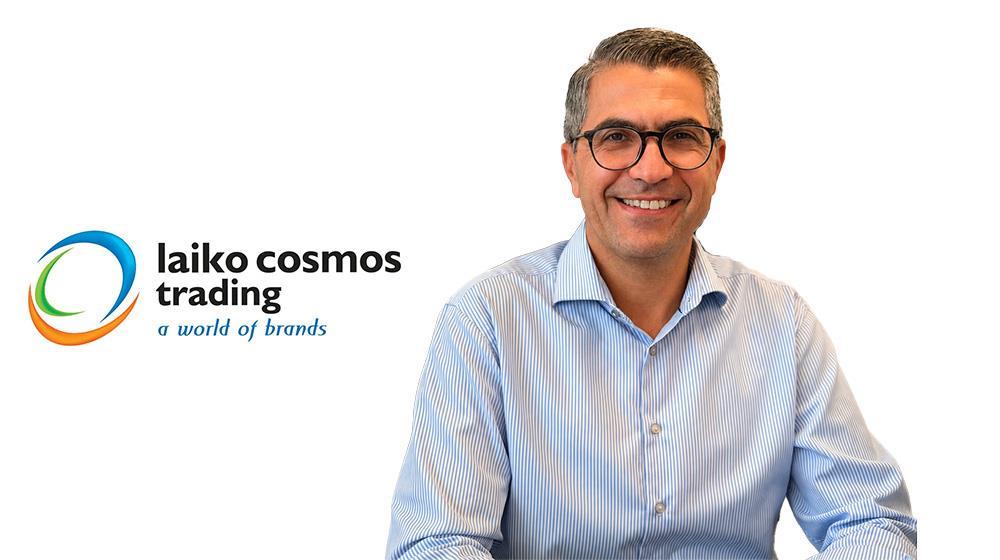
LaikoCosmos Commercial Manager, Christodoulos Kountouris, expresses cautious optimism about the course of the FMCG sector, demand for the main categories of which remained stable during the first half of the year.
In an interview with InBusinessNews, he lists the industry's key priorities, including maintaining competitiveness through proper management of increased costs, strengthening brands that offer value to the consumer, as well as investments in technology and digital tools.
Asked about the impacts of geopolitical developments, Kountouris explains that despite the risks and enormous pressures faced by the food and beverage category, opportunities are also being created.
Among other things, many companies have accelerated the search for alternative suppliers, strengthened local partnerships, improved their supply chain and developed their premium brands. At the same time, they are focusing on profitable partnerships and not just partnerships that increase turnover, while limiting ineffective promotions by replacing them with smarter ones.
How do you assess the course of the Cypriot economy and your sector during the first half of 2026? What developments stood out positively or negatively and to what extent were the predictions you made at the beginning of the year confirmed or overturned?
Despite the uncertainty caused by the war in Iran, it appears that during the first half of the year, the Cypriot economy as a whole showed satisfactory resilience. Growth continued and unemployment remained at low levels. For the FMCG sector, demand for the core categories remained stable.
Clearly, when 2026 began, the data were completely different and all the conditions were in place for a very good year. At the end of February, beginning of March, all of this was overturned. The forecasts for the tourism product were not the best, while businesses were, and still are, being faced with increased transportation costs, increases from suppliers and irregularities in the supply chain. Unfortunately, businesses were not able to absorb all of the above increases, resulting in several price variations.
The main priorities
What are your expectations and priorities for the second half of 2026? Where do you see growth opportunities, but also what challenges do you believe will determine the course of the market by the end of the year?
For the second half of the year, we remain cautiously optimistic. Sales volumes will maintain their positive trend. However, as long as uncertainty exists on the international scene, consumers' disposable income, as well as the way it is spent, is affected. For our industry, key priorities should be the following:
- Maintaining competitiveness through proper management of increased costs.
- Strengthening brands that offer value to the consumer
- Investments in technology and digital tools.
As the biggest challenge, I would mention the pressure on a company's profitability combined with maintaining its competitiveness. Energy costs remain elevated, while the supply chain is still not fully normalised. Many companies will face difficulties in passing on price increases to the consumer and will face pressures on profitability.
However, amidst the challenges, there are also opportunities. The environment favours strategies that focus on premiumisation, portfolio optimisation, and targeted promotions rather than generalised discounts.
To what extent have geopolitical developments, and in particular the crisis in the Middle East, affected the economy in general and your industry in particular? Have they created more risks, upheavals or even new opportunities?
Clearly, the war in Iran has significantly affected both the economy in general and our own industry.
As one of the largest companies in our sector, we have seen the food and beverage category come under enormous pressure:
- Reduced tourism,
- price increases from suppliers
- energy costs,
- disruptions in international supply chains,
- consumer uncertainty,
- increase in parallel imports.
Despite the risks, opportunities are also emerging. Many companies have accelerated the search for alternative suppliers, strengthening local partnerships, improving their supply chain and developing their premium brands. At the same time, they are focusing on profitable partnerships and not just partnerships that increase turnover, while limiting ineffective promotions by replacing them with smarter ones.
The above actions can offer a significant competitive advantage in the future.
The need to maintain the competitiveness of businesses
If you could point to one intervention from the state or market that would strengthen the resilience of the economy in the second half of the year, what would it be?
As I have mentioned above, demand is expected to remain at satisfactory levels in the second half of the year.
Any intervention should not aim to stimulate consumption, but to maintain the competitiveness of businesses in an environment of increased operating costs.
In particular, supporting digitalisation, energy upgrading and infrastructure modernisation projects would help businesses become more competitive and less vulnerable to external crises.
(Source: InBusinessNews)
