







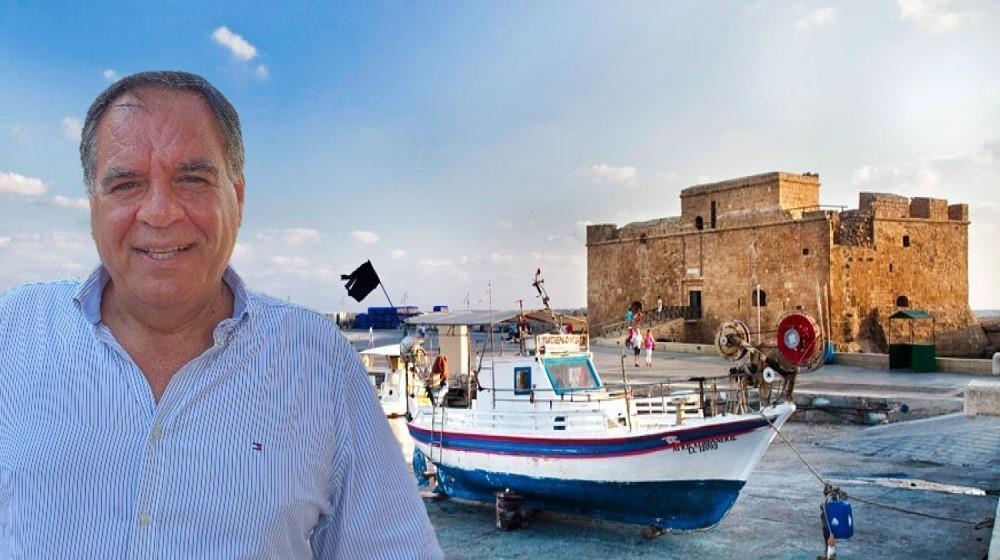
Tourist traffic in the Paphos district is expected to be at high levels in August, with hotel occupancy rates estimated to range between 85% and 90%, according to the President of the Paphos Hoteliers Association, Euripides Loizides.
The picture is expected to be particularly dynamic during the days around 15 August, a period during which Paphos is at the epicentre of tourist traffic, with increased visitor arrivals and significant demand for accommodation.
The high occupancy figures confirm that August remains one of the most important months of the tourist season for the district, despite the pressures recorded overall in the market, he said.
Loizides appears cautiously optimistic about the course of August, noting, however, that a significant portion of reservations are made at the last minute.
This trend, he explains, is largely linked to the financial pressures faced by consumers, who are delaying making decisions about their vacations and looking for the best possible price.
The improvement recorded in August comes after a July which, despite positive tourist traffic, closed with a decrease in occupancy by approximately 10% compared to the corresponding month in 2025.
This is a clear improvement compared to previous months. In May and June, losses had reached approximately 15%, which had caused intense concern in the hotel industry.
The picture for July, according to the President of the Paphos Hoteliers Association, shows that the tourism market has gradually begun to recover, but has not returned to last year's levels.
The Paphos district attracts a large number of visitors during the 15 August period. The increased demand for hotels, tourist accommodation and restaurants creates one of the strongest "waves" of visitor numbers of the summer season.
This period is considered crucial for hotel businesses, as the increased demand acts as a significant breather in a year in which the industry is faced with reduced occupancy rates in several months and significant pressure on prices.
Greater, however, is the concern about the continuation of the tourist season.
For September, occupancy rates in the Paphos district so far are around 75%-80%, recording a drop compared to last year.
Loizides estimates that the reduction amounts to approximately 15%, while so far there are no substantial indications of a significant reversal of the picture.
According to him, conditions are expected to be even more difficult in October, something which is causing concern among tourism professionals, as extending the tourist season is a long-standing goal for Cyprus.
Despite the reduction in occupancy rates, the President of the Paphos Hoteliers Association points out that the biggest blow to hotel businesses is not found exclusively in the number of visitors.
Of particular concern is the significant decline in prices, which, according to Loizides, have decreased by more than 20%.
This development has a direct impact on hotel revenues and, by extension, on the viability of the businesses. Thus, even when occupancy rates remain at relatively high levels, the lower average room selling price significantly limits total revenues.
Factors affecting this year's tourist season include geopolitical instability.
As Loizides mentioned, part of the market seems to have been lost due to the war, as several potential visitors chose other destinations for their holidays.
At the same time, the increased cost of living and general economic pressures have changed traveler behaviour.
Many consumers delay planning their vacations and make their reservations very close to the departure date, while also looking for more economical options.
The trend of last-minute bookings therefore makes it more difficult to reliably predict tourist traffic for the coming months.
Within this backdrop, the course of the Israeli tourism market is particularly positive, showing a significant increase in visitors to Paphos.
According to Loizides, the increased presence of Israeli tourists is also enhanced by the large number of air connections between the two countries, facilitating access to Paphos.
If this trend continues until the end of the tourist season, it is estimated that Israel could emerge as the second largest tourist market for Paphos, after the UK.
This development is considered particularly important for the destination, as it enhances the diversification of the markets on which Paphos tourism depends.
This year's tourist season in Paphos presents, so far, a mixed picture. As the president of the Paphos Hoteliers Association reports, on the one hand, August and especially the 15 August period create a strong tourist flow, with occupancy rates reaching 85%-90%.
On the other hand, the losses recorded in previous months, the drop in prices of more than 20%, the decrease in demand in some markets and the uncertainty for September and October create an environment of increased challenges for the hotel industry.
The next period is considered critical for the course of the season. The evolution of last-minute bookings, the course of international markets and, above all, the ability to maintain demand after August will largely determine the final outcome of this year's tourist year for Paphos, Loizides concludes.
(Source: InBusinessNews)
