







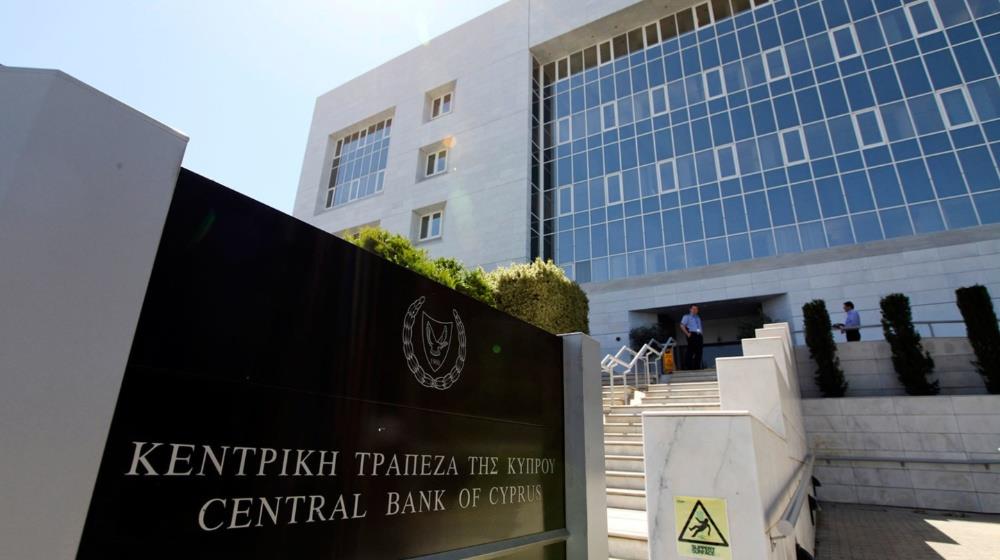
The Central Bank of Cyprus (CBC) has confirmd the resilience of the Cypriot banking system, warning, however, of increasing risks that create new challenges for financial stability.
Among other things, the Central Bank indicates that exposure to the domestic real estate sector and government bonds, amid growing concerns about global public debt despite their generally safe nature, may make the banking sector vulnerable to potential contagion of shocks.
Additionally, the Central Bank has issued warnings in relation to the issue of foreclosures, emphasising - among other things - that the recent amendments voted by Parliament restore the framework to pre-2018 regulations, significantly weakening its effective operation.
The Report
More specefically, in the Financial Stability Report that it recently published, the Central Bank of Cyprus states that the banking sector remained resilient to domestic and external shocks, maintaining high profitability, strong asset quality and adequate levels of capital and liquidity, contributing to safeguarding financial stability.
At the same time, mergers in the domestic banking sector that were completed in 2025 are expected to further enhance the resilience and efficiency of the system, but also lead to a further increase in its already high concentration.
Furthermore, the report continues, certain factors constitute sources of vulnerability. In particular, it explains, the sector's recent lending activity to non-residents, as well as its exposure to the domestic real estate sector and government bonds (amid growing concerns about global public debt despite their generally safe nature), may make the banking sector vulnerable to a potential contagion of shocks.
Profitability is good, but close monitoring is required
However, according to the Central Bank, the profitability of the banking sector is following a stabilising trend, after the peak of the interest rate hike cycle, and remains at significantly higher levels compared to the period before 2022.
After noting that net interest income continues to be the main factor in the sector's profitability, while the overall high level of profitability maintains returns on equity at high levels, the Central Bank underlines that "the strong dependence of credit institutions' business models on net interest income makes their profitability particularly sensitive to a possible reversal of the interest rate cycle, as well as to a possible deterioration in the credit quality of their assets in the event of a deterioration in macroeconomic conditions."
In this light, it indicates that it becomes necessary to continuously and closely monitor the sustainability of sources of profitability and the ability of the banking sector to maintain adequate levels of resilience in the medium term.
Asset quality
Regarding the quality of the banking sector's assets, the Central Bank notes that it continues to strengthen, with the non-performing loan ratio (NPL) falling to a historically low level of 1.6% and now comparing positively with the EU average, underlining - however - that the progress achieved in recent years in terms of deleveraging the banking sector's loan portfolios was not uniform, with significant deviations still existing in NPL ratios between credit institutions.
Geopolitical tensions
At the same time, and although it acknowledges that the direct exposure of credit institutions to geographically sensitive areas remains limited, representing approximately 3.1% of the total assets of credit institutions, the Central Bank report nevertheless warns that the indirect risks arising from the escalation of geopolitical tensions still need to be monitored.
More specefically, the Central Bank warns that a potential deterioration in the macroeconomic environment, combined with prolonged high energy prices and the current regime of increased global political uncertainty, could put pressure on the financial position of businesses and households.
In this light, he points out, "their debt servicing capacity may be weakened, with negative effects on the asset quality of the banking sector."
Furthermore, according to the Central Bank Report, the expansion of credit institutions' lending activities abroad strengthens their interconnection with international economic developments, indicating that although geographical dispersion can contribute to risk diversification, increased lending to foreign residents increases the banking sector's exposure to foreign economies.
"In the current environment of prolonged international uncertainty and geopolitical tensions, this development enhances the risk of contagion of external disruptions to the Cypriot banking sector, with potential negative implications for financial stability," the report specifically indicates.
Bond exposure
Furthermore, the Central Bank warns that the significant exposure (approximately 22% of total assets or approximately 248% of Common Equity Tier 1 Capital) of the domestic banking sector to debt securities makes it potentially vulnerable to adverse developments in international financial markets and the global fiscal environment.
As it explains, "the inclusion of government bonds (both domestic and non-domestic) in the banking sector's portfolio creates opportunities for risk diversification in the assets of credit institutions, since these bonds generally carry a lower risk of default. However, the significant concentration of the bond portfolio in this type of bond (approximately 60% of the total bond portfolio) may create vulnerabilities for the sector, especially in the event of a deterioration in global fiscal conditions or a further increase in global debt levels."
At the same time, the report adds, "ongoing geopolitical tensions, combined with growing concerns about public debt sustainability and increased uncertainty in financial markets, have contributed to a rise in the cost of financing internationally."
This development, it emphasises, may further burden the public finances of many countries and increase the risk of possible downgrades in the credit rating of government bonds.
"Despite the fact that the bond portfolio of domestic credit institutions consists almost entirely of investment grade securities, approximately 96% of the total bond portfolio, the potential deterioration of conditions in international markets could lead to impairment losses," it adds, indicating that "more generally, any deterioration in the quality of credit institutions' bond portfolios would have an impact on their balance sheets, with possible negative consequences for their capital adequacy."
Divestment framework
In addition to the above, the Central Bank underlines that the high percentage of loans secured by real estate, although it functions as a protective shield against customer default, makes the banking sector more exposed to potential adverse developments in the real estate market.
As it warns, "any price correction or slowdown in activity in the sector could weaken the value of collateral, negatively affecting recovery rates and enhancing credit risk."
In this light, the report states, "the proposed laws, as voted by the House of Representatives, concerning the 'Transfer and Mortgage Law' and restoring the foreclosure framework to pre-2018 regulations, substantially weaken the effective functioning of the foreclosure framework."
However, according to the Central Bank, these amendments lead to potentially endless legal proceedings and, by extension, to the lengthening of the collateral liquidation period, adversely affecting the recoverable value of the collateral, and increasing the loss in the event of default.
"Given the significant percentage of loans secured by real estate, this increase may lead, among other things, to increased provisions and possible capital needs," he continues, while adopting the observations expressed on the subject by the European Central Bank.
"As also pointed out in the Opinion recently issued by the ECB18, the recent amendments may erode financial discipline and undermine the payment culture, financial stability and public finances, while leading to stricter lending criteria and an increase in mortgage interest rates," it says.
Other risks
Furthermore, based on the Financial Stability Report, credit institutions remain exposed to cross-cutting risks, which may simultaneously affect multiple aspects of their operation and resilience.
In particular, increased cybersecurity threats and the risk of digital disruptions may affect business continuity and confidence in the banking sector, while challenges related to climate change may translate into increased physical and transitional risks for credit institutions' loan portfolios.
Capital adequacy and liquidity
Despite the above risks, however, the Central Bank underlines that "the high capital adequacy and high liquidity levels of the domestic banking sector are key factors supporting its resilience and its ability to absorb potential shocks."
During 2025, it adds, the sector's capital ratios were maintained at historically high levels, with the Common Equity Tier 1 ratio (CET 1 ratio) reaching 25.8%, significantly exceeding the minimum supervisory requirements and the corresponding EU average (16.3%19), with the Cypriot banking sector recording the highest levels of the ratio among EU countries.
A similar positive picture continues to be seen in liquidity levels, with the liquidity coverage ratio reaching 318.6% at the end of 2025, significantly exceeding both the minimum supervisory requirements of 100% as well as the European average of 163.1%20, with the Cypriot banking sector recording the third highest ratio in the EU.
An additional element strengthening the resilience of the domestic banking sector, he underlines, is the relatively conservative structure of loans secured by real estate, as reflected in the low levels of Loan-to-Value ratios.
"Low IPA ratios limit the impact on credit institutions' profitability of potential corrections in real estate prices and complement their strong capital adequacy, strengthening the overall ability of the banking sector to absorb potential shocks," the report points out.
Attention required
However, given the particularly uncertain - as the report characterises it - international environment and the increasing geopolitical and macroeconomic uncertainty, the Central Bank indicates that it is necessary for domestic credit institutions to maintain increased vigilance and a proactive stance.
"Maintaining strong capital buffers and adequate liquidity levels, combined with the continued implementation of prudent lending practices and the further strengthening of internal governance, risk management and operational resilience frameworks, is a key prerequisite for ensuring the resilience of the banking sector," it underlines.
This approach, the report concludes, also contributes to limiting the effects of the accumulation of excessive risks and strengthens the ability of credit institutions to absorb potential shocks, supporting financial stability in both the medium and long term.
(Source: InBusinessNews)