






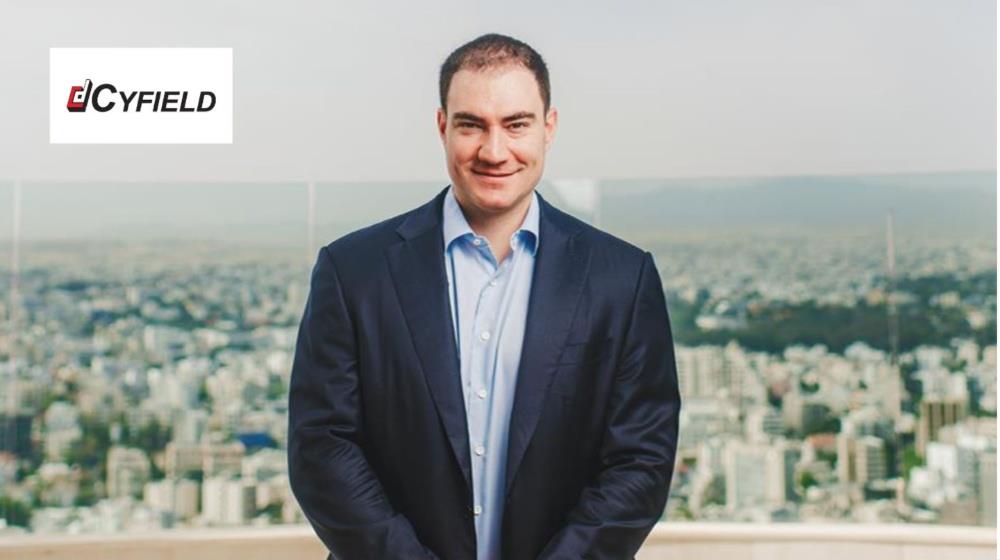
"Demand for modern residential and commercial developments is showing increasing momentum, with mixed-use developments emerging as one of the most effective and sustainable models of the future, creating areas with long-term economic value," underlines Cyfield Executive Director, Giorgos Chrysochos, while also emphasizing that the real estate sector remains one of the most stable choices for both local and foreign investors.
Speaking to CBN and InBusinessNews, he explains that Cyfield’s priority is to continue creating high-quality projects that meet everyday needs and shape the modern urban landscape, while enhancing connectivity, accessibility, and road safety.
At the same time, the implementation of the first private electricity generation plant is progressing intensively, with the aim of playing a decisive role in the country’s energy adequacy and security, offering cheaper electricity for consumers. He also adds that processes for the arrival of natural gas as soon as possible should continue intensively, as it constitutes a decisive step for reducing electricity costs in combination with energy storage projects.
Asked about the impact of the crisis in the Middle East, Chrysochos points out that for the construction sector, the greatest risk concerns the possibility of fluctuations in the cost of materials and energy, as well as a slowdown in investment decisions due to this uncertainty, clarifying, however, that Cyprus has consistently proven that it has the credentials to function as a stable and reliable business and investment destination in a geopolitically sensitive region.
“Beyond the risks, opportunities are also being created,” he noted.
How do you assess the course of the Cypriot economy and your sector during the first half of 2026? Which developments stood out positively or negatively, and to what extent were your forecasts at the beginning of the year confirmed or overturned?
Despite the intense uncertainty prevailing in international markets, Cyprus demonstrated notable resilience. In fact, the country recorded a positive growth rate, significantly exceeding the European average. This was made possible thanks to the support of business activity, investments, and the labor market, confirming our forecasts.
The real estate sector, in particular, remains one of the most stable choices for both local and foreign investors, with Cyprus being a safe destination for families and employees. There is strong interest in projects that offer quality, energy efficiency, and a strategic location.
On the other hand, challenges remain in relation to increased construction costs, lengthy licensing procedures, the lack of human resources and high-level professionals, as well as high energy costs.
Mixed-use developments are emerging as one of the most effective and sustainable models of the future, creating areas with long-term economic value.
What are your expectations and priorities for the second half of 2026? Where do you see growth opportunities, and which challenges do you believe will shape the course of the market until the end of the year?
The overall assessment for the current year is that this growth trajectory will be maintained. However, geopolitical instability and the anticipated increase in interest rates by the European Central Bank remain factors that require continuous adjustment, with the aim of ensuring long-term sustainable growth for the country.
As far as our sector is concerned, demand for modern residential and commercial developments continues to show increasing momentum. Mixed-use developments are emerging as one of the most effective and sustainable models of the future, creating areas with long-term economic value. For Cyfield, it is a priority to continue delivering high-quality projects that meet everyday needs and shape the modern urban landscape, while enhancing connectivity, accessibility, and road safety.
At the same time, recognizing that reducing energy costs is a decisive factor for increasing competitiveness and reducing operating costs for businesses, we are moving forward intensively with the implementation of the first private electricity generation plant. The goal is for it to play a decisive role in the country’s energy adequacy and security, offering cheaper electricity to consumers.
The reality is that challenges related to the lack of specialized human resources, energy costs, and international uncertainty affect planning and investment decisions. And that is precisely where the challenge lies: to fully utilize our country’s strategic advantages through close cooperation between the private and public sectors, with the aim of maintaining this positive growth trajectory.
To what extent have geopolitical developments, particularly the crisis in the Middle East, affected the economy in general and your sector in particular? Have they created more risks, shifts, or new opportunities?
Developments in the Middle East constitute a factor that directly or indirectly affects the economies of the wider region, including Cyprus.
For the construction sector, the greatest risk concerns the possibility of fluctuations in the cost of materials and energy, as well as the slowdown of investment decisions due to this uncertainty.
However, Cyprus has consistently proven that it has the credentials to function as a stable and reliable business and investment destination in a geopolitically sensitive region.
Therefore, beyond the risks, opportunities are also being created. In this direction, we need to work intensively for the arrival of natural gas as soon as possible, as it constitutes a decisive step toward reducing electricity costs, in combination with energy storage projects. Additionally, full employment and rising wages not only directly affect social cohesion but also lead to higher motivation and greater commitment, resulting in more productive businesses and a more competitive economy.
We need to work intensively for the arrival of natural gas as soon as possible, as it constitutes a decisive step toward reducing electricity costs in combination with energy storage projects.
If you could point to one intervention from the state or the market that would strengthen the resilience of the economy in the second half of the year, what would it be?
Personally, I have repeatedly pointed out that bureaucracy in the public sector is a long-standing obstacle to growth and investment. Modernization, digitalization, and improving the efficiency of public services are crucial for creating a more business-friendly environment and strengthening investor confidence.
For Cyprus to become more competitive, faster licensing, quicker issuance of title deeds, and timely response from utility services to construction projects are required. Accelerating procedures will lead to an increase in housing supply, which is a key prerequisite for addressing the housing issue the country is facing.
It is also vital to modernize the framework governing public contracts, as weaknesses in the existing system often lead to delays, cost overruns, or even project abandonment.
Therefore, among other things, the introduction of adjudication procedures for the rapid resolution of disputes is needed, while it is imperative to move swiftly toward creating a fair and modern framework that protects all parties, reduces misinterpretations, limits conflicts, and prevents delays, as well as contract terminations.
In this context, it is important to continue investments in infrastructure, the green transition, technology, innovation, and human capital, so that the Cypriot economy remains resilient in the face of challenges in the international environment.
