







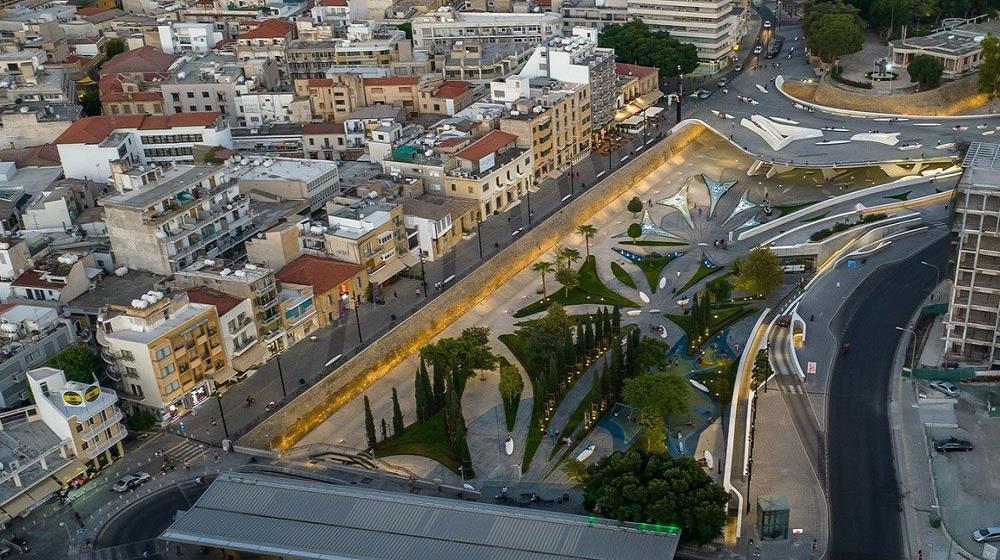
The Scientific and Technical Chamber of Cyprus (ETEK) has prepared and submitted to the President of the Republic, Nikos Christodoulides a comprehensive framework of proposals aimed at revitalising the urban centre of Nicosia.
The Chamber's proposals are included in a detailed Report entitled 'Upgrading the Urban Centre of Nicosia - Applicable measures, implementation mechanism and roadmap,' which has made a record of the current situation and proposes a series of measures and solutions that will contribute to addressing existing problems and breathe new life into the urban centre of Nicosia.
As the ETEK characteristically points out - among other things - in its Report, the upgrading of the urban centre of Nicosia is a matter of public policy and spatial/economic resilience and requires political and technical addressing of the main causes of degradation:
- decrease in permanent population,
- empty ground floors and inactive properties,
- limited mix of uses,
- weak daily economic and cultural life, as well as
- discontinuity of public space and functional connections.
These phenomena, it emphasises, are not independent, but feed off each other:
- the absence of residents reduces stable demand,
- reduced demand increases vacant ground floors,
- Empty ground floors weaken the urban experience and safety/attractiveness,
- and the discontinuity of public space discourages movement and staying, intensifying the vicious cycle of abandonment.
The existence of studies or individual projects is not enough
According to ETEK, the experience of recent years shows that the existence of studies or individual projects is not enough to change the trajectory of the centre. “Without unified planning, the clear assignment of responsibility and continuous monitoring (with specific milestones and indicators), interventions are either excessively delayed or completed piecemeal,” the Chamber indicates.
In this context, it continues, the Report prepared and submitted to the President of the Republic by ETEK aims to transform the general "revitalisation" goal into an applicable program: to determine what needs to be done, with which tools, by which bodies, with what timetable, and with what accountability.
“The emphasis is on governance and the implementation mechanism, precisely because the critical deficit that reproduces the degradation is the inability to complete coordinated interventions, and not the lack of ideas or proposals,” it explains.
The next phase, ETEK emphasises, should not be the preparation of a new general study, but the transition to implementation: prioritising mature interventions, assigning responsibility, a timetable, financing and immediate implementation of measures that can deliver within the first half of the year.
Targeting Makarios Avenue
The Report, adds ETEK, proposes precisely this transition from discussion and planning to the organised delivery of results.
Specifically for Makarios Avenue, the Report adopts a systemic approach: the management of the road is not to be treated as an isolated traffic issue, but as part of a broader package of policies and projects that must work in combination.
"The effectiveness of any regulation in Makarios Avenue depends on simultaneous progress in critical components: strengthening habitation and mixed uses, activating inactive stock and ground floors, improving accessibility and connectivity, upgrading public space and the microclimate, as well as highlighting identity through planned actions and activities," ETEK further emphasises.
Therefore, ETEK states, the goal is not a fragmentary answer to an individual question, but the establishment of a comprehensive, measurable and institutionally guaranteed framework that leads from planning to implementation.
Based on the Report, Makarios Avenue is proposed as the first field of visible implementation of the strategy, without however being isolated from the wider urban centre.
"The success of interventions in Makarios Avenue depends on simultaneous progress in habitability, accessibility, ground floor activation, public space and functional connections. In this way, Makarios Avenue functions as a catalyst and not as the sole object of revitalisation," it points out.
The measures
In light of the above, in its Report ETEK lists 12 specific and applicable - as it emphasises - codified implementation measures, which include both measures with a "lever" character, as well as measures to activate uses and coherence of public space, which will, however, be implemented with a common methodology (clear leading body, co-responsible persons, required tool, time horizon and indicators/milestones).
Measure 1: Acceleration/simplification of licensing (fast-track change of use and minor interventions)
- Establishing a fast-track procedure for change of use of ground floors and for minor conversions/temporary uses.
- Standardisation of requirements and standardised solutions for interventions in protected areas, in order to reduce the time and uncertainty of licensing.
- Creation of a special one-stop-shop for licensing and support for the urban centre, which will guide owners, businesses and investors for changes of use, minor interventions, temporary uses and reopening of ground floors, with predetermined response times and standardised procedures.
Measure 2: Parking as a policy tool (revision of requirements and targeted regulations)
- Review of parking requirements for businesses in the historic centre and adoption of alternative arrangements.
- Use of municipal parking spaces/schemes with priority for residents and short visits, where need is documented.
In this regard, ETEK states that the parking policy must balance between avoiding through traffic and the need for functional access for residents, people with disabilities, the elderly, catering, short visits and small businesses.
As it emphasises, the solution is not the generalised reintroduction of private cars, but targeted, managed and measurable access, combined with public transportation, gentle mobility and last-mile solutions.
Measure 3: Tax incentives for renovations and investments in the centre
- Establishing tax incentives for owners who renovate/reactivate buildings within the city centre.
- Linking incentives with uses that enhance multifunctionality, habitation, creative economy and education.
Measure 4: Management/concession of inert preserved sites by the Municipality (institutional possibility)
- Creating a framework so that the Municipality can manage/grant inert protected areas under public benefit terms.
- Targeting cultural, social and educational uses that activate the public life of the centre.
Measure 5: Mechanism for identifying and activating inactive properties (technical team and digital registry)
- Establishment of a technical team for mapping, recording and systematic communication with owners of vacant/abandoned properties.
- Creation and continuous updating of a digital register of inactive stock as a policy and transparency tool.
- The digital registry should not function as a simple recording, but as an activation tool: it should be accompanied by an organised communication program with owners, in order to identify obstacles to utilisation, intentions for reactivation, incentive needs and cases that require regulatory or tax intervention.
Measure 6: Vacancy tax with a reinvestment clause in the centre
- Establishment of a special fee for properties that remain inactive beyond a specified time limit (indicatively 3 years).
- Provision for collection/management at local authority level and commitment to reinvest revenue in downtown revitalisation projects.
Measure 7: Support for mixed use and flexibility of conversions (multifunctionality)
- Arrangements that facilitate the mixing of uses (residence, work, culture, recreation) within the centre.
- Reducing obstacles to changes of use when quality of life and functionality conditions are ensured.
Measure 8: Incentives for permanent residence in the centre
- Incentive program to increase permanent population (renovations/leases), with targeted groups (young professionals, young families, students).
- Strengthening daily use of the centre as a basic condition for sustainable revitalisation.
- Permanent occupancy should be treated as a central indicator of the success of revitalisation and not as a side effect. Creating affordable housing options for young professionals, students, young families and downtown workers should be linked to tax incentives, the use of inactive buildings, rapid permitting of changes of use and partnerships with universities and large employers.
Measure 9: Connections and flow of public space (cohesive city experience)
- Uniform guidelines for materials, lighting, signage and urban equipment.
- Designing connections between intervention zones and integrating projects so that they function as a single network of pedestrian/bicycle/micromobility flows.
Measure 10: Coordination mechanism for implementation and monitoring (delivery and accountability)
- Institutionalisation of a participatory body with representation of competent bodies (local authority, state services, ETEK, academics, organised bodies).
- The body functions as a structured implementation feedback platform: it meets on a regular basis, assesses progress based on indicators and recommends corrective actions to the Delivery Office.
- Establish an annual public progress report with clear indicators and quantified milestones.
- The coordination mechanism should not be limited to a monitoring or exchange of views role. It should have a clear operational mandate, named responsibility, the ability to immediately propose decisions, an obligation for the co-responsible services to respond, and a rapid escalation process at the political level when obstacles to licensing, funding, or responsibilities arise.
Measure 11: Cultural identity and creative economy (activity planning)
- Support for creative/cultural uses, residencies, workshops, makerspaces and temporary use programs in inactive buildings.
- Development of thematic routes and actions that enhance identity and visitor numbers.
- Developing a unified communication identity for the centre of Nicosia, so that it is presented as a place of residence, work, culture, creation and everyday experience. This identity must be linked to public space, routes, events, signage, lighting and activation of ground floors.
Measure 12: Strengthening small entrepreneurship and activating ground floor apartments
- Tools to support new activities on inactive ground floors and promote "local economy zones" with experimental/flexible schemes.
- Combining incentives with action planning (pop-ups, events) to create a steady flow and financial sustainability.
- Pilot activation of ground floors with temporary uses, pop-ups, small cultural and commercial actions, thematic routes and collaboration with businesses, universities and creative groups, in order to increase the stay in the centre and create reasons for repeated visits.
The suggestions for Makarios Avenue
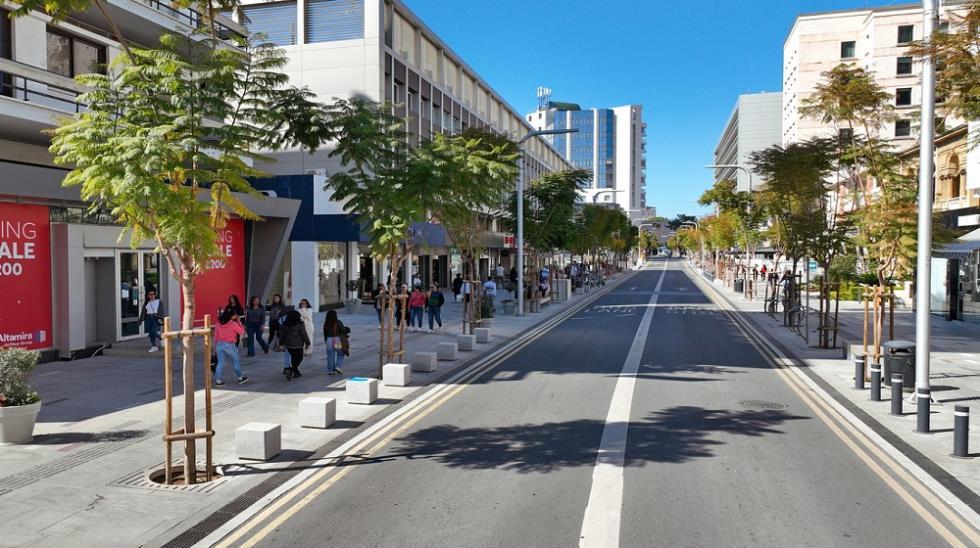
Regarding Makarios Avenue, however, ETEK indicates that its management should be based on low-cost and immediately applicable transitional measures, which immediately improve daily operation and user experience, without substituting the institutional levers and structural interventions of the overall strategy.
In this transitional stage -six months-, the goal is to quickly deliver measurable benefits (comfort, safety, readability, functional access, activation of activities) and to strengthen confidence that the centre is moving consistently towards a comprehensive implementation program.
According to the Chamber, Makariou Avenue can function as the first pilot area for the delivery mechanism.
Therefore, within six months, ETEK believes that combined measures of public space, shading, lighting, signage, ground floor activation, temporary uses, short-term access and a program of actions can be launched, in order to evaluate in practice the effectiveness of the model and restore confidence that the strategy is being implemented.
"The pilot application in Makarios Avenue must be designed in a way that produces immediate data and application lessons for the entire urban centre: what works, what obstacles appear, which agencies respond in a timely manner, and which arrangements need adjustment before expanding the measures to other areas of the centre," ETEK emphasises.
Based on the above, ETEK recommends the following measures exclusively for Makarios Avenue:
- Microclimate - shading - greenery: Targeted shading solutions (shelters/shades) and increased greenery (tree planting, thermal comfort interventions) in high-traffic areas, in order to immediately improve the sustainability of daily use, especially in hot periods.
- Urban equipment, lighting, signage: Upgrading of seating areas, lighting and directional signage with a unified logic for coherence, safety and legibility of the route, with priority given to points of discontinuity and uncertainty.
- Coordination of hours and action plan: Collaboration with businesses and organisations to harmonise hours and a stable program of activities, in order to create a predictable flow of visitors and reasons for visiting/staying.
- Short-term parking and access facilities without through traffic: Targeted arrangements for short visits where a need is documented (e.g. utilisation/collaboration with municipal spaces), in a way that supports the operation of the ground floors without encouraging through traffic or generalised attraction of private cars.
- Bus flows and operational nodes: Reorganisation of bus crossings and operational nodes in collaboration with the competent authorities, in order to limit the overloading of the core and reduce flow conflicts on the axis.
- Direct activation of street life - aesthetic interventions and popups/events: Small-scale interventions and a program of actions (pop-ups, events, temporary uses) as a direct "activator" of life, in synergy with tools to support small entrepreneurship and creative uses, in order to increase stay and economic sustainability.
- "Last mile", soft mobility and pilot operating arrangements: Strengthening operational access to/from Makariou with safe pedestrian and bicycle connections to key hubs, improvements to crossings and low-speed arrangements where required, as well as a clear pilot operational regime on specific days/hours (e.g. weekend), which will be assessed with flow/stay indicators and adjusted based on documentation.
Two spatial backbones with a multi-year horizon
In addition to the institutional tools and immediate transitional measures, ETEK emphasises that multi-year spatial planning is also required for two basic spatial "backbones" that constitute the permanent cohesion and connectivity infrastructure of the urban centre.
These backbones, it underlines, are not isolated projects, but structural networks that organise flows, enhance the readability of the centre, improve accessibility and create a coherent network of public space.
"Because they require maturation, successive studies, licensing, securing financing and phased implementation, they must be included in a stable program with a clear coordination body, timetable and intermediate milestones," ETEK points out.
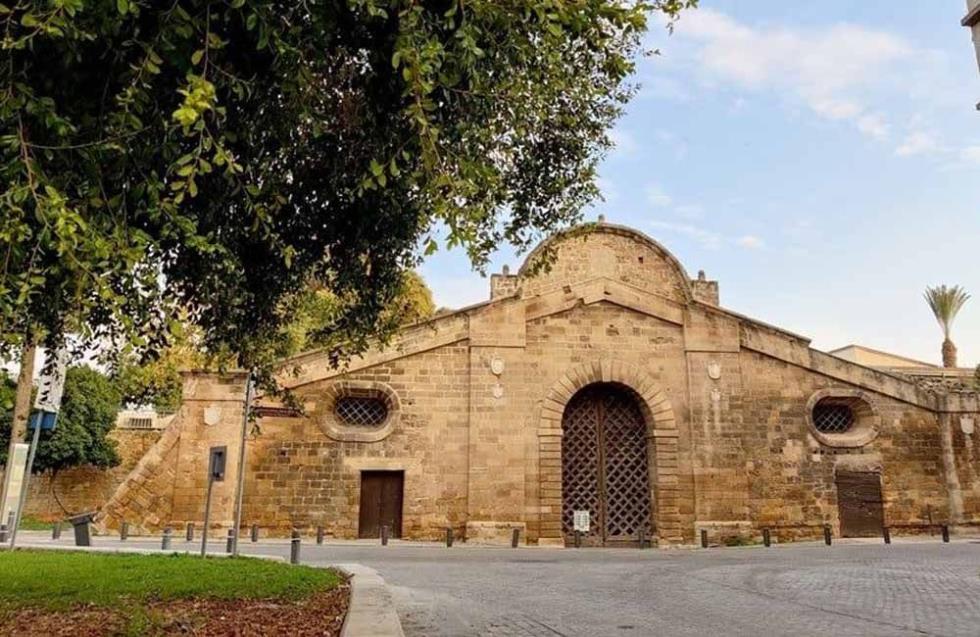
The moat/perimeter arch as a single linear park with interconnections (Paphos Gate - Famagusta Gate).
According to the ETEK, the moat and the perimeter arch can function as a linear green infrastructure and at the same time as a "ring" of recreation, walking and gentle movement around the historic core.
The goal is not limited to creating greenery, but to developing a continuous, recognisable public space that:
- connects the Gates and key points of the centre,
- organises pedestrian/bicycle/micromobility routes,
- enhances environmental comfort (shading/microclimate) and the quality of stay,
- creates activation "fronts" at selected points (e.g. small squares, stops, cultural points), without burdening the core with incompatible uses.
In order to be feasible, this backbone, ETEK points out, must proceed in phases (in sections), with common technical specifications, a single identity (materials/lighting/signage/equipment) and guaranteed maintenance, so as to avoid the usual image of "discontinuous" interventions.
"Express" routes connecting neighbourhoods with major employers/services/centres of interest
At the same time, ETEK suggests "express" routes, which will connect neighborhoods with large employers/services/centres of interest.
As it explains, the "express" routes form a network of fast and distinct connections that reduce the time and uncertainty of travel to/within the centre and enhance its daily use.
Their logic is to connect, with consistency and high reliability, neighborhoods and residential areas with:
- large employers and service concentrations,
- educational/cultural poles,
- public transport hubs and surrounding parking lots.
These routes, ETEK continues, do not concern only one means: they require a combination of infrastructure and operation (clear markings, safety, signage, lighting, crossings, traffic regulations where required), so that they function as real "access arteries" and support the strengthening of habitation, commerciality and cultural activity.
"Phase implementation can start with 'pilot' high-demand segments, be evaluated with flow/access time indicators, and be expanded based on documentation," ETEK further states.
Implementation conclusion
Finally, ETEK notes in its Report that the two aforementioned spatial backbones can function as the long-term foundation on which the remaining policies can gain stability and duration.
For this reason, they require clear planning from the beginning, a minimum common framework of technical specifications and a monitoring mechanism with milestones (study-maturation-financing-implementation phases), in order to avoid fragmentation and incomplete execution.
(Source: InBusinessNews)
