






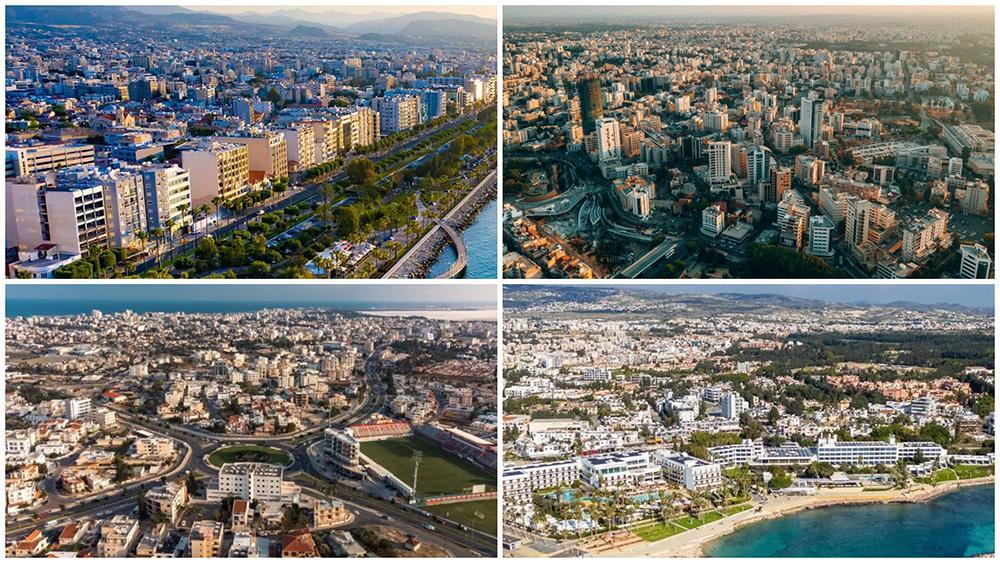
An important process of modernising the way in which urban and peri-urban space is planned and developed is the revision of the four major Local Plans of Cyprus. The process is ongoing and concerns the Local Plans of Nicosia, Limassol, Larnaca and Paphos.
Local Plans in Cyprus outline the designated land use, building zones, and development regulations for major urban areas and regions under development pressure. Administered by the Department of Town Planning and Housing, these plans dictate where specific developments can occur.
The main objective of the revision is to update and modernise these Local Plans so that they respond to the modern needs and challenges of urban areas.
Citizens, Local Authorities, investors, professional bodies, as well as the public administration will benefit from the revision and modernisation of Local Plans.
Among the multiple benefits that are expected to arise are a better quality of life through more organised and functional cities, the creation of better conditions for housing, work, entertainment and social activities, more housing options and better utilisation of land, as well as the creation of a clearer and more stable framework for investments, the attraction of investments through a modern and predictable urban planning system, and the facilitation of the implementation of development projects that meet the needs of the market.
This is how cities are developed and projects are planned
The Local Plans of the Urban Complexes of Nicosia, Limassol, Larnaca and Paphos constitute the basic tool for the proper planning and organisation of development in these areas.
Through Local Plans, the way in which cities are developed, land uses are organised, and projects and interventions are planned by both the public and private sectors are determined.
Local Plans directly affect the daily lives of citizens, economic activity, the development of cities and the quality of life in general. The process of reviewing the four Local Plans began in 2025 and is currently underway.
During this period, a detailed evaluation of existing plans is carried out, with the aim of determining whether they meet current needs and the new conditions that have emerged.
What does the review/drafting include?
The revision concerns the review and updating of existing Local Plans, so that they better respond to the current needs of society, the economy and the environment. At the same time, new social and economic conditions are taken into account, as well as the changes that have occurred in recent years in the way of life, work and development of cities.
The review examines new conditions concerning space, society, the economy and the environment, as well as the need for possible changes in the content, structure and boundaries of the Local Plans. All work is based on scientific and technical data, with the aim of creating a more modern, effective and flexible urban planning framework that can better support sustainable development and the needs of citizens.
Specifically, the procedure examines, among other things:
- the need for more and more affordable housing options,
- the organisation of travel and the improvement of accessibility,
- the protection of the natural and cultural environment,
- addressing the impacts of climate change,
- strengthening city centers and local communities,
- urban planning zones and permitted land uses,
- the possibility of developing new areas, among other things, for uses that arise due to new socio-economic conditions and the better utilization and organisation of existing development areas.
Purpose of the review
The main objective of the revision, which at the same time constitutes an institutional obligation of the state, is to update and modernise the above Local Plans so that they respond to the contemporary needs and challenges of urban areas, taking into account the changing social conditions, economic developments, the requirements for sustainable development and environmental commitments at national and European level.
Specifically, the new Local Plans seek to:
- to limit the uncontrolled expansion of cities,
- to create better conditions for qualitative development,
- to address the modern needs of citizens,
- to enhance sustainable mobility and the use of alternative means of transport,
- to promote a better balance between development, environmental protection and quality of life.
Benefits for society, citizens and the economy
Beneficiaries from the revision and modernisation of Local Plans will be citizens, Local Authorities, investors and professional bodies, as well as the public administration, through the existence of a clear, updated and functional urban planning framework that promotes transparency, sustainable development and the rational use of space.
The benefits for society and citizens are multiple:
- Better quality of life through more organised and functional cities.
- Creating better conditions for housing, work, entertainment and social activities.
- More housing options and better use of land.
- Improving access to services and infrastructure.
- More and more functional open public spaces, green spaces and areas that enhance social contact.
- Safer and easier travel.
Similar benefits will arise for the economy and development:
- Creating a clearer and more stable framework for investments.
- Attracting investment through a modern and predictable urban planning system.
- Facilitating the implementation of development projects that meet market needs.
- Better utilization of real estate.
- Strengthening the competitiveness of cities.
- Promoting new economic activities and creating new development opportunities.
The process completion timeline and milestones
Important milestones in 2026 were the completion and publication of the Report of the Minister of Interior for the Review/Elaboration of Local Plans, as well as the start of the request submission process based on Article 12(C) of the Town and Country Planning Law on June 15, 2026, which will last until 18 October, 2026.
Following the completion of this process, public hearings will be held along with the activation of Article 12(E) of the Law, which provides for the presentation to the Planning Council of the views of Local Authorities, government Departments/Services and other Bodies, which will subsequently feed into a substantial part of the work of the Planning Council. Taking into account the actions that have already been taken and those that remain, it is estimated that the processes of the Planning Council for the revision/development of the four Local Plans will be completed around the end of 2027.
(Source: InBusinessNews)