








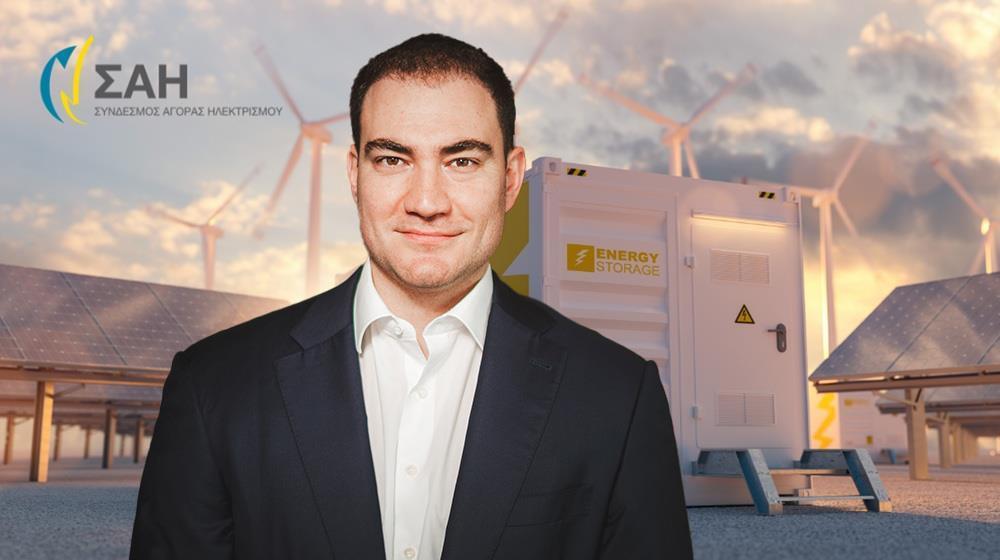
Energy storage is the key to the full utilisation of renewable energy sources (RES), particularly in Cyprus, where there is a high penetration of photovoltaics and huge potential for clean energy production, emphasises the President of the Electricity Market Association (EMA), George Chrysochos.
Speaking to InBusinessNews and CBN, Chrysochos explains that, given the exceptional usefulness of storage systems, a clear timetable is needed so that the necessary actions can move forward immediately. “Under no circumstances should energy storage remain hostage to delays or bureaucracy,” he notes.
It is recalled that, as the Electricity Market Association (EMA) has pointed ou tthat in a rceent announcement, the major delay is due to the failure to issue Connection Terms for storage systems in time by the Distribution System Operator (DSO), which falls under the EAC, a delay that in many cases exceeds twelve months. “These practices cannot, under any circumstances, be considered acceptable at a time when our country’s energy system is facing increasing pressure, while at the same time they raise serious questions regarding transparency, efficiency, equal treatment of investors, as well as the independence and impartiality of the competent bodies,” the EMA President says.
Stressing that energy storage is a fundamental pillar for the stability, reliability and security of the electricity system, he explains, that surplus energy produced during hours of high sunshine can be stored and used later, mainly during the evening hours or during periods of increased demand. “In this way, the need to use expensive and polluting conventional generation units, which today largely determine the high cost of electricity, will be drastically reduced,” he points out.
What are the benefits of energy storage and how will the implementation of such projects contribute to reducing the cost of electricity?
Energy storage is not just a useful technology. It is a fundamental pillar for the stability, reliability and security of our country’s electricity system. Particularly in Cyprus, where there is a high penetration of photovoltaics and huge potential for clean energy production, storage is the “key” to the full utilisation of Renewable Energy Sources (RES). This will clearly benefit consumers, as surplus energy produced during hours of high sunshine can be stored and used later, mainly during the evening hours or during periods of increased demand. In this way, the need to use expensive and polluting conventional generation units, which today largely determine the high cost of electricity, will be drastically reduced. Beyond reducing the cost of purchasing emissions allowances and reducing Cyprus’ dependence on imported fuels, storage will strengthen grid stability, reduce curtailments of green energy, limit losses, and create the conditions for a more flexible and efficient energy model. This will mean a gradual reduction in tariffs for households and businesses.
What are the reasons for the major delays in promoting energy storage projects?
As the Electricity Market Association (EMA) has pointed out in a recent announcement, the major delay is due to the failure to issue Connection Terms for storage systems in time by the Distribution System Operator (DSO), which falls under the EAC. A delay that in many cases exceeds twelve months. These practices cannot be considered acceptable at a time when our country’s energy system is facing increasing pressure, while at the same time they raise serious questions regarding transparency, efficiency, equal treatment of investors, as well as the independence and impartiality of the competent bodies.
The serious impact on households, businesses and investment
What are the broader effects of these delays for households and businesses?
It is clear that the delays directly affect both consumers and the domestic economy as a whole. Thousands of households that invested in photovoltaic systems in the hope of cheaper electricity are seeing energy costs strain their family budgets. The same applies to businesses, as high energy costs directly affect competitiveness, increase operating costs and limit their ability to grow. It should be noted that the delays also lead to increased curtailments of production from RES projects, especially photovoltaic parks. To understand the scale of the problem, only last April curtailments in large photovoltaic parks reached 66%. This creates serious uncertainty for investors, reduces the return on projects and discourages new investments in the green energy sector. Consequently, Cyprus risks falling behind in its energy transition and will not manage to achieve its European environmental targets. In practice, this means continued dependence on expensive and polluting fuels, with significant economic and environmental costs.
How do delays in implementing energy storage projects hinder the development of a truly Competitive Electricity Market?
There can be no truly competitive electricity market without adequate energy storage infrastructure. Storage is a key balancing mechanism for the system and a necessary prerequisite for greater participation of Renewable Energy Sources in the market. Therefore, delays keep the system dependent on conventional generation units and limit the ability of new producers and investors to participate equally in the electricity market. By reducing competition, you also reduce consumer choices, keeping prices high. In addition, the lack of storage means there is not the required flexibility for effective management of energy supply and demand, making the full utilisation of RES impossible. So, if we truly want a modern, sustainable and competitive electricity market that works for the benefit of consumers, the economy and the country’s energy security, storage is a necessary condition.
EMA calls for a clear timetable - the Minister of Energy’s response
On this issue, EMA has sent a letter to the President of the Republic, informing him of the seriousness of the situation and asking for his personal intervention. Was there any response from him or the competent authorities for the immediate acceleration of licensing procedures and the issuance of connection terms for storage projects?
Indeed, EMA sent a letter to the President of the Republic requesting his personal intervention for the immediate acceleration of licensing procedures and the issuance of Connection Terms for storage projects. Recently, we received a reply letter from the Minister of Energy on behalf of the President, informing us that out of a total of 42 applications received by the Distribution System Operator (DSO) for connection to existing Renewable Energy Sources (RES) plants, Final Connection Terms (FCTs) were issued for 16 applications, while the remaining 26 applications will be examined based on the “first come, first served” approach. In addition, we received assurances that the competent Ministry fully understands the important role and usefulness of storage systems. For our part, as an Association, we believe that precisely because of their exceptional usefulness, a clear timetable must be set so that we can, as a state, immediately proceed with the necessary actions. Under no circumstances should energy storage remain hostage to delays or bureaucracy. Otherwise, greater utilisation of RES and the smooth functioning of the competitive market, for the benefit of consumers’ long-term interests, will not be achieved.
