







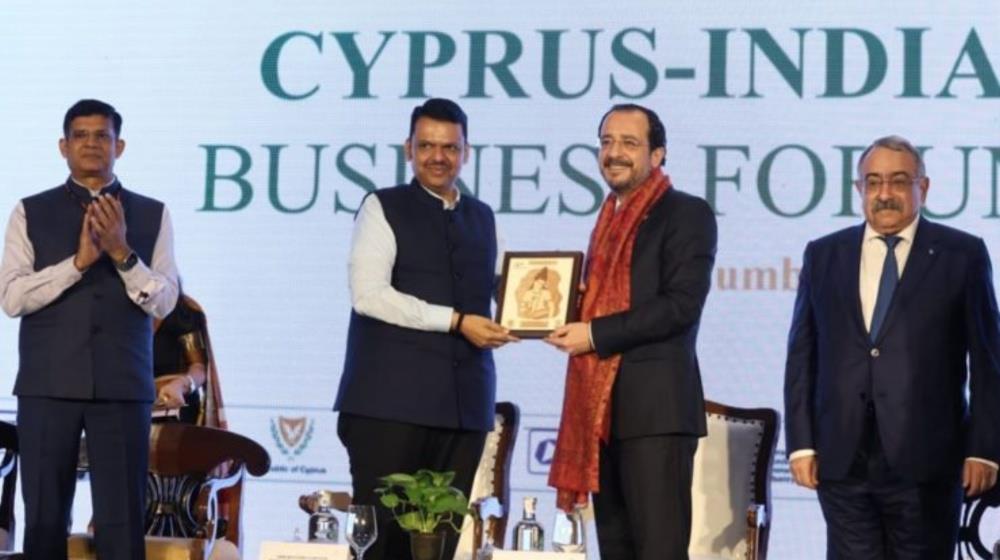
Cyprus President Nikos Christodoulides announced on Thursday morning the establishment of a Cyprus Trade Centre in Mumbai.
As he noted, the Cyprus Trade Centre has been designed to “serve as a hub for business connectivity, helping Indian companies explore opportunities in Cyprus and across Europe, encouraging partnerships with Cypriot businesses, and facilitating access to the EU through a stable, transparent, and fully EU-compliant business environment.”
Christodoulides spoke at the Cyprus–India Business Forum, organised by the Cyprus Chamber of Commerce and Industry (CCCI) and Invest Cyprus, in cooperation with FICCI (the Federation of Indian Chambers of Commerce and Industry), in Mumbai as part of his official visit, President Christodoulides said the centre is expected to become operational on September 1 this year.
The President described Mumbai as a reflection of the strong ambition and outward-looking spirit that define India today. Referring to Indian Prime Minister Narendra Modi’s visit to Cyprus in June 2025, he said it marked “a growing partnership that crystallised into a living document, the Joint Declaration on the Implementation of our Strategic Partnership, which we are now enriching further through the Action Plan and Roadmap.”
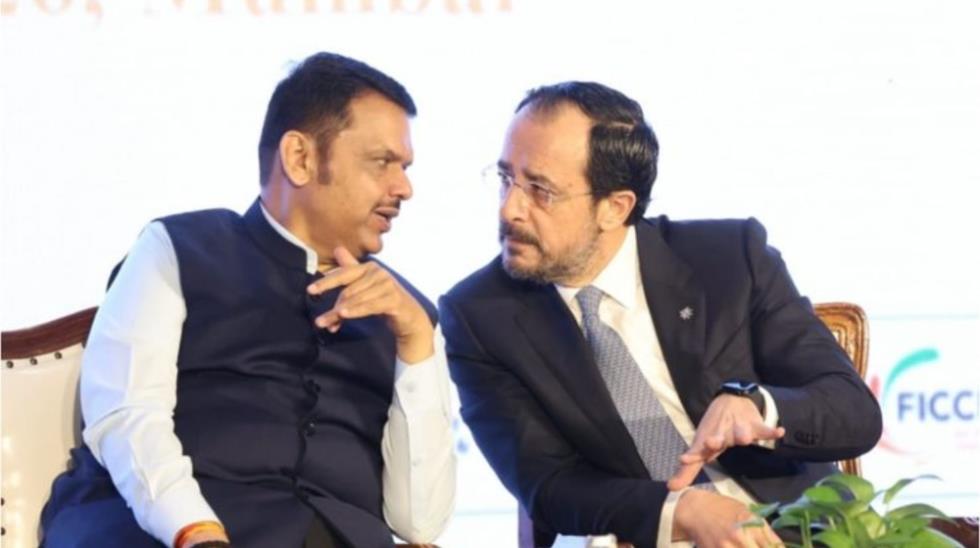
He stressed that at the heart of this strategic partnership are the highly dynamic business communities of both countries.
President Christodoulides also referred to EU–India relations, noting that Cyprus currently holds the Presidency of the Council of the European Union during a period of major challenges but also significant opportunities “to come closer together, build strong partnerships and create new prospects.”
He said the Cyprus Presidency presents a unique opportunity to leverage the momentum in EU–India relations as a springboard for stronger Cyprus–India economic and business cooperation. He further noted that EU–India relations are at a historic high following the Free Trade Agreement concluded during the very first month of the Cyprus Presidency, creating a market of two billion people by linking two of the world’s largest economies and opening up vast untapped opportunities for citizens, workers and businesses alike.
The President underlined the central role of the private sector in this effort. “As governments, we can create the necessary framework, but that framework only comes to life when businesses, investors and innovators give it substance. That is what ultimately builds lasting partnerships, creates jobs and enhances connectivity,” he said.
He stressed that the ambition is “to transform an already strong political relationship into deeper economic cooperation, with emphasis on investment, trade and joint business opportunities.” He noted that the participation of Cypriot companies from sectors including financial services and fintech, professional services, technology, energy, real estate, transport and logistics, as well as manufacturing, reflects a broad and outward-looking business ecosystem ready to collaborate with Indian partners.
Highlighting Cyprus’ advantages as a gateway to the EU, President Christodoulides said that as an EU and Eurozone member state, Cyprus offers full access to the Single Market of more than 450 million consumers through a transparent and predictable regulatory framework based on common law — a legal tradition familiar to both Indian businesses and international investors. At the same time, Cyprus’ size and flexibility enable faster decision-making and create an attractive business environment.
“Our message today is clear and simple: Cyprus is ready to serve as a reliable, efficient and competitive launchpad for Indian businesses seeking access not only to Europe, but also to the wider markets of the Eastern Mediterranean, the Gulf and North Africa from a stable European base. For example, e-commerce, with Cyprus serving as a logistics hub, offers a highly attractive proposition for Indian companies,” he underlined.
The President also presented Cyprus’ economic fundamentals, noting that the country continues to deliver strong economic performance despite a difficult and unstable global environment. “In the first quarter of 2026, Cyprus recorded GDP growth of 3%, the highest growth rate in the European Union, confirming the strength and resilience of our economy,” he said.
He added that this performance is underpinned by exceptionally healthy public finances. “We consistently maintain fiscal surpluses and a clear downward trajectory in public debt, which stood at around 52.2% of GDP in 2025. As a result, Cyprus is now ranked in the ‘A’ category by all major international credit rating agencies.”
In addition, Cyprus offers a 15% corporate income tax rate — among the lowest in the EU — as well as an extensive network of double taxation agreements covering more than 65 countries, including India.
Investment, he continued, lies at the core of the government’s strategy. According to President Christodoulides, Cyprus has in recent years consistently attracted productive foreign direct investment across a wide range of sectors, with international companies increasingly choosing the island as a base for regional headquarters and operations spanning Europe, the Middle East and Africa.
“We are also seeing, with particular satisfaction, growing interest from Indian companies already using Cyprus as their entry point into Europe, especially in sectors such as technology, financial services and digital innovation,” he added.
At the same time, he noted that for many businesses Cyprus can also function as a practical regulatory gateway to the European Union, offering access to approvals, compliance and EU-aligned operational frameworks within an English-speaking and business-friendly environment.
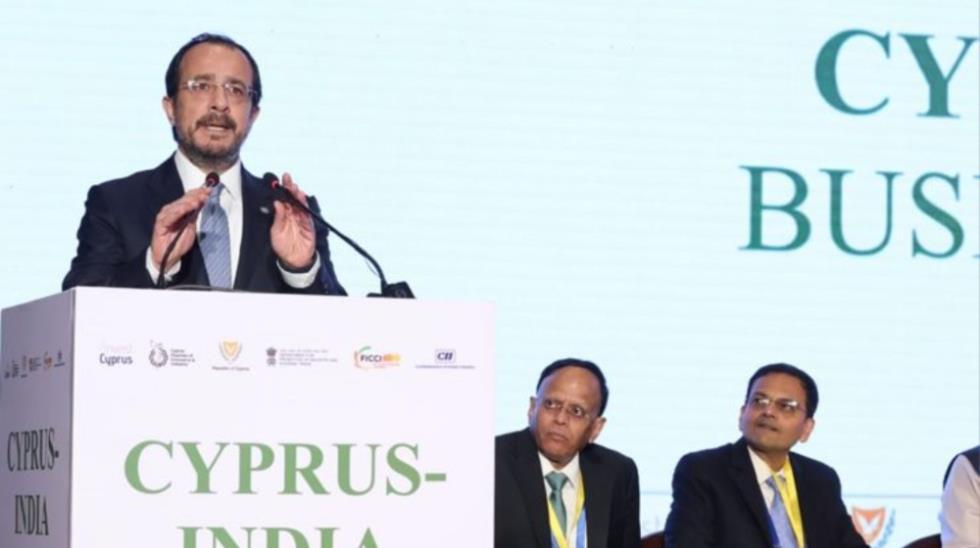
Beyond its geographical location and regulatory framework, Cyprus offers practical advantages that support business growth, he said, referring to the dedicated Business Support Centre, which provides fast-track procedures for company establishment and the relocation of executives and their families.
President Christodoulides also said that Cyprus is investing in human capital by combining international talent attraction policies with targeted initiatives aimed at reconnecting with highly skilled Cypriots abroad.
According to the President, Cyprus provides a unique environment for innovation and scaling up. “Companies can pilot products, services and technologies in a manageable and accessible environment within a recognised European regulatory framework, using, for example, the Cyprus Securities and Exchange Commission’s regulatory sandbox for fintech and regtech, and then expand more broadly into the European market.”
Referring to the potential for Cyprus–India cooperation, he highlighted a number of high-value sectors including digital technologies and artificial intelligence, financial services and fintech, renewable energy, logistics and trade infrastructure, tourism and maritime services. “Limassol today hosts one of the European Union’s most significant shipping services clusters, bringing together ship management, financing, insurance and related professional services within a highly internationalised business environment,” he noted.
He also emphasised that connectivity is central to this effort. Referring to the India–Middle East–Europe Economic Corridor (IMEC), he said it creates new opportunities in trade, logistics, energy and digital infrastructure.
“In this context, Cyprus can serve not only as a geographical hub, but also as an operational and regulatory base within the European Union for organising, managing and expanding regional activities across multiple markets simultaneously,” he said.
At the same time, he revealed that efforts are underway to strengthen direct links between the two countries, including the establishment of a direct air connection, which he described as “a substantial step forward for business and investment relations.”
Remarks by Devendra Gangadharrao Fadnavis, Maharashtra Chief Minister
The Forum was also addressed by Maharashtra Chief Minister Devendra Gangadharrao Fadnavis, who said President Christodoulides’ presence in Mumbai represents the beginning of a new era in India–Cyprus relations.
He noted that Cyprus remains one of India’s most stable friends in Europe, while India has consistently stood by Cyprus on matters of principle and international law.
Fadnavis said India today stands out as a centre of growth, stability and opportunity and has emerged as the world’s fastest-growing major economy. Referring to the economic scale of Maharashtra, he said the state today represents a US$660 billion economy — the largest in India — contributing nearly 30% of the country’s industrial output and attracting around 40% of all foreign direct investment flowing into India.
“Mumbai is increasingly evolving into one of the world’s most dynamic financial centres. But our ambition goes beyond growth figures. We are building the infrastructure, institutions and innovation ecosystems that will define the next 50 years,” he stressed, noting that Maharashtra is emerging as a hub for fintech, artificial intelligence, data centres, electric mobility, semiconductors, defence manufacturing and clean energy.
On the other hand, he noted that Cyprus occupies a uniquely strategic position in today’s world. It serves as a gateway to Europe, the Eastern Mediterranean and the Middle East, while maintaining a strong presence in shipping, logistics, financial services, maritime ecosystems and innovation.
“Maharashtra is the gateway to India’s economic future. This partnership between Cyprus and Maharashtra is therefore of profound strategic importance,” he said, adding that cooperation in shipping and maritime transport could become a defining pillar of this partnership. “Cyprus is a globally recognised maritime power, while Maharashtra is rapidly expanding its ports, logistics and maritime ecosystem.”
He also stated that cooperation between India’s financial ecosystem and Cyprus’ European financial networks could open new horizons in cross-border finance and digital innovation.
Technology and innovation must also stand at the centre of this relationship, he added, noting that Maharashtra is building one of India’s strongest ecosystems for artificial intelligence and start-ups. “We also see enormous opportunities in advanced manufacturing, clean energy, education, research partnerships and industrial innovation,” he said.
Concluding his remarks, the Chief Minister said: “History often remembers the moments when nations choose to look beyond geography and towards their shared destiny. I believe this is one such moment for India and Cyprus.”
