





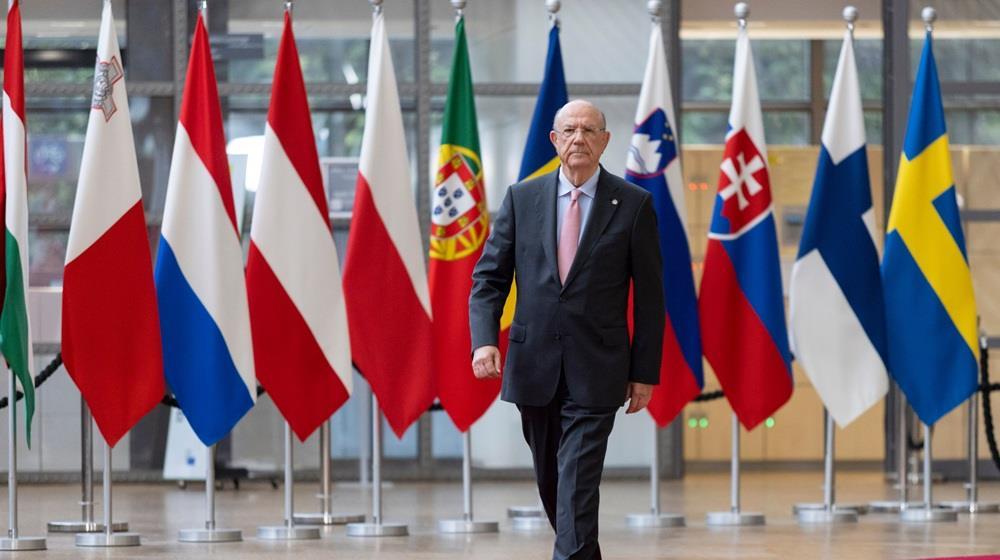
Finance Minister Makis Keravnos said there is a positive climate for advancing the European Union’s capital markets integration, expressing optimism that a final agreement could be reached soon.
Speaking after Tuesday’s Ecofin meeting, Keravnos said the recent developments confirm the EU’s view that strategic autonomy is important for improving the competitiveness of the European economy, and that this can be achieved through capital markets integration.
He said the main outstanding issues concern central supervision and the governance model of the EU’s financial markets authority, ESMA, where some member states still have different views.
Keravnos added that the climate at the meeting was very positive for another discussion based on a document submitted by the Cypriot Presidency, with the aim of reaching a final convergence that all sides can agree on.
He also said the Cypriot Presidency held 13 technical meetings between January and April, completing the first full examination of the proposal. Ministers, he noted, broadly recognised the need to avoid overlapping responsibilities and higher costs, while balancing ambition with speed in implementation.
Separately, Ecofin reached a general approach on fighting VAT fraud, including direct access for EPPO and OLAF to VAT databases. Keravnos described this as a basic step in the fight against fraud and said data exchange must continue to follow strict rules and data protection standards.
The meeting also reviewed progress on the €90 billion loan to Ukraine, with Keravnos saying the Cypriot Presidency had worked continuously to put the necessary elements in place so disbursements can begin as soon as possible.
European Commissioner Valdis Dombrovskis said capital markets integration is more urgent than ever and called for momentum and ambition to be maintained. He also said the EU must take the necessary steps to unlock the full potential of the single market, especially in capital, warning that competitiveness is at stake.
Dombrovskis also referred to VAT fraud measures, Recovery and Resilience Facility disbursements, the Commission’s better regulation agenda, the impact of the Middle East conflict on energy prices, ongoing Ukraine financing talks, and the adoption of the EU’s 20th sanctions package against Russia.