






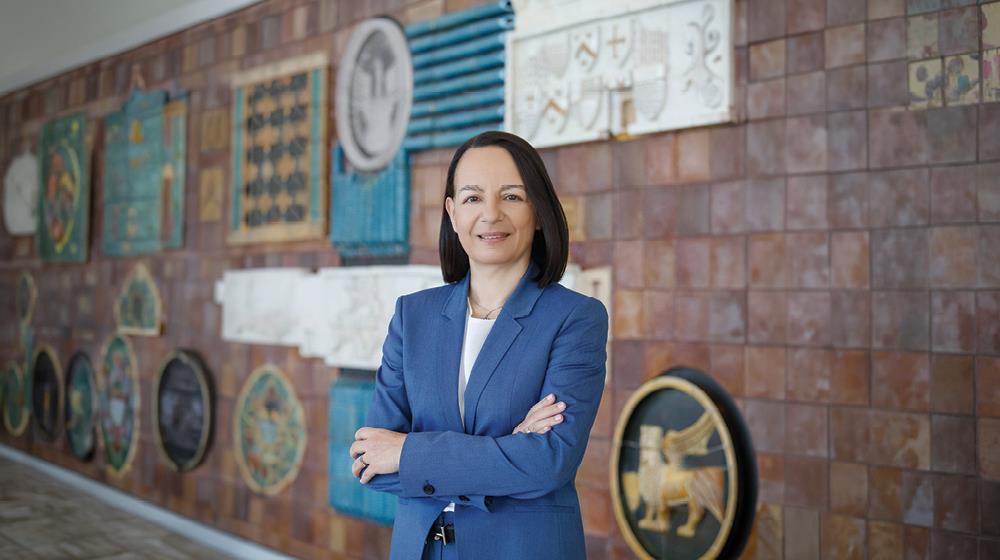
"In the immediate aftermath of recent geopolitical developments in the region, flight cancellations were expected. This was not unique to Cyprus but part of a broader development impacting airports across the Middle East, some even more significantly. Over time, however, we have seen connectivity between Cyprus and its European markets restored, and a resumption of the majority of routes that had been temporarily suspended," Eleni Kaloyirou, the CEO of airport operators Hermes Airports notes.
In a recent interview with GOLD magazine, she continues, "What is essential today is to communicate clearly that the country continues to operate with stability, maintaining consistent connectivity and smooth travel flows. Cyprus remains a safe and hospitable destination, offering excellent weather and quality experiences to its visitors on a year-round basis."
Among other things, the CEO also comments on how, driven by a major investment cycle and a sustained push to expand air connectivity, Larnaca is redefining its place in the regional aviation landscape, reflecting on the forces behind this shift and what lies ahead.
How have geopolitical tensions impacted aviation and tourism, particularly through disruptions and cancellations, and what is your outlook for 2026?
In the immediate aftermath of recent geopolitical developments in the region, flight cancellations were expected. This was not unique to Cyprus but part of a broader development impacting airports across the Middle East, some even more significantly. Over time, however, we have seen connectivity between Cyprus and its European markets restored, and a resumption of the majority of routes that had been temporarily suspended. What is essential today is to communicate clearly that the country continues to operate with stability, maintaining consistent connectivity and smooth travel flows. Cyprus remains a safe and hospitable destination, offering excellent weather and quality experiences to its visitors on a year-round basis.
Looking ahead, there are cautious grounds for optimism that the impact of these challenges will be mitigated. At Hermes Airports, we remain committed to close collaboration with all tourism stakeholders, ensuring flexibility, adaptability and operational readiness. Based on these foundations, we believe that 2026 can be a year of stabilisation and qualitative growth for both aviation and tourism.
With the Phase II expansion underway, how transformative will this be for Larnaka Airport, not just in terms of capacity but in reshaping its role as a regional gateway?
The €170 million Phase II investment by Hermes Airports marks a defining milestone for Cyprus and will have a particularly transformative impact on both Larnaca and Paphos. This expansion is not simply about increasing capacity but reflects a broader evolution of the airports into modern, future-ready regional gateways. Phase II is the largest part of a continuous investment programme delivered over the past 20 years to modernise infrastructure and enhance the passenger experience. Consequently, both airports will be better equipped to handle growing passenger volumes in the years ahead, while improving efficiency, comfort and overall flow.
At the same time, operational flexibility across Larnaca and Paphos is being strengthened. In parallel, we have pursued a strategy to attract commercial investment, particularly in Larnaca’s airside areas and the old terminal, supporting aviation-related services such as maintenance, cargo, training and VIP services. Ultimately, all these investments – in the expansion of the new Larnaca airport terminal and facilities as well as in the aviation and other services now provided at the old terminal area – position Larnaca as a competitive, agile and sustainable gateway in the Eastern Mediterranean. They strengthen both the city’s and the airport’s strategic importance, contributing meaningfully to national economic growth and shaping a more outward-looking and dynamic future for Cyprus.
Larnaca has recorded strong growth in air connectivity in recent years. What is driving this momentum and how sustainable is it in an increasingly competitive aviation landscape?
The strong growth in air connectivity at Cyprus’ airports reflects a deliberate, multi-layered strategy focused on supporting tourism, enabling business activity and creating long-term economic value. Hermes Airports has invested in strong partnerships with airlines and stakeholders, fostering new routes and expanding existing connections, while promoting Cyprus as a safe, high-quality, year-round destination. Maintaining this momentum in a competitive aviation landscape requires adaptability, so efforts are underway to extend the tourism season and strengthen the island’s positioning. At the same time, investments in sustainability and innovation aim to ensure lasting, resilient growth. With a consistent strategy, solid partnerships and a forward-looking approach, Larnaca is well-positioned to sustain its progress and further strengthen its role on the regional aviation map.
Can improved air connectivity boost Larnaca’s investment appeal beyond tourism into sectors like business services, education and innovation?
Enhanced air connectivity is undoubtedly a catalyst, not only for tourism but also for the broader investment profile of Larnaca and Cyprus as a whole. Reliable access to international markets supports the growth of key sectors such as business services, education and innovation. Strong connectivity enables the efficient movement of people and ideas, helping companies integrate into global networks. It also enhances Cyprus’ image as a modern business hub, strengthening investor confidence and contributing to a more dynamic economy. Larnaca, due to its proximity to the airport, has become especially attractive for investments across aviation, tourism and education. In recent years, this has been reflected in the increasing number of companies establishing a presence in Cyprus, particularly near Larnaka Airport. At Hermes Airports, our role goes beyond airport management; for two decades, we have actively supported national development by improving connectivity and encouraging investment that sustains economic growth.
The airport-to-city journey forms the very first impression of Larnaca. Where do you see the most pressing areas for improvement?
The journey from the airport to the city is the visitor’s first real experience of Larnaca and plays a key role in shaping their overall impression. While the city’s image has improved in recent years, there is still room for further progress. A common point of feedback is the need for better public transport, with more frequent and direct routes offering reliable and sustainable options. At the same time, smart solutions such as real-time digital information and seamless connectivity can enhance the experience. I expect that, with Larnaca being chosen as European Capital of Culture for 2030 – following a bid that we at Hermes Airports strongly supported – a lot of work will be undertaken to further improve the city’s appeal to all its visitors, local and foreign.
In the next five to ten years, what role can Larnaca play in the region’s aviation, connectivity and economic landscape?
Looking ahead, Larnaca has the potential to establish itself as a modern, agile and strategically positioned city in the Eastern Mediterranean. With ongoing infrastructure investments, the growth of aviation-related businesses, and stronger connectivity, Larnaka Airport is well-positioned to enhance its role as a gateway linking Europe with the Middle East and beyond. At the same time, high-quality services and advanced technologies will boost its competitiveness and appeal to airlines and passengers. Our ambition is for Larnaca to evolve into a destination in its own right, connecting people, ideas and opportunities on a regional and global stage.
This interview first appeared in the April edition of GOLD magazine. Click here to view it.