








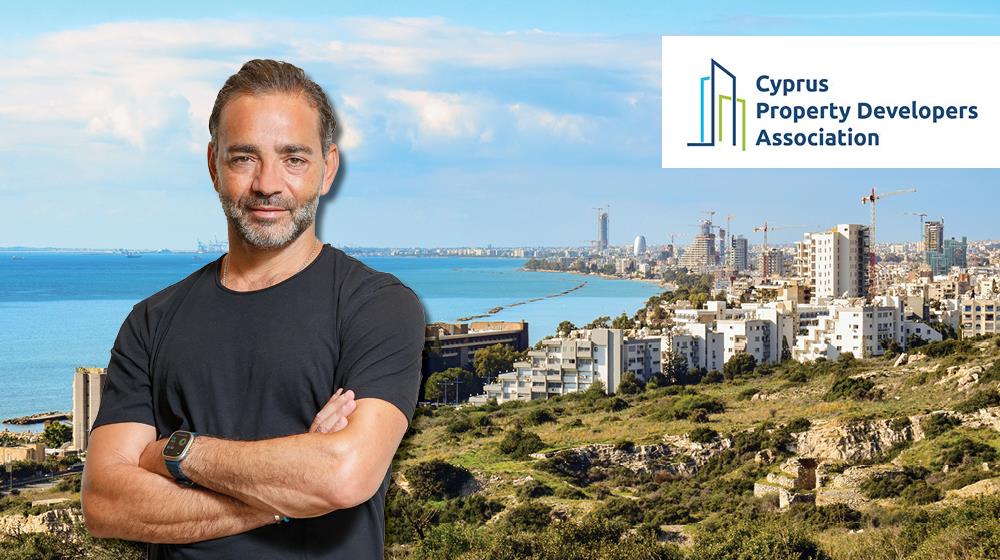
"The island’s high quality of life, political stability, attractive tax framework and resilient banking sector remain key competitive advantages," Yiannis Misirlis, Chairman of the Cyprus Property Developers Association, suggests commenting on the island's property development sector, while also noting that, "Cyprus has steadily strengthened its position within the European real estate landscape, emerging as a credible and attractive Mediterranean destination."
In a recent interview with GOLD magazine, Misirlis discusses how the property sector in Cyprus is changing as both large-scale and smaller developments are seeing a transformation in what potential buyers are looking for.
Among other things, he, in addition, talks about the biggest bottlenecks that developers and how they can be remedied to encourage more supply. Misirlis, meanwhile, also shares his thoughts on what Cyprus must do to enhance its real estate sector competitiveness, suggesting, “A diversified pipeline is more resilient across cycles and better aligned with Cyprus’ dual identity as both a domestic housing market and an international lifestyle destination.”
Construction costs and regulatory hurdles continue to be flagged as constraints in the broader market narrative. What are the biggest bottlenecks that developers currently face and what can be done to unlock a stronger supply response?
Delays in building permit procedures are the most significant bottleneck for developers. Despite recent reforms, approval timelines are often lengthy and unpredictable. Time, in our sector, translates directly into cost. When a project is delayed by months or longer, the financial burden increases due to higher financing costs, inflation in material prices and overall uncertainty. An important part of this additional financial burden is, of course, passed onto the buyer. A faster, more streamlined licensing framework would reduce delays, stimulate housing supply and strengthen Cyprus’ competitiveness as an investment destination.
At the same time, the shortage of skilled labour continues to place pressure on construction timelines and quality standards, further constraining output. To unlock a stronger supply response, we need efficient permitting, better coordination among authorities, targeted incentives for affordable housing, and policies that address workforce shortages. Predictability and efficiency are essential to meet housing demand sustainably.
Reports show that apartments now dominate sales. Do developers need to recalibrate the supply towards smaller units or does the luxury and villa segment still hold strategic value?
Apartments have always dominated transactions in Cyprus – not due to a recent shift but because this is where the mass market lies. They are more affordable, financeable and liquid so, in any normalised cycle, volume concentrates there. Recent data does not signal a dramatic demand for reorder but a cyclical reinforcement of an existing hierarchy: in tighter affordability and disciplined lending conditions, mainstream product outperforms high-ticket stock.
That does not mean developers should abruptly recalibrate away from houses and villas. Real estate development is capital-intensive and long-cycle; reactive supply shifts often destroy value. Apartments must remain disciplined in size, energy performance and pricing, especially in resilient urban cores.
At the same time, luxury properties and villas retain strategic value. They attract foreign capital, support Cyprus’ premium positioning and generate strong multiplier effects. The objective is to balance liquidity-driven product with value-driven product. A diversified pipeline is more resilient across cycles and better aligned with Cyprus’ dual identity as both a domestic housing market and an international lifestyle destination.
How do you see Cyprus’ status evolving within the wider European real estate context, relative to competitiveness against other Mediterranean markets?
Cyprus has steadily strengthened its position within the European real estate landscape, emerging as a credible and attractive Mediterranean destination. The island’s high quality of life, political stability, attractive tax framework and resilient banking sector remain key competitive advantages.
To enhance our competitiveness, Cyprus must prioritise more efficient licensing procedures, the full digitalisation of public services and a stable, predictable policy environment that reduces uncertainty for investors. Strategically, we must also prioritise sustainable development and energy-efficient buildings, aligning with broader European ESG standards.
This interview first appeared in the March edition of GOLD magazine. Click here to view it.
