






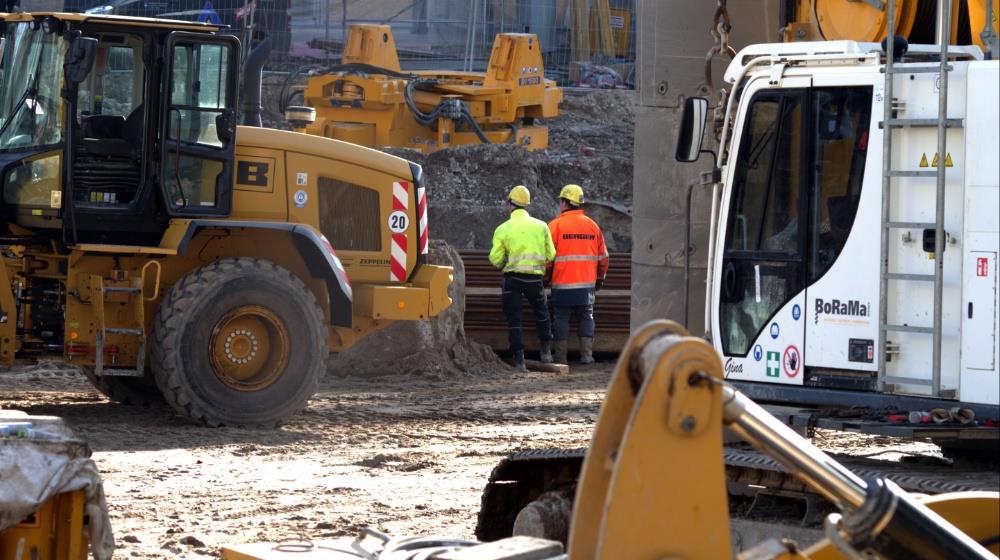
The labour shortage facing the construction sector, now widely regarded as one of the industry’s most pressing challenges, will take centre stage at a roundtable discussion organised on Thursday by the Federation of the Building Contractors Associations of Cyprus (OSEOK).
The issue, which is increasingly seen as a major issue for the sector’s growth, is already impacting the timely delivery of both public and private projects, driving up costs and slowing overall development across the industry.
The roundtable, titled "The Construction Industry Facing Labour Shortages," will take place at 5:30pm at Hilton Nicosia, bringing together key stakeholders from both the public and private sectors. Among those expected to attend are the Labour Minister, Marinos Mousiouttas, the Migration Deputy Minister, Nicholas Ioannides, as well as senior officials from the Labour Ministry. Contractors who are members of OSEOK and are active in both public and private projects will also participate.
Speaking to InBusinessNews, OSEOK Chairman Stelios Gavriel said the discussion will focus extensively on the challenges facing the sector, particularly in relation to recruitment procedures and the employment of third-country nationals and asylum seekers.
He noted that businesses are currently facing significant obstacles in completing the necessary processes to hire foreign workers, pointing out that, although the collective agreement includes categories for new entrants to the industry -categories that were expected to also apply to workers from abroad- the competent Ministry only approves permits for Technician A positions, which come with a cost exceeding €3,000 per month.
"Our aim is to give our members the opportunity to express their concerns and outline the difficulties they face when submitting applications to hire workers from third countries," Gavriel said, adding that the procedures applicable to the construction sector are considerably more time-consuming than those in other sectors of the economy, such as the hotel industry.
"Our process is governed by collective agreements and legislation, and it can take anywhere from six to twelve months to bring workers to Cyprus," he explained. He also highlighted wage-related challenges, noting that although lower salary scales exist within the collective agreement, employers are effectively required to hire staff at higher wage levels.
At the same time, OSEOK intends to raise specific issues with the Migration Ministry, particularly regarding Syrian nationals who hold subsidiary protection status. Gavriel said the federation is seeking ways to improve the framework to make it more attractive, enabling the sector to absorb a greater number of workers.
He also pointed to the case of asylum seekers, whose number currently stands at around 10,000 in Cyprus, and who are not permitted to work in the construction sector under existing regulations. "What we want to discuss is whether, while fully respecting collective agreements, these individuals could be allowed to work in our industry for a defined period, one or two years," he noted.
The labour shortage, Gavriel stressed, is already creating serious delays in the completion of projects, particularly large-scale developments. In this context, he concluded, the participation of the state alongside industry professionals is crucial in fostering meaningful dialogue aimed at identifying and promoting concrete solutions to address the issue.
(Source: InBusinessNews)