







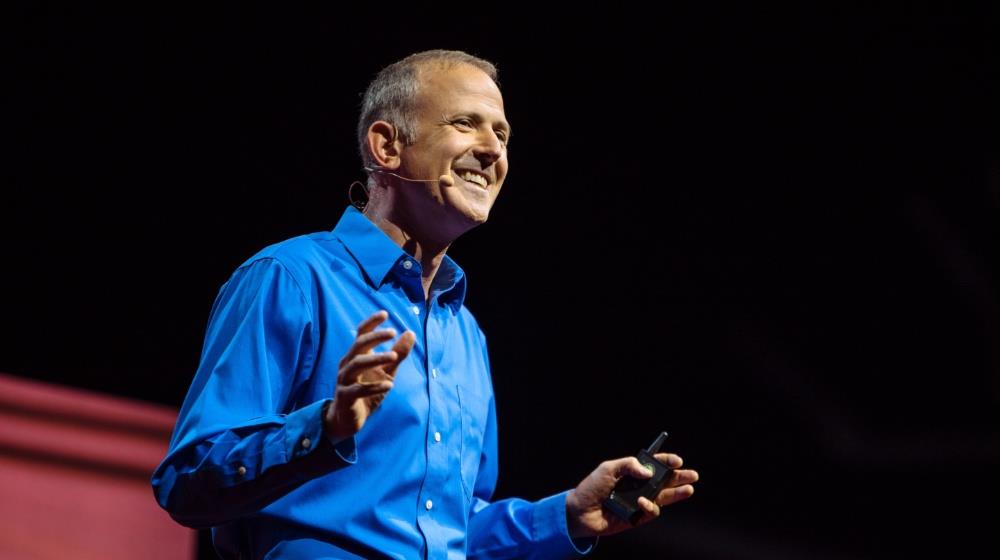
With a career spanning 25 years at the Boston Consulting Group (BCG) -where he served as Managing Director and Senior Partner and led the firm’s global Research & Product Development- Ringel has been the silent architect behind the innovation frameworks used by the world's most successful organisations.
Today, he has moved from the boardroom to the frontier of human biology as the Chief Operating Officer of Life Biosciences. His mission is no longer just to advise on growth, but to operationalise one of the most ambitious goals in scientific history: cellular rejuvenation.
As a keynote speaker at the upcoming Cyprus EMEA Healthspan Summit this April, Ringel arrives in Limassol at a pivotal moment. With Life Biosciences’ lead program (ER-100) cleared for human clinical trials in 2026, he brings a unique perspective on what it takes to transform a "tech gateway" like Cyprus into a world-class biotech powerhouse.
In this exclusive interview, we discuss the "BCG mindset" in the lab, the reality of reversing the biological clock, and the specific "missing ingredients" Cyprus needs to attract global giants to its shores.
You spent 25 years at BCG. How did managing global innovation prepare you for the high-stakes world of biotech?
The fundamentals of innovation are remarkably consistent: success requires a compelling idea grounded in unmet need, disciplined capital deployment, and flawless execution. In biotechnology, the stakes are higher due to complex science and long timelines. My experience allows me to manage that uncertainty through evidence-based decision-making under ambiguity. I am encouraged to see Cyprus building these same foundations through the Research and Innovation Foundation and the Startup Visa scheme, positioning the country as a strategic bridge between Europe and the Middle East.
What is the biggest "business lesson" you have brought from the corporate world to Life Biosciences?
I’ve learned that scale is a double-edged sword. Large companies are often delayed by internal complexity, while small firms lack resources. At Life Biosciences, our operational essence is to maintain rapid, clear decision-making while leveraging the scale of external partners, academic labs, and government entities. This mirrors the Cypriot model: the ability to move quickly at a national level while remaining deeply connected to global markets. That combination of focus and connectivity is how smaller systems compete on a much larger stage.
How do you pitch the ROI of "reversing age" to traditional institutional investors?
While our technology is revolutionary, our path to value follows the proven model of treating disease. Our partial epigenetic reprogramming platform seeks to rejuvenate at a cellular level, but we are advancing this through established clinical trials with clear endpoints. We are currently focused on ophthalmology -specifically glaucoma and NAION- where there is significant unmet need. Investors understand this: we create value stepwise as clinical data emerges. If our platform is validated in the eye, it has potential applicability across many other age-related diseases.
2026 is a historic year with your lead program (ER-100) entering human trials. What is the significance of this moment?
This is a landmark milestone. Our lead candidate, ER-100, is now in a Phase I trial—marking the first time a therapy based on cellular rejuvenation is being studied in a controlled human setting. This represents the critical transition from preclinical theory to rigorous clinical evaluation. While our primary objective is to assess safety, a successful validation could fundamentally shift how society addresses the diseases of aging. We are at an early stage, but we have moved the conversation from "what is possible" to "what is proven."
Beyond vision, what other therapeutic markets are next on your strategic roadmap?
Preclinical research is already exploring this approach across neurodegeneration, musculoskeletal disease, metabolic disorders, and cardiovascular disease. However, we are disciplined: we prioritize diseases with significant unmet need, well-understood biology, and clear clinical endpoints. Our strategy is to build strong evidence step-by-step, expanding only as human data supports safe and effective application. We are moving from laboratory theory to a rigorous, indication-by-indication development framework.
Is the Cyprus business ecosystem ready to become a world-class longevity hub?
Cyprus has the foundational elements and, crucially, a clear intent. Government initiatives like the Research and Innovation Foundation and the IP Box regime are important building blocks. However, world-class ecosystems require "density", the scaling of academic institutions, risk-tolerant capital, and "anchor companies" that act as gravitational pulls for talent. Cyprus is on a trajectory similar to Israel, leveraging its regional connectivity to play a meaningful role in the longevity economy.
Does the upcoming Cyprus EMEA Healthspan Summit mark a significant milestone for the region?
The timing is perfect. Over the last decade, the biology of aging has moved from the lab into clinical evaluation. This shift requires informed engagement from investors, policymakers, and healthcare leaders to shape how these innovations are adopted. This summit signals Cyprus’s ambition not just to participate in the global conversation, but to help shape it. It is a vital bridge between scientific promise and the economic reality of the field.
What are the critical "ingredients" needed to attract global firms like Life Biosciences to invest in Cyprus?
It’s not solely about funding. You need a parallel development of "anchor institutions" that signal credibility, a workforce of both scientists and experienced operators, and a regulatory environment that supports clinical development. Fiscal incentives are most effective when they reinforce a functional system. The key is a coordinated, staged approach to building each element so they reinforce one another. That’s how you move from early momentum to a truly durable biotech ecosystem.
If you succeed in extending "healthspan," how must the business world adapt?
Extending healthspan could generate trillions of dollars in economic value by keeping people productive longer and reducing the burden of chronic disease. This has profound implications for retirement systems and workforce models, which are currently built on outdated assumptions about aging. In an aging Europe, extending healthspan is one of the few levers available to offset these demographic shifts. It will require alignment across healthcare, policy, and business to translate this science into real-world impact.
What is your message for Cypriot business leaders who are still "on the fence" about this industry?
This is no longer a purely theoretical field; it is being tested in the clinic. The question for business leaders is no longer if this field matters, but how and when to engage. Those who build an understanding early and participate thoughtfully are best positioned as the industry matures. It is a rare opportunity to "do well by doing good" while participating in a truly transformative inflection point in science.
Dr. Michael Ringel, J.D., Ph.D., will be delivering his keynote address at the Cyprus EMEA Healthspan Summit this April at the Parklane, a Luxury Collection Resort & Spa, Limassol.
The summit, organized by the St. Moritz Longevity Forum in partnership with the MHV Group, represents a landmark gathering of the region's scientific and financial elite.
For registration and information on the summit: Visit the St. Moritz Longevity Forum
To learn more about the work being done at Life Biosciences: Visit Life Biosciences – Aging can be redefined
