






The European Central Bank’s decision to hold the deposit rate at 2% at its March meeting is no surprise – it wouldn’t have been one a month ago either. However, the rules of the game have changed.
While inflation across the Eurozone has eased from the peaks of recent years, escalating geopolitical tensions have altered the outlook, reopening the possibility that interest rate hikes could return to the agenda.
A return to monetary tightening would be unwelcome for an already fragile Eurozone economy. The most recent IMF forecasts have already downgraded expected growth for 2026 to a sluggish 1.2%. If interest rates were to rise, increasing borrowing costs for businesses and dampening corporate investment, we can expect that projection to fall even lower.
Of course, much depends on the long-term consequences of the conflict in the Middle East. Energy markets have reacted quickly to developments in the region, with oil and natural gas prices rising in global trading. Europe’s heavy reliance on Russian gas meant it was hit particularly hard following Russia’s invasion of Ukraine in 2022.
Although Europe has since worked to diversify its energy imports — both geographically and in terms of fuel mix — it remains especially vulnerable to swings in global prices due to its continued need to import large volumes of fuel and the central role energy‑intensive industries play across the Eurozone economy. This stands in stark contrast to the United States, where rapid growth in domestic oil and gas production has transformed the country into a net energy exporter in recent years.
Higher energy costs can quickly feed through into broader inflation. Rising fuel prices increase transport costs, manufacturing expenses and household energy bills. These pressures often spread across supply chains, eventually pushing up the cost of goods and services more broadly. Aware that they faced criticism in 2021-22 for not acting quickly enough to calm what they saw as ‘transitory’ inflationary pressures, policymakers at the ECB will not risk acting too slowly this time.
If energy prices continue to rise and inflation expectations begin to move higher, the ECB may find itself in the uncomfortable position of having to raise interest rates again in order to protect price stability.
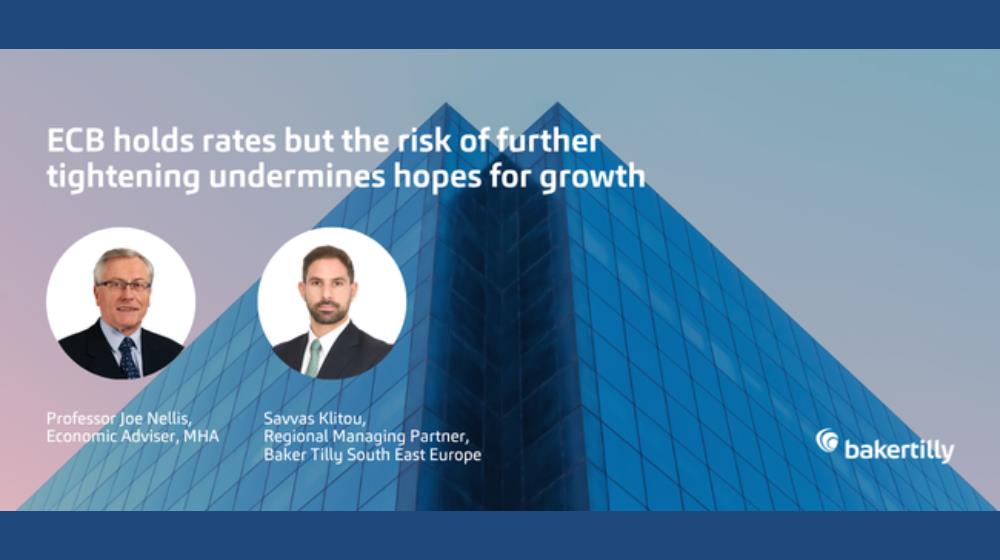
“The ECB’s decision to hold interest rates reflects increasing confidence that inflation is broadly converging toward target, despite the short‑term uncertainty created by the war in the Gulf and its impact on energy prices. For Cyprus and Greece, this provides an important backdrop of stability, supporting continued investment and economic momentum while policymakers remain vigilant to geopolitical developments. Should elevated oil prices and geopolitical uncertainty persist for longer, however, this could place renewed pressure on inflation and growth, potentially delaying any easing in monetary conditions.”
– Savvas Klitou, Regional Managing Partner, Head of Tax Services
*Emeritus Professor Joe Nellis is economic adviser at MHA, the accountancy and advisory firm