





Malte Lohan, CEO of AmCham EU, believes that during its six-month Presidency of the EU Council, Cyprus has the ability to improve the business environment and set the EU on the path to prosperity in the years ahead.
And this because of – rather than in spite of – its size.
AmCham EU represents some of the largest global companies operating in Europe. What are the most pressing concerns that your members raise about the current EU business environment?
Europe’s declining attractiveness for investment is the top issue for our membership. Much of that concern stems from the EU’s regulatory burden. For years, businesses have warned that excessive administrative requirements as well as unclear, duplicative and contradictory regulations were stifling growth and investment. The EU must deliver a simpler regulatory environment to safeguard its competitiveness on the global stage.
In addition, as European preference rules emerge in various policy instruments, global companies need predictable, non-discriminatory requirements that encourage investment and value created in the EU. If designed poorly, these could have the opposite effect, discriminating against US companies, denying the EU economy access to best-in-class products and services, and risking the 4.6 million European jobs and $4 trillion in foreign direct investment they bring.
Can you characterise Europe’s competitiveness, particularly vis-à-vis the US and Asia?
Excessive regulation and unpredictability have taken their toll on Europe’s competitiveness. The 2024 Draghi report shows the GDP gap between the EU and the US grew from about 15% in 2002 to 30% in 2023. Likewise, the IMF estimates that real GDP will grow 4.1% in Asia in 2026, compared to only 1.4% in Europe. The numbers are clear: the EU must follow through on its commitment to improve its long-term attractiveness for investment. That said, Europe still brings to the table key advantages. With 450 million consumers, a highly skilled workforce and top universities and research institutions, the Single Market is the number one driver of foreign investment into Europe. That makes the EU a critical pillar in American companies’ global operations. They make 55% of their foreign income in Europe, more than anywhere else in the world. For comparison, the entire Asia-Pacific accounts for only 20%. The EU has work to do to regain its international competitiveness and, if it succeeds, it has the potential to rival anywhere else in the world for economic opportunities.
How would you describe the current state of EU-US economic relations?
Turbulence in EU-US relations over the past year has put considerable pressure on businesses on both sides of the Atlantic. Beyond the immediate cost of tariffs, these tensions have caused uncertainty for the $9.5 trillion transatlantic economy, with direct impacts on investment. However, the stakes are too high to allow the partnership to founder: the transatlantic economy is the largest commercial relationship in the world, it supports 16 million jobs and fosters European prosperity and security. For American companies in particular, Europe is home to 64% of US foreign assets. There’s no reason why the transatlantic economy shouldn’t continue to thrive if the EU and the US navigate the current tensions carefully and respectfully. Last year, the two sides painstakingly negotiated the EU-US Framework Agreement; moving forward its implementation remains the best way to stabilise the transatlantic relationship and give certainty to the many businesses and citizens who rely on it.
What policies are most critical for keeping Europe attractive to long-term foreign direct investment?
For long-term foreign direct investment, business in Europe needs three conditions: a predictable transatlantic trade and investment environment, a more competitive European economy and a Europe open to those who drive its growth. To double down on its strengths and correct past overregulation, the EU must lower barriers to trade in the Single Market and reduce regulatory burdens. By streamlining duplicative, conflicting and needlessly burdensome regulations and ensuring coherent implementation across the Single Market, policymakers can help Europe’s economy fire on all cylinders. Lastly, the EU must stay true to the openness and fair competition that has fostered decades of growth. Protectionism and the discriminatory application of European preference criteria would hinder – not help – the EU’s resilience. Supply chain diversification, partnerships and prioritising the creation of EU-added value can reward real economic contributions while enhancing Europe’s attractiveness for investment.
Is there room to grow AmCham EU’s relationship with AmCham Cyprus?
In advance of the country's EU Presidency, AmCham Cyprus was a key partner when planning our engagements with the Government to support the incoming Presidency in its work. Like AmCham EU, AmCham Cyprus juggles diverse members, priorities and cultures – and that balancing act makes our organisations natural partners to bridge divides within the EU and across the Atlantic. Our members must continue to make their voices heard as Cyprus steers the EU through a critical period, and we will continue to work with AmCham Cyprus to do just that over the next several months and beyond.
From AmCham EU’s perspective, what role can smaller EU member states like Cyprus play in the Union’s broader economic and investment strategy?
It is precisely because Cyprus is a smaller member state that it can play an outsized role in shaping the EU’s economic future. Without the advantages that come from a larger landmass and a bigger population, small states like Cyprus rely on negotiation and building coalitions to achieve their goals. Using the diplomatic skills that the country has developed over its 22 years in the EU, Cyprus has the opportunity to steer the EU through a decisive moment and move forward a predictable transatlantic agenda and a pragmatic, simplified regulatory framework. Because of – rather than in spite of – its size, the country can improve the business environment and set the EU on the path to prosperity in the years ahead.
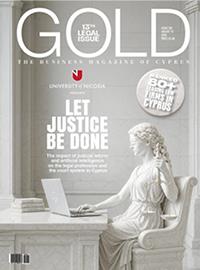
This interview first appeared in the February edition of GOLD magazine. Click here to view it.